Government
US Energy Dept. Cancels $3.7B in Previous Awards for Decarbonization Projects
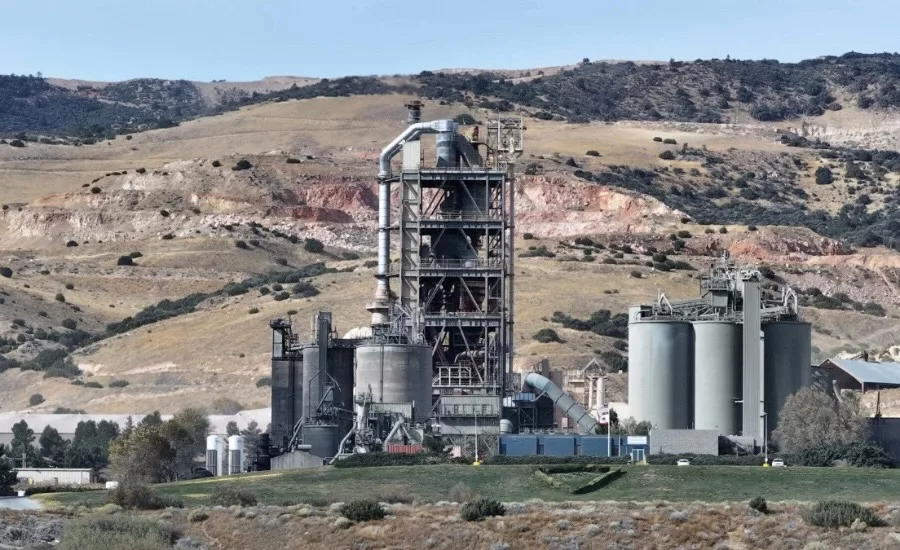
National Cement Co. of California Inc. planned to use $500 million in U.S. Dept. of Energy funding toward a three-pronged effort to reduce emissions from its cement plant in Lebec, Calif.
Photo courtesy National Cement Co. of California Inc.
The U.S. Dept. of Energy canceled 24 awards totaling $3.7 billion that were announced during the Biden administration to support various carbon capture and sequestration projects and other decarbonization initiatives, including efforts by some construction material suppliers, although awardees may be able to appeal the clawbacks.
Energy Secretary Chris Wright announced the cancellations May 30, claiming agency officials reviewed the awards and "determined that projects do not meet Americans’ energy needs, are not economically viable and would not generate a positive return on investment."
He said in a statement that financial reviews of the projects in the prior administration had been rushed; two-thirds of canceled awards were signed between Election Day 2024 and Inauguration Day. The current administration seeks to ensure federal investments "strengthen our national security, bolster affordable, reliable energy sources and advance projects that generate the highest possible return on investment,” Wright said.
However DOE did not release specific project detail supporting the cancellations nor say if any projects will be reconsidered under revised rules.
The canceled funding includes a pair of $500-million awards to Heidelberg Materials US Inc. and National Cement Co. of California Inc. DOE had selected Heidelberg’s proposal to implement carbon capture, transport and storage at its cement plant in Mitchell, Ind. At the time the award was announced in March 2024, the company said the effort could reduce the plant’s carbon dioxide emissions by about 2 million metric tons annually.
A spokesperson for Heidelberg told ENR that the termination notice it received indicated that the decision can be appealed, and the company is considering doing so.
National Cement’s canceled $500-million award of matching funds was also planned to go toward efforts aimed at cutting cement plant emissions. The company previously said the Level Net-Zero Project at its plant in Lebec, Calif., would involve replacing a portion of its fossil fuels with alternatives using locally sourced agricultural byproduct biomass, such as pistachio shells; and using calcined clay to produce cement that is less carbon intensive; and capturing and sequestering carbon dioxide emissions. In a written statement, National Cement said it is reviewing its options to deliver on the commitments associated with the project.
Looking for quick answers on construction and engineering topics?
Try Ask ENR, our new smart AI search tool.
Ask ENR →
"As we understand the new priorities of the U.S. Department of Energy, we want to emphasize that this project will expand domestic manufacturing capacity for a critical industrial sector, while also integrating new technologies to keep American cement competitive," the company said in its statement.
DOE’s Office of Clean Energy Demonstrations had selected both projects. Officials also canceled a third award under the same program, for $189 million to Brimstone Commercial LLC. The company planned to build its first commercial-scale cement plant using a novel production process the company says results in far fewer emissions than traditional processes. In addition to producing portland cement, the facility would produce the mineral alumina and clear a “mine-to-metal” path for U.S. aluminum production, a Brimstone spokesperson said via email.
The company said it believes the termination resulted from a misunderstanding “given our project’s strong alignment with President Trump’s priority to increase U.S. production of critical minerals.” Mike Ireland, president and CEO of the American Cement Association, formerly Portland Cement Association, called the cancellations “a missed opportunity” as carbon capture projects have had bipartisan support.
“The U.S. cement industry fully supports the administration’s approach to bolstering domestic manufacturing and innovation by eliminating regulatory red tape that has limited U.S. cement companies’ productivity and delayed their efforts to reach energy independence,” Ireland said in a statement. “We believe these [carbon capture and storage] projects align with that strategy and stand committed to supporting our members in the appeal process to ensure these critical investments are delivered.”
Other canceled awards include $331.9 million to Exxon Mobil Corp., which planned to put the money toward a clean hydrogen facility in Baytown, Texas; $540 million to energy company Calpine for carbon capture projects at two power plants in California and Texas; and $200 million to Technip and LanzaTech Global Inc. for a project to produce sustainable ethylene for commercial use. American Cast Iron Pipe Co. and Quikrete subsidiary United States Pipe and Foundry Co. LLC each lost $75 million for efforts to reduce carbon output from their manufacturing operations.
The cancellations add a new hurdle for carbon capture and storage (CCS) technology as it sought to gain power market momentum, "despite a long struggle to align high capital costs, solvent stability and complex permitting for pipelines and storage," said a report in POWER magazine.
American Cast Iron Pipe said in a statement that it would still continue with its project despite the funding termination, although it was "disappointed" by the move.
"Once completed, the Next Generation Melt Project and future downstream projects will increase capacity, provide flexibility with production scheduling and add high-quality, high-paying jobs," the company said.
Additional terminations may be coming. Wright issued a memo last month directing Energy Dept. staff to ensure that financial assistance award recipients and their projects are financially sound and aligned with Trump administration policies. Officials said they were reviewing 179 awards totaling more than $15 billion.
This story was updated June 3 to add comments from National Cement Co. and American Cast Iron Pipe Co.