Texas Case Exposes Cracks in the Government Contractor Immunity Shield
October 22, 2025
Texas Case Exposes Cracks in the Government Contractor Immunity Shield
October 22, 2025A journalist photographed the remains of the Toyota in which Pedro Alfonso Castaneda died in a 2019 crash in Montgomery County, Texas. Contractors sued by his family say they were not involved in traffic safety and have state immunity.
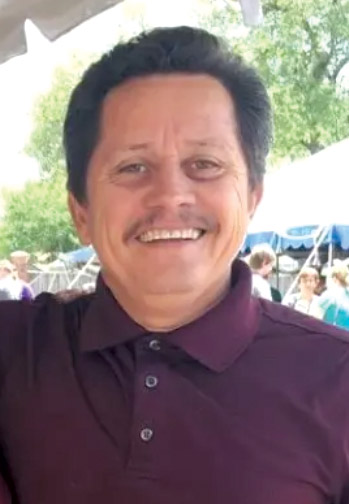
Pedro Alfonso Castaneda died in a Texas crash in 2019 while driving his pickup truck. His family’s lawsuit tests the state’s immunity law protecting contractors.
It started with a horrific crash.
Pedro Alfonso Castaneda, the mainstay of a Texas family of five, had finished shopping at a plumbing supply store on an August afternoon in 2019, when he pulled up in his Toyota Tacoma pickup at an intersection adjacent to a busy highway overpass construction project in Pinehurst, Texas.
Recently installed traffic signals at the intersection, still covered by black plastic fabric, were awaiting the local utility to give the go-ahead to power them up. Castaneda dutifully drew to a stop, a witness said, before he rolled forward, preparing to turn left onto the highway frontage road. He never finished his turn. As Castaneda pulled forward, Juan Carlos Cruz Galva, driving a Chevrolet C/K 3500 pickup and towing a trailer with plumbing supplies and machinery, was moving south, coming from Castaneda’s right, at almost 60 mph. It struck his Toyota on the passenger side, spinning it into the center lane where a third driver, Luis Ventura Alvarado Martinez, was also driving south in a Ford F-250 and also pulling a trailer. Martinez’s front end buried itself into Castaneda’s vehicle—sending it into a nearby ditch, knocking a utility pole to a 45° angle and severing power lines.
The next phase of the calamity took minutes, not seconds, as live power lines that fell across the Toyota ignited its interior upholstery. Firefighters who quickly arrived had to wait until lines were de-energized to extract Castaneda from the unimaginably twisted and mangled Toyota; he was pronounced dead of blunt force trauma and internal injuries.
Felicitas Castaneda, Pedro’s widow, filed a lawsuit on behalf of her family in state court later that year. After switching defendants several times, she accused Third Coast Services LLC, a Cypress, Texas, traffic signal contractor, and SpawGlass Civil Construction Inc., the road project prime contractor, of negligence leading to the accident.
Specifically, the family alleged that Third Coast Services improperly covered the traffic signal heads, confusing Castaneda and violating Texas Dept. of Transportation standards. The lawsuit also claimed that both firms ignored numerous prior accidents at the intersection and failed to modify traffic controls or reinspect signals promptly after an inspection eight months earlier.
Third Coast Services and SpawGlass disputed the charges, saying they were not responsible for what happened on the roads, or what may have triggered a deadly driving mistake by Castaneda in failing to yield to the other vehicles. But their primary legal defense, stated in a motion filed before a trial could begin, has been that, as government contractors, they are immune and can’t be sued. That defense has become a government contracting legal cause célèbre over the issue of immunity.
Third Coast Services and SpawGlass argued that charges against them related to the intersection are moot because while their highway work was under a contract from Montgomery County, the firms had to meet Texas DOT specifications. In essence, the companies said they were working for Texas, and under state law, can’t be sued. Over ensuing months, as the Texas trial court judge and appeals court judge both denied the motion to dismiss and left Felicitas’ lawsuit standing, contractor associations rushed to defend Third Coast Services and SpawGlass—spending tens of thousands of dollars on amicus (friend-of-the-court) briefs buttressing the case for immunity.
Looking for quick answers on construction and engineering topics?
Try Ask ENR, our new smart AI search tool.
Ask ENR →

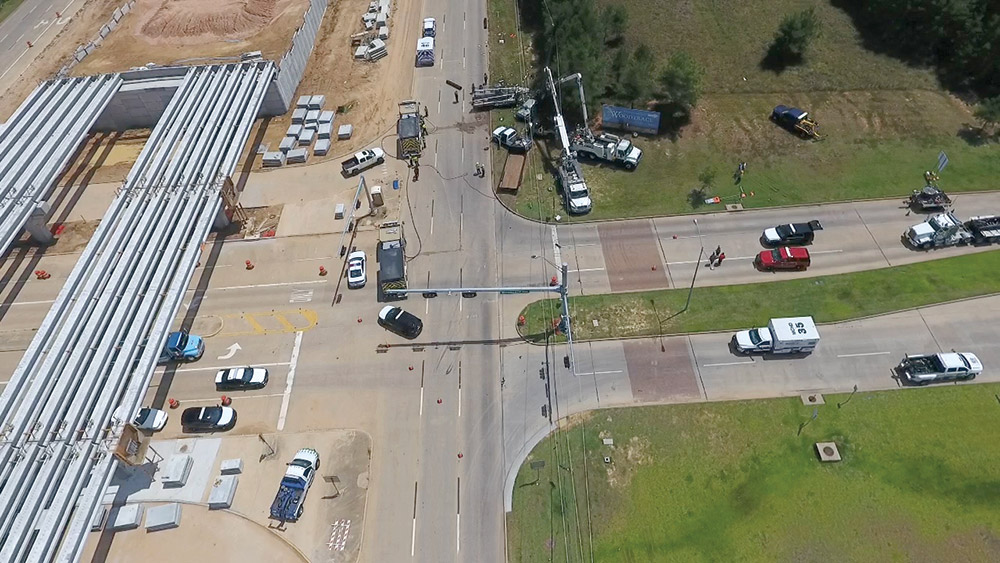
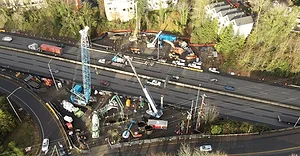
Castaneda’s pickup apparently stopped before pulling into the southbound frontage road lanes (right), where the vehicle was struck by two others moving south at high speed (far right). Castaneda had passed under beams placed by a project construction crew.
Drone photo: Montgomery County Police Reporter
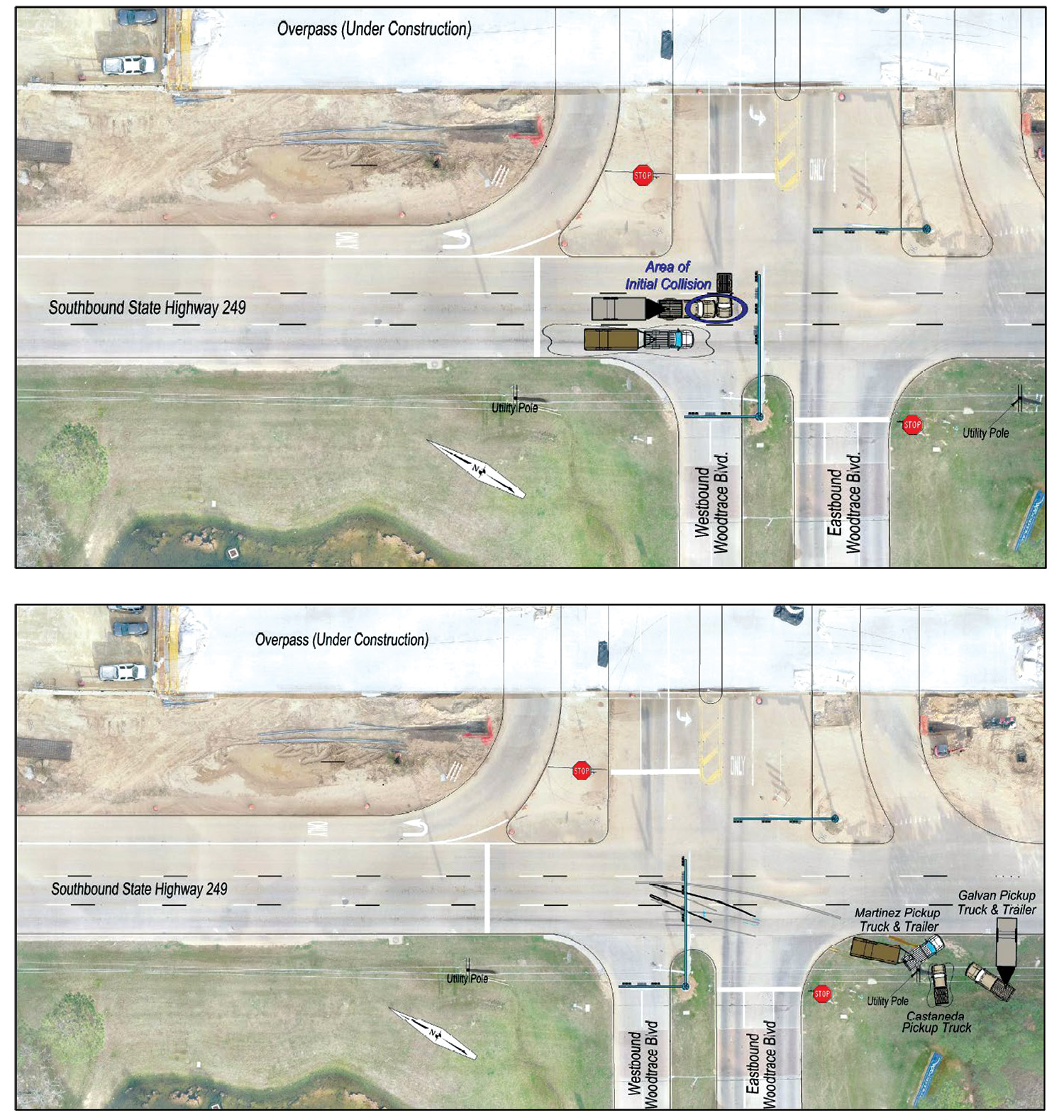
Intersection drawings State Court Filings
Much is at stake. The case is one of a handful of immunity test cases that are pending in state and federal courts involving different government contracting sectors and issues ranging from detention centers for migrants to student loan services. In some of the cases, the key issue is whether the shield provided by immunity laws extends protection to companies that, as servants of government, work on behalf of the public. Without such protection, contractors argue, they would be tempting targets for all kinds of claims, including many nuisance lawsuits that they say raise government contractors’ risks, costs and bid prices needed to offset those costs.
Texas subcontractors have an especially important interest in the outcome of the Third Coast Services and SpawGlass defense, arguing that immunity granted to a state contractor also extends to subcontractors. Brian Carroll, a Belton, Texas attorney, wrote the American Subcontractors Association’s amicus brief. “Why would you give immunity to the general contractor but not to anyone else? It makes no logical sense,” he wrote. “It’s not in our public policy to do that.”
In the end, it will fall to the Texas Supreme Court to decide whether the public also benefits from government contractor immunity laws, as they weigh contractors’ rights and benefits and justice for the Castaneda family. Settlements had been reached with prior defendants, the family’s attorney noted in an interview. But Third Coast Services, SpawGlass and other contractors know that settlements and court verdicts, especially jury decisions, have been rising higher, as have costs of lawyers and expert witnesses involved in lawsuits.
Punitive damages are capped in Texas and limited to twice the economic compensation, plus the amount awarded for noneconomic damages up to $750,000. But state juries have socked defendants with several huge damage awards exceeding $500 million. Such awards, known in legal circles as “nuclear verdicts,” are often cited by insurers for adding to premium increases and lower policy limits. Preserving immunity is the best option for avoiding costly outcomes.
With the Castaneda family’s two victories so far against immunity, its lawyer is sure that the legal argument its case raises—that overly broad immunity allows companies to escape negligence—will resonate with judges in a third judicial test following the contractors’ appeal: a panel of Texas Supreme Court judges in Austin.
“Part of the problem with these types of immunity statutes,” said Castaneda family attorney Casey Gibson in an interview, is that while the laws were meant to resolve things quickly, their lack of definition and clarity on scope results in lengthy appeals that are the “opposite of their intent.” Because the matter is stretched out over time—it is six years since Castaneda’s violent death—“it’s difficult for the family,” she said. “We hope the court will decide all issues and send it back to the trial court.”
At the time in 2022 when the contractors made their first motion to stop the case based on immunity, the two sides in the lawsuit were on the eve of a trial, Gibson said. “We were picking the jury. We were ready several years ago and we’re ready now to get justice for the family.”
Will the US Supreme Court Limit Immunity?
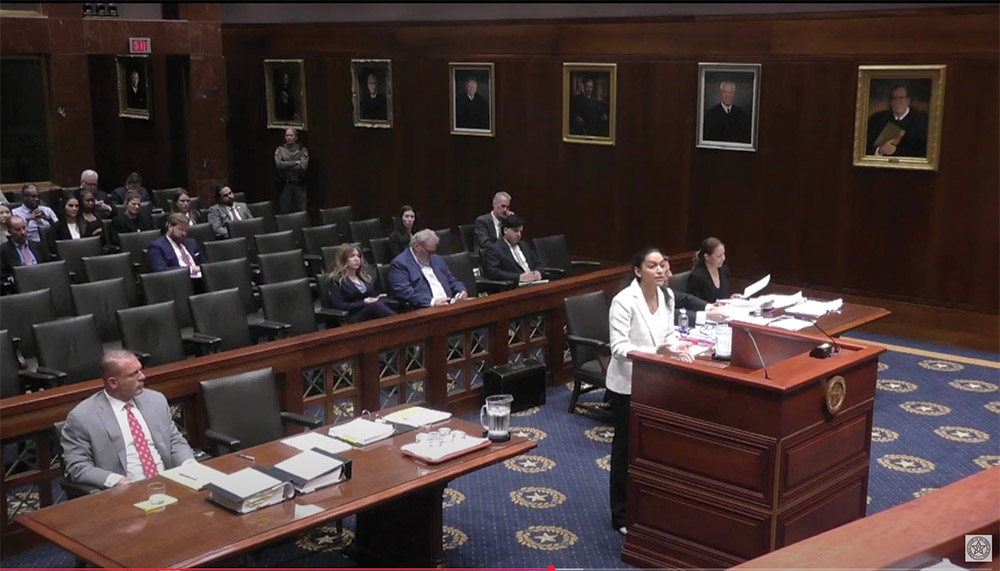
Attorney Casey Gibson (right) argued on behalf of the Castaneda family in Texas Supreme Court in Austin.
Photo: Texas Supreme Court Video Screenshot
Contractors working on federal infrastructure projects, state road projects funded by federal dollars and other types of state construction enjoy an umbrella of immunity from third-party lawsuits. While state laws differ, they are similar in that governments have granted themselves immunity and pass it on to those they hire. If contractors perform their work correctly as agents of government, they are protected. The legal doctrine is known as derivative sovereign immunity, and some lawyers and legal scholars want more limits on it.
For road contractors working on federal or federally funded projects, this immunity is critical. It protects them from liability for work zone accidents, which could arise from government-approved designs or traffic control plans, as long as firms adhere to plans and specifications.
Whether the immunity applies in the case of Third Coast Services v. Castaneda is what the Texas Supreme Court debated recently. The doctrine was codified in 1940 as a result of the case Yearsley v. W.A. Ross Construction Co., in which the U.S. Supreme Court was asked to consider a lawsuit against contractor W. A. Ross for erosion damage on a property where it was building Missouri River flood dikes. The property owner accused the contractor of creating flooding with its work, but the high court justices ruled that Ross could not be sued because it was acting under the federal government authorization and did not exceed its scope of work. It is the Yearsley decision that has led many state transportation agencies to extend immunity to contractors working for them.
Jonathan Glater, professor of law at the University of California-Berkeley, along with Kate Sablosky Elengold, an assistant law professor at the University of North Carolina School of Law, wrote a 2021 law journal article critical of the doctrine. “This shield consists of different legal doctrines, used pretty indiscriminately by corporate defendants that confront civil liability for allegedly harmful conduct,” he said in an email response to ENR. “Such a defendant does not much care which doctrine (sovereign immunity, derivative sovereign immunity, or federal preemption) works to prevent liability.”
One notable case now in federal court is Menocal v. GEO Group Inc., which the Supreme Court began to review in June. The U.S. appeals court in Denver denied immunity to the GEO Group, a private detention contractor, in a lawsuit by Alejandro Menocal, who was detained in an Immigration and Customs Enforcement jail in Aurora, Colo., for four months in 2014 and required to work on cleaning details. He sued in a class action suit claiming the forced labor was illegal and amounted to unjust enrichment.
The GEO Group case draws attention to how contractors must meticulously document precisely what work they are performing and how that work is exactly what their contracts specify.
Glater believes that the high court is poised to intervene in some way to address “what kind of protection may be available to a federal contractor under what circumstances.” But he adds that, right now, “the doctrine is not clear and we think it would make sense to adopt a different approach, asking about the nature of the work a contractor does before determining whether there should be a shield to liability. That is not the law now.”
By Elaine Silver
The Project on SH 249
The Woodtrace Boulevard/State Highway 249 intersection is part of the SH 249 Tollway Mainlane Project, set to expand and improve the highway, including frontage roads and added toll lanes. One phase was a collaboration between Texas DOT and Montgomery County that delegated to the latter control of design and construction. The county hired SpawGlass as general contractor, which in turn hired Third Coast Services as electrical subcontractor for traffic signal installation.
Third Coast Services has been in business since 2004, employing about 35 and generating about $13.2 million in annual revenue, according to Dun & Bradstreet estimates. SpawGlass’ parent company, SpawGlass Holding, is based in Selma, Texas, and ranks at No. 147 on the 2025 ENR Top 400 Contractors list.
In November 2019, Castaneda’s family filed its original suit in state court in Harris County against the two drivers involved in the fatal accident, Galva and Martinez. In February 2020, the family dropped its complaint against the drivers, and one month later, Felicitas Castaneda amended her complaint to instead sue SpawGlass, alleging negligence. Four months later, her suit also included Third Coast Services, alleging negligence partly based on the delayed traffic signal activation.
With the new defendants, the suit’s focus shifted from drivers to alleged negligence in construction zone safety measures, particularly the traffic signals that had not yet operated at the intersection beneath and adjacent to the overpass.
The two companies both denied any wrongdoing and said that they fully complied with their contracts. They sought to have the suit dismissed by invoking Texas Civil Practice and Remedies Code §97.002. It protects contractors working on Texas DOT highway projects with immunity if they comply with contract documents. Defendants also argued that their work on the SH 249 project, designed and approved by the DOT, and with the project’s electrical permit in its name, qualified as working for the agency, even though the SpawGlass contract was with Montgomery County.
The contractors cited a prior case holding that a direct contract with Texas DOT, known in legal terminology as privity, is not required to receive immunity. The trial court nevertheless denied the firms’ summary judgment motions to dismiss the case. Third Coast Services and SpawGlass appealed the denied motion to the Texas Court of Appeals, but it ruled that a direct contract with Texas DOT was, in fact, required for contractors to receive immunity.
The companies then contested that loss in another appeal, this time to the state Supreme Court. That set off alarms for subcontractors, many who believe they are only one accident away from financial trouble or even being forced to close down.
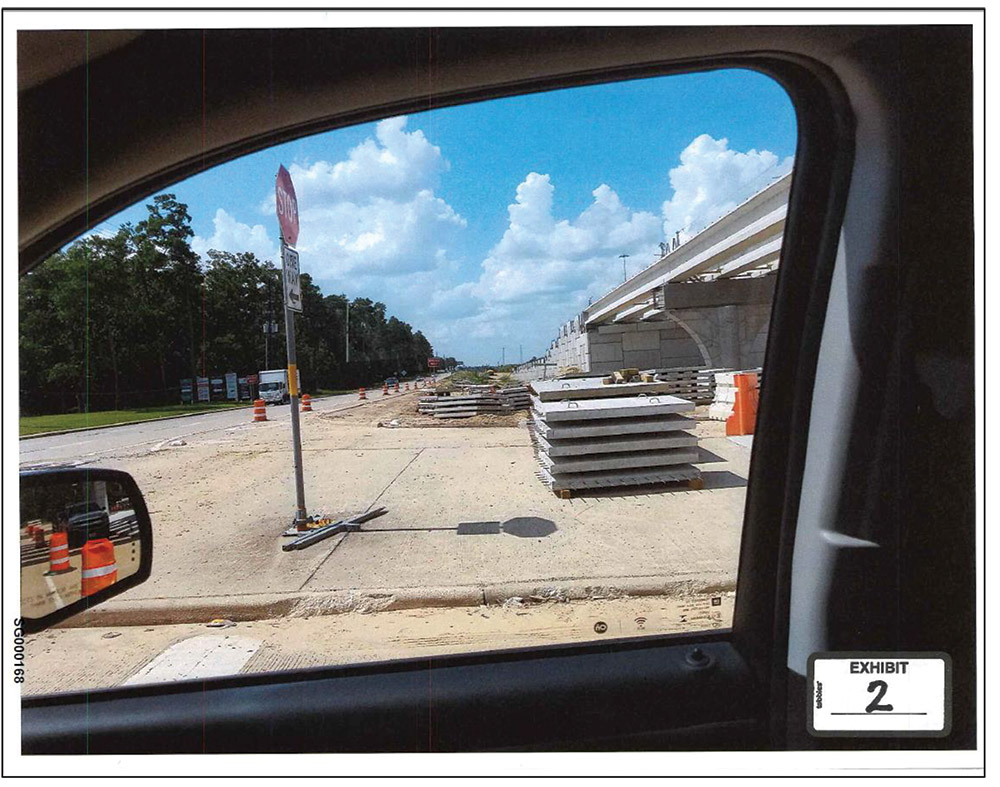
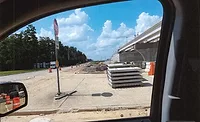
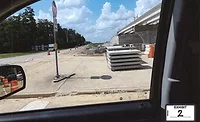
The stop sign, seen below, is where Pedro Alfonso Castaneda sought to make his left turn while new traffic signals had not yet been activated.
Photo: Texas State Court Filing
The Importance of Immunity
Each state has its specific laws and regulations concerning privity on DOT and other public works projects.
Some 45 states have similar laws to Texas’ §97.002, which provides immunity that shields contractors, and in some cases, subcontractors as well, from liability for defects in DOT-furnished plans—if contractors substantially comply with the terms of their contracts. This can shift risk without requiring that the subs themselves are working under a direct contract with the state DOT.
Florida, New York, California and Illinois protect subcontractors even without direct DOT contract privity. Georgia, Ohio and Michigan provide subcontractors some protections, but they must prove compliance, and privity is often required for direct lawsuits. North Dakota, South Dakota, Wyoming and Nebraska have the most restrictive laws, leaving subs the most exposed to lawsuits.
Things seem more straightforward related to federal government work. Contractors are protected from suits under federal laws and regulations that include the Federal Acquisition Regulation, Contract Disputes Act and Anti-Deficiency Act. Those measures shield a contractor from defects in government plans and losses the defects may cause if the company complies with its contract. The benefit of immunity is passed from government to the prime contractor to subcontractor.
However, there are legal scholars who believe, in general, federal contractor immunity has gone too far.
In a 2021 Stanford Law Review article entitled “the Sovereign Shield,” university law professors Kate Sablosky Elengold and Jonathan D. Glater make the case that the federal government’s expanding use of private contractors, estimated at $579 billion annually at the time of the article, has led to abuses. They believe contractors are able to escape direct accountability for negligence that is sometimes described as preemption, derivative sovereign immunity or intergovernmental immunity.
The authors use the example of the student-loan servicing industry, portraying it as a nest of these abuses that flourish behind an immunity shield and allows them to avoid state consumer protection laws or negligence claims.
The contracting alliance between the federal government and private companies, Elengold and Glater write, “shifts the balance of power in favor of the federal government at the expense of the states, in favor of the executive branch at the expense of the legislature and in favor of private enterprise at the expense of consumers.”
The authors call for “judicial clarity, congressional reforms to curb outsourcing and vigilance to prevent this ‘quiet’ power grab from destabilizing constitutional principles,” as a way to remedy the imbalance that these protections create.
Business Rallies Behind Contractors
The business community, including contractor associations, are trying to head off the ideas championed by Elengold and Glater before they become embedded in case law.
Amicus brief legal filings play an important role in industry specific lawsuits that tackle complex legal statutes. Judges cannot be expected to know and understand all possible effects of their rulings, so the briefs are often submitted by industry groups whose members are directly affected by both the implications of the lawsuits and any new rulings the judges make.
In the appeal pending in Texas Supreme Court for Third Coast Services v. Castaneda, amicus filings from industry groups such as American Subcontractors Association and Associated General Contractors emphasized subcontractor risks and that contractor immunity was in both the letter and the spirit of the law.
In its amicus brief to the state Supreme Court, the subcontractors’ group said that 80% to 90% of work on highways is performed by subcontractors. The organization advocated for extending immunity to them. Separately, a group of 10 construction companies filed an amicus brief to support SpawGlass and Third Coast Services. The signatories include several Top 400 Contractors such as Rogers-O’Brien Construction, Graycor Inc., Nabholz Construction Corp. and SEMA Construction Inc.
In the brief, they cautioned the court that requiring direct privity for immunity to apply means that any governmental entity, such as the Montgomery County Toll Road Authority, which contracts with the Texas DOT, can expect “a decline in bids for performing the type of work” because of the higher risk.
Prices from bidders also will be higher and “the ability for work to be conducted safely, efficiently and timely on these types of projects will become impeded,” the companies claimed, which “then results in a cascading effect across other industries [that] utilize the road system being constructed or improved,” the brief further states.
Carroll, the national subcontractors’ group attorney, said in an interview that his concern is “that a subcontractor is building a public infrastructure project and it is complying with all the plans and specifications, but even then it can get sued.”
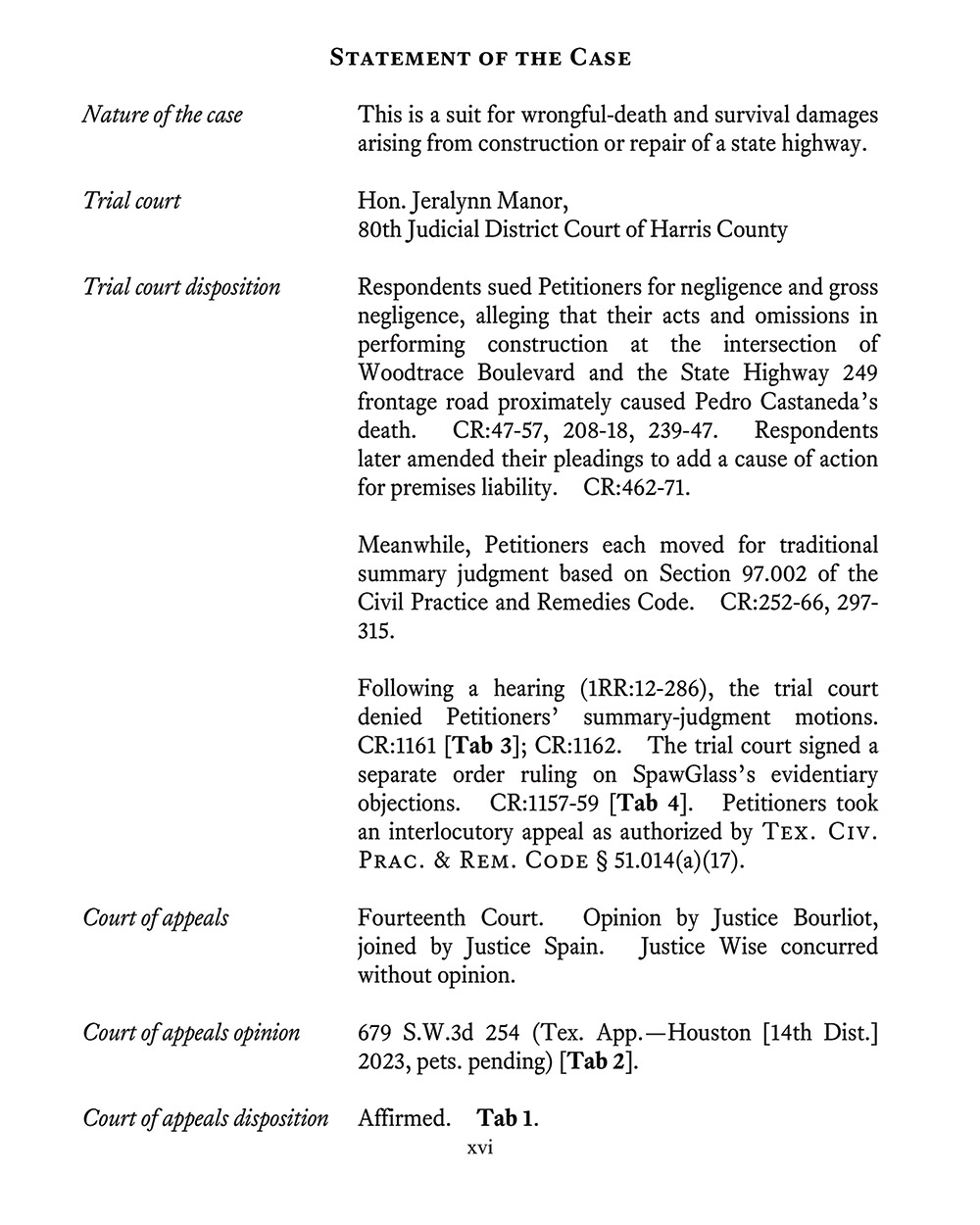
Third Coast Services and SpawGlass have made two attempts as defendants to forestall a trial over alleged negligence by seeking a case dismissal based on immunity.
Oral Arguments in Austin
An Austin courtroom was the most recent place where the Castaneda case continued. As with many legal issues, this one boils down to a definition: the word “for.” Were the contractors working for Texas DOT or for Montgomery County?
The Texas Supreme Court judges filed into the courtroom for oral arguments on Sept. 9. Portraits of statejudges hung on the wall. Attorneys were already at their opposing tables in the front, but seats for observers were only sparsely filled.
Third Coast Services’ counsel, Anthony T. Golz, stood up first. He argued that Texas § 97.002 immunity applies to its client and to SpawGlass by asserting that the statute’s “for TxDOT” phrase covers contractors improving the state highway system. The statute protects those constructing or repairing any part of the state highway system, he told the judges, such as the traffic signals on SH 249’s frontage roads, which are part of the system and benefit the state DOT. In other words, the improvement is “for” the agency. Golz backed up his claim, referring to an email that requires compliance with Texas DOT standards for post-project operation in the spot where Castaneda had his fatal car accident.
Even though Montgomery County was in charge of the project, based on the Transportation Code, TxDOT has control over highway improvements, Golz argued, so Third Coast Services qualifies for protection regardless of privity, meaning that while SpawGlass’ contract was with Montgomery County, the subcontractor can’t be sued.
The Castaneda family counsel, Gibson, went next. She countered that the statute in fact is clear that SpawGlass and Third Coast Services were not working “for” Texas DOT because the statute does require direct privity—having a contract directly with the agency, not just compliance with its standards.
“In this case, the legislature specifically chose to use the language, TxDOT. They didn’t use TxDOT specifications. They didn’t use TxDOT design plans,” she said. “The statute cannot be segregated. The very first part of the statute refers to a contractor, one who contracts.”
Justice Brett Busby seemed to challenge Gibson with the analogy that if the air conditioning system is broken in the Supreme Court, when the facilities manager calls in repair personnel, they are working for the court, even if the facilities manager hired them. In this case, responding to justices’ hypotheticals about control and location, Gibson clarified that the legal test focuses on the contractor-state DOT relationship, and not geography—echoing the logic by the Court of Appeals’ ruling that contractors hired by Montgomery County do not qualify for state immunity.
A ruling is expected by next March, so six years since the crash in Montgomery County, the legal saga remains unresolved. A judge or jury has never evaluated all of the evidence about the accident in a trial, and maybe they never will if immunity stands up. Either way, the risk landscape in Texas will be defined by what at first seemed like an ordinary overpass project and a tragedy that took the life of Pedro Alfonso Castaneda.
With reporting by Richard Korman