Transmission Infrastructure
Trump DOE Issues First Loan, $1.6B, for Five-State AEP Grid Upgrade
Funding comes as Energy Dept. and FERC are set to push rule to "rapidly accelerate” grid links of power loads larger than 20 MW, such as for data centers
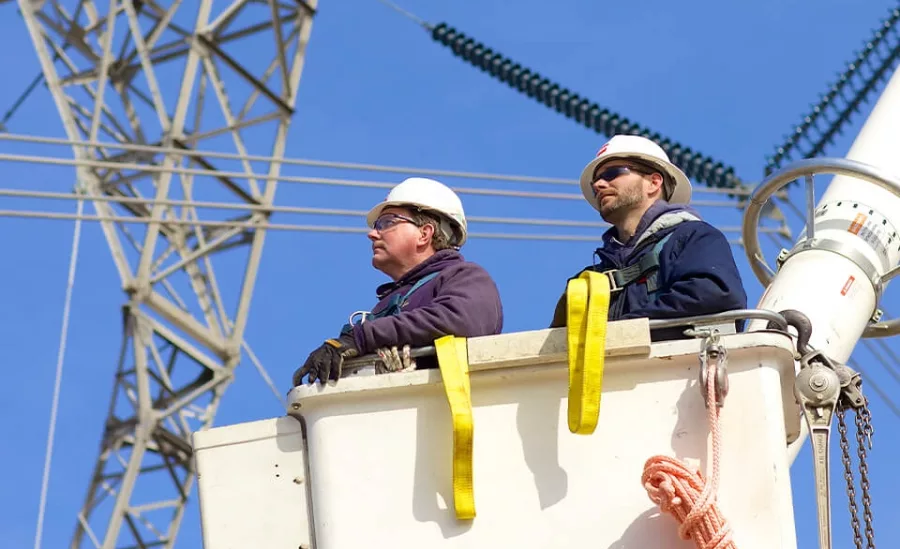
US Energy Dept finalized what it said is the first federal loan guarantee—$1.6 billion to utility American Electric Power to support rebuilding 5,000 miles of high-voltage transmission line in Indiana, Michigan, Ohio, Oklahoma and West Virginia.
The U.S. Energy Dept has finalized what it said is the first Trump administration loan guarantee—$1.6 billion to utility American Electric Power to support reconductoring and rebuilding of 5,000 miles of high-voltage transmission line in Indiana, Michigan, Ohio, Oklahoma and West Virginia carrying mostly fossil-fuel-derived power.
The project received the funding conditionally from the Biden-era department’s Loan Programs Office in January, as part of $23 billion in assistance DOE offered to eight utilities for investments in transmission, energy storage grid modernization and gas pipelines.
The AEP funds gained final approval by the now renamed "Energy Dominance Financing Program," Energy Secretary Chris Wright said during a media briefing on Oct. 15, noting he was “happy to move forward" to support the work, which is claimed to generate 1,000 construction jobs.
According to AEP, total project cost in the five states is $3.56 billion.
The company is “experiencing growth in energy demand that has not been seen in a generation,” company Chairman Bill Fehrman said.
About 2,000 miles of line work in Ohio and 1,400 miles in Oklahoma, costing $1.9 billion and $767.2 million, respectively, are the first and largest projects supported by the loan, according to the utility.
Contractors will be selected “on a project-by-project basis,” said an AEP spokesman.
Looking for quick answers on construction and engineering topics?
Try Ask ENR, our new smart AI search tool.
Ask ENR →
“This is a good project,” Energy Secretary Chris Wright told media. "Not all of the [Biden-era] projects were nonsense.”
He defended the agency's cancellation in July of a $4.9-billion Biden-era department loan guarantee to the planned first phase of the Grain Belt Express, a new high-voltage transmission line being developed by Invenergy to deliver solar and wind power from Missouri to Indiana.
Wright pointed to the project's higher per mile cost as a new line, with unclear power buyers. “Ultimately that is a commercial enterprise that needs private capital,” he said, also questioning if the project could even meet strict federal loan financial conditions required.
DOE Directs FERC on Large Power Loads
The funding comes as the department—in what energy sector observers term a legal but “unusual” move—told the Federal Energy Regulator Commission on Oct. 24 to finalize the cabinet agency's own proposed rule to have FERC "rapidly accelerate” grid interconnections of power loads larger than 20 MW, such as for data centers.
Strategy firm Capstone DC said Oct. 24 that the rule raises “significant legal questions over federal vs. state jurisdiction,” and that investor-owned utilities are “very likely to object to the DOE’s interpretation."
Adding to controversy over whether FERC adding large loads impedes states and grid managers' authority to regulate power service, Wright wants the commission to have the rule final by next April 30, an extremely fast action for such a complex regulation.
Leading the rulemaking now will be Laura Swett, FERC's third Trump administration chair, whose elevation from commissioner also was announced Oct. 24. A Republican who was a FERC adviser and staff attorney, she succeeds Democrat David Rosner who remains a commissioner along with new Republican David LaCerte.