Legal
US Judge Halts Trump Stop-Work Order on Rhode Island Offshore Wind Project
Work halt on nearly done $6B union project would cause "irreparable harm," DC judge said, as Canada propels offshore wind market that could send power to the US.

Federal judge ruled that Trump administration order to halt work on $6-billion project off Rhode Island would cause "irreparable harm
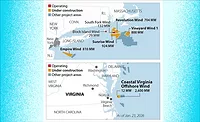
A Washington, D.C,. federal district court judge lifted on Sept 22 the Trump administration block to finish construction of the 80% completed 704-MW Revolution Wind offshore wind project 15 miles from the Rhode Island coast.
Judge Royce C. Lamberth, a Reagan administration appointee, granted the request of developers Orsted and private investor partner BlackRock for a preliminary injunction so work can restart on the estimated $6 billion project that was halted Aug. 22. while a U.S. Interior Dept. review continues of claimed impacts to U.S. national security and to ocean site “other uses.” The judge termed the US Justice Dept. defense of those shutdown triggers as “the height of arbitrary and capricious."
Construction will resume “as soon as possible,” said Orsted, noting that 45 of its 65 turbines are installed.
“This ruling will put people back to work,” said Rhode Island Gov. Dan McKee, noting optimism that the court will continue to support the project as the lawsuit plays out. Its power will be split by the state and Connecticut.
Revolution Wind provides more than 1,000 union construction jobs, Orsted said.
“There is no question in my mind of irreparable harm to the plaintiff,” Lamberth said during an earlier hearing, adding that without a work restart, the “entire enterprise could collapse” and project delay could jeopardize use of a specialized installation vessel needed to complete work.
Revolution Wind attorneys had argued that the stop-work order is illegal and “reflects a shockingly expansive theory of agency power to undo prior regulatory approvals."
Looking for quick answers on construction and engineering topics?
Try Ask ENR, our new smart AI search tool.
Ask ENR →
Offshore wind sector analyst Philip Totaro, CEO of research firm IntelStor, speculated that the shutdown was intended as a negotiating tactic with Rhode Island and Connecticut leaders related to natural gas purchases. The states did not confirm the contention, but Connecticut Gov. Ned Lamont said it "will continue to engage with the federal government on a durable path forward for this project and on shared energy priorities.”
Trump halted in May his monthlong shutdown of the 810-MW Empire Wind project off New York after talks with Gov. Kathy Hochul related to resuming work on two possible gas pipeline projects in the state, which she has denied. But the projects are moving forward now in the state permit process, and last week, the Northeast Supply Enhancement pipeline from Pennsylvania to New York City was approved by New York's top utility regulator.
“We are pleased with the court’s decision and the opportunity it brings to return nearly 1,000 skilled building trades craft workers to the jobsite," said Sean McGarvey, North America’s Building Trades Union president, who noted in an earlier statement that "tens of thousands" of union jobs were eliminated in the first six months of the Tromp administration.
An Associated General Contractors spokesperson told ENR that any step “that allows needed infrastructure improvements to advance is welcome news.”
Totaro also noted that U.S. could appeal the injunction that could generate new litigation and risks for Orsted and BlackRock of non-compliance with other issued permits, as well as schedule risks to their nearby 924-MW Sunrise Wind project also under construction to supply power for New York.
Orsted told investors earlier this month that the shutdown was costing project partners at least $25-30 million per week.
Meanwhile Canada moved forward last week to take east coast offshore wind market share from the U.S., announcing Sept. 20 that its utility regulator will launch a process to attract investors and prequalify bidders in its developing sector. The Nova Scotia and Canada governments designated the nation’s first four offshore wind areas in July toward a proposed 40GW sector goal that could be auctioned off in Canada’s first offshore wind leasing round for 5GW, possibly this year.
“Today’s announcement is another leap toward Canada becoming the global supplier of choice for energy and supporting our long-term energy security,” said Tim Hodgson, Minister of Energy and Natural Resources.
The two Atlantic provinces set for offshore development, Nova Scotia and Newfoundland & Labrador, have only about 1.5 million residents combined and low power demand. Nova Scotia's 40GW target would generate nearly 30% of Canada's entire power demand and possibly could reach the U.S. via a massive subsea cable, said sector publication Recharge.


.webp?height=200&t=1766484839&width=200 "Wind-Farm-Pause-(2)")