2025 ENR Top 250 International Contractors: Market Volatility Flatlines Gains
August 20, 2025
2025 ENR Top 250 International Contractors: Market Volatility Flatlines Gains
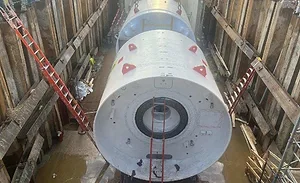
August 20, 2025Kalyon is working on the 308.3-km Black Sea–Podisor gas pipeline project in Romania that will connect the country's offshore natural gas deposits with Austria, including a section that crosses under the Danube River.


Related Links:
ENR 2025 Top 250 International Contractors
ENR 2025 Top 250 Global Contractors
View complete 2025 list, with full market analysis
(Subscription Required)
Challenges abound for the Top 250 International Contractors as revenue numbers show regional conflicts—with supply chain disruptions and cost volatility rocking some global markets and roiling others to a point of diminished returns. But as project challenges increase in complexity, contractors say they are sharpening their core services and harnessing regional relationships.
Marginal revenue gains among this year’s Top 250 firms could signal a deepening change of tide in a construction industry plagued by unpredictable and rapid fluctuations in costs of materials, labor and equipment.
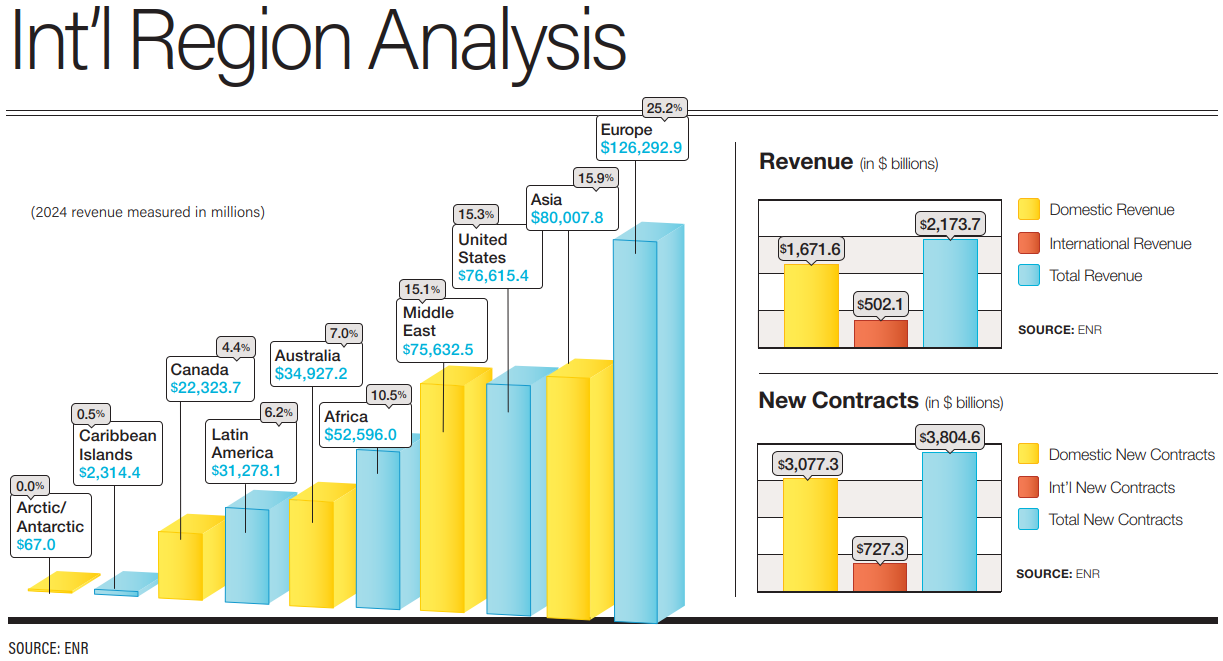
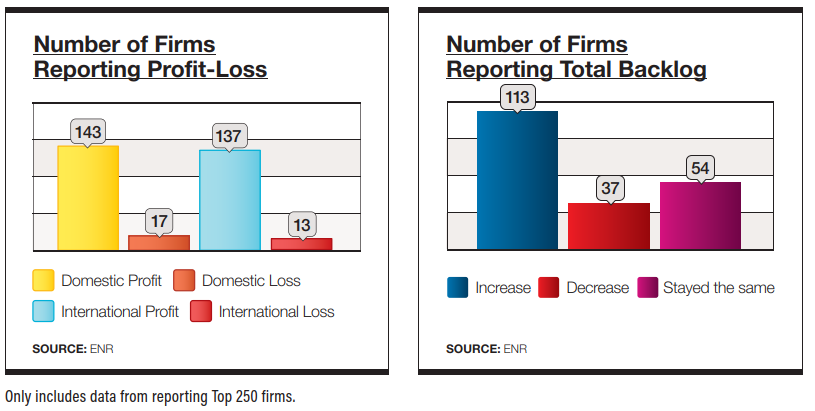
Overall, Top 250 revenue increased 0.5% from 2023 to 2024, to $501.2 billion. In turn, this marginal growth drove down median international revenue 2.7% to $464.36 million, from $477.07 in 2023. Of the companies that filed this year and reported a profit or loss, 91.3% said they were profitable in 2024.
While international contractors have been value engineering their way through heightened inflation and skilled labor shortages for years, intensifying economic uncertainty and regional conflicts are pushing some markets to a tipping point, firm executives told ENR in comments.
“The global economic recession that began with the pandemic in 2020, and especially the recent war in countries near our areas of operation, creates uncertainty and supply chain disruptions,” says BCM Holding Chairman Baran Çoktin, whose firm is ranked No. 136 on the Top 250 list. He adds that uncertainty “impacts input and logistics costs in the construction sector, increasing costs and reducing profit margins.”
Even as contractors innovate to push projects forward, Çoktin says risks associated with unpredictable political and policy shifts and high labor and land costs can ultimately spook investors into inaction. He predicts that the majority of contracting expenses next year will be “mostly in labor [and] material costs due to economic crises” and in transportation “due to increases in petroleum products.”
Ali Tamince, Sembol Construction executive board chairman, adds that navigating regulatory environments and cultural differences can compound the complexity of international contracting. To increase project success, he says the No. 146-listed firm has “established local partnerships to ensure compliance and cultural alignment.” Sembol has also implemented advanced project management software to “enhance supply chain visibility and financial risk management,” Tamince adds.
Increased investment in technology and regional resources by Top 250 contractors reflect what Besix Group CEO Pierre Sironval calls a “defining shift” in international markets that recognizes the “value of collaborative contracting.” The Brussels-based firm is ranked No. 47.
Looking for quick answers on construction and engineering topics?
Try Ask ENR, our new smart AI search tool.
Ask ENR →
With today’s “technically complex projects, traditional contracting models often place disproportionate risk on the contractor while the client retains most of the reward,” he notes. “This imbalance can erode trust and hinder progress” in a rapidly shifting market.

Market Ups and Downs
After explosive double-digit growth over the past two years, 2024 revenue data shows manufacturing and industrial process sectors have contracted the most, at 3.3% and 10.6% respectively. Top 250 contractors doing business in the oil and gas sector saw revenue fall 13.6%, with those in hazardous waste reporting a 10.6% decline. But sewer and waste sector revenue was up 18.4% for listed firms, also rising 14.2% for those in the telecommunications sector and 12.2% in water supply.
Behind the numbers, many Top 250 contractors says they are leaning into a business strategy that prioritizes refining core services such as tunneling, oil and gas infrastructure and site development over expanding into new sectors and contracting markets.
“Our success is primarily driven by projects within the [oil and gas] sector, along with industrial, environmental and renewable energy initiatives,” says Khaled Ibrahim, chairman and managing director of the No. 230-ranked Egyptian Maintenance Co. Over its 25-plus years in operation, he says the contractor has developed a reputation for overcoming challenges that has allowed it to become “a trusted partner for integrated maintenance services. Ibrahim adds that “high-profile projects in sectors such as oil and gas, petrochemicals and water treatment have significantly enhanced our market presence.”
Similarly, the Arab Contractors (Osman Ahmed Osman & Co.) has cemented its position as a key international contracting player in Africa and across the Arab Gulf region over several years by strategically focusing on transportation, road infrastructure, water and energy projects and urban development, says Chairman Ahmed El Assar. The contractor is ranked No. 93 on the Top 250 contractors list.
Knowing the 'Landscape'
“Sustaining long-term operations in Africa requires more than just technical expertise; it demands close coordination with government authorities, continuous market research, and deep understanding of the political and economic landscape in each country,” El Assar points out. “Identifying promising opportunities and aligning with national priorities is key.”
Despite the abundance of opportunities, challenges remain across various African nations. “One of the most pressing challenges involves securing adequate project financing,” he says.
Top 250 revenue in the Caribbean region increased 37.7% between 2023 and 2024. The Middle East and Australia regions also saw double digit revenue growth at 17.7% and 13.9%, respectively. But Top 250 revenue reported in Latin America decreased 9.9% between 2023 and 2024, after growing 77.2% between 2021 and 2023.
Firms did report an increase in the total of international new contracts—rising 7.6% to $727.3 billion this year, from $676.1 billion on the 2024 Top 250 survey. Backlogs also remained solid, with 55.4% of firms reporting a backlog status change, indicating a growth in the past year.

Managing Costs
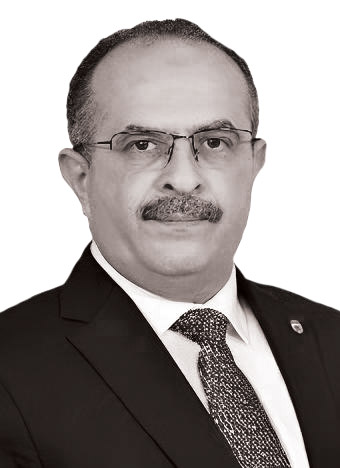
“Identifying promising opportunities and
aligning with national priorities is key.”
Ahmed El Assar, Chairman, The Arab Contractors
Overall, global supply chain disruptions have created a domino effect of rising costs in the form of material delays and price fluctuations. Amid rising geopolitical tensions provoked by shifting trade policies, Turkey-based Dorçe says customs duties and import restrictions can be unpredictable, especially in the firm’s key regions such as the Middle East, Africa and parts of Asia.
“These factors increase overall project costs and extend delivery timelines,” says firm General Manager Doruk Coşkunsu. He adds that the contractor, ranked at No. 229, has seen some countries provide “broad export incentives to their domestic contractors, enabling them to operate more competitively and profitably in overseas markets.” In turn, “this creates a disproportionate advantage for some global players, particularly when bidding in highly price-sensitive tenders,” he points out.
To address such international challenges, Coşkunsu says Dorçe has shored up its in-house design, engineering and modular production capabilities, enabling the construction firm to better manage costs and timelines across its markets. The contractor has also “diversified and regionalized our global supplier and logistics network, allowing us to adapt quickly to country-specific constraints,” he says.
Remzi Demircan, CEO of Turkey-based MBD Insaat Sanayi ve Ticaret A.S., says the No. 174-ranked firm’s growth in recent years has been driven by its domestic market in Turkey.
“Our costs have been mainly affected by Turkey's macroeconomic conditions and the basic dynamics in the construction sector—in particular, due to the earthquakes in 2023 and exchange rates hovering below inflation and labor costs increased above material costs,” says Demircan, who adds that he is beginning to see rapidly rising commodity prices level out.
“For 2026, we anticipate that we are nearing the end of the volatility cycle of global commodity prices,” according to the executive. Domestically, he further predicts “the rate of increase in labor costs to remain below that in material prices, as exchange rates will continue to move in line with inflation and construction projects in the post-earthquake region will slow down.”
Demircan adds that “our expenses in 2026 are likely to increase mostly in material procurement and especially in FX-based commodity costs. Labor costs, on the other hand, will be more balanced in line with the current macroeconomic and sectoral dynamics.”
Yet how and where international contractors anticipate their costs rising are often intimately tied to their specialities and the regions in which they complete the most work. For Orkun Group, ranked at No. 234, its Africa Deputy Director, Mustafa Tabakoğlu, says the firm expects its most significant expenses next year to be increases in labor costs, logistics and equipment.
“This is primarily due to the expansion of our project portfolio and the acquisition of new contracts, many of which are located in Africa,” says the executive. “Operating in these regions often presents supply chain challenges that can drive up both transportation and procurement costs,” Tabakoğlu contends. “Additionally, increasing demand for skilled labor and equipment further contributes to rising expenses.”
Hospitals | By Jonathan Keller
Cairo's Heart Center Has Complex Curves
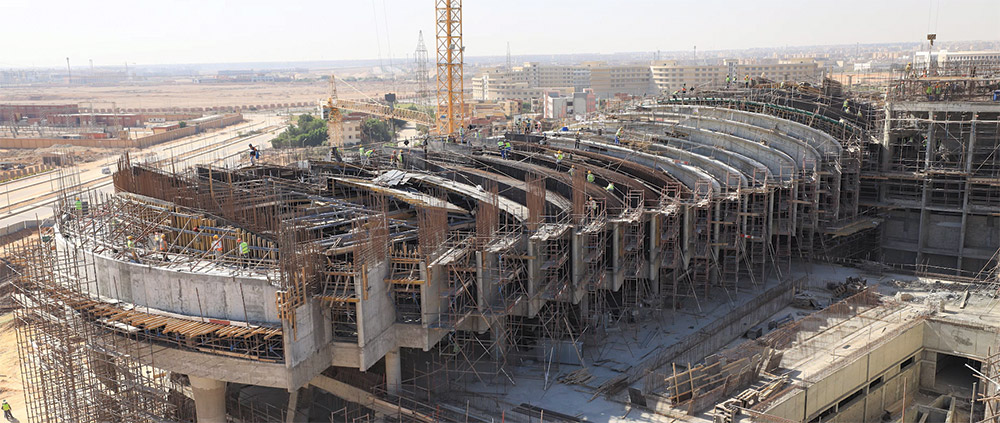
Photo courtesy of Ehaf Consulting Engineers
Orascom Construction (No. 40) is finishing work on the Magdi Yacoub Global Heart Center in Cairo. Designed by Foster + Partners, with EHAF and DAR consulting, the hospital will feature 88 concrete curved sections spread across four roof segments. The team used a 12-axis robotic formwork system to create the sections. The 85,000-sq-m facility is expected to host 120,000 patients annually, free of charge.
Ripples of ‘America First’
For many Top 250 contracting firms, U.S. President Donald Trump’s trade policy—and its accompanying tariffs announced on April 2—have added surprise costs to materials procurements. While some contractors have opted to take a wait-and-see approach on how the tariffs will progress, others are preparing for how they will impact operations in the long-term.
“We anticipate expense increases due to increased and additional tariffs and toughened import regulations,” says Baturay Konak, CEO of ONUR Group, ranked at No. 166.
“Also the current international political circumstances such as the Russia-Ukraine war and the political environment in the Middle East may pose risks for [increased] contracting expenses, which may emanate from [higher] petrol prices, labor shortage and other factors," he explains.
For Mesa Holding Inc., ranked at No. 210, co-owner and CEO Mert Boysanoğlu says tariffs and customs restrictions have created logistical challenges—particularly in importing mechanical, electrical and plumbing equipment and facade systems from Western Europe and Asia.
“To strengthen our procurement resilience, we have regionalized our supplier network, developed strategic stock points, and implemented advanced demand forecasting tools across all international projects,” he says.
Periods of international uncertainty are not good for economic activity, adds José Manuel Loureda, business development director of Sacyr Engineering and Infrastructures and Sacyr Water. Loureda says the contractor, ranked at No. 34 this year, is increasingly seeing contracts adjusted due to changes in tariffs and regulations.
“The most problematic increases in materials are steels of all types, bitumen for asphalt in roads and cement for concrete,” he adds. “Therefore, the evaluation and professional management of purchases are increasingly relevant for companies in our sector.”
Hydroelectric | By Jonathan Keller
New Hydroplant Powers Up Tanzania
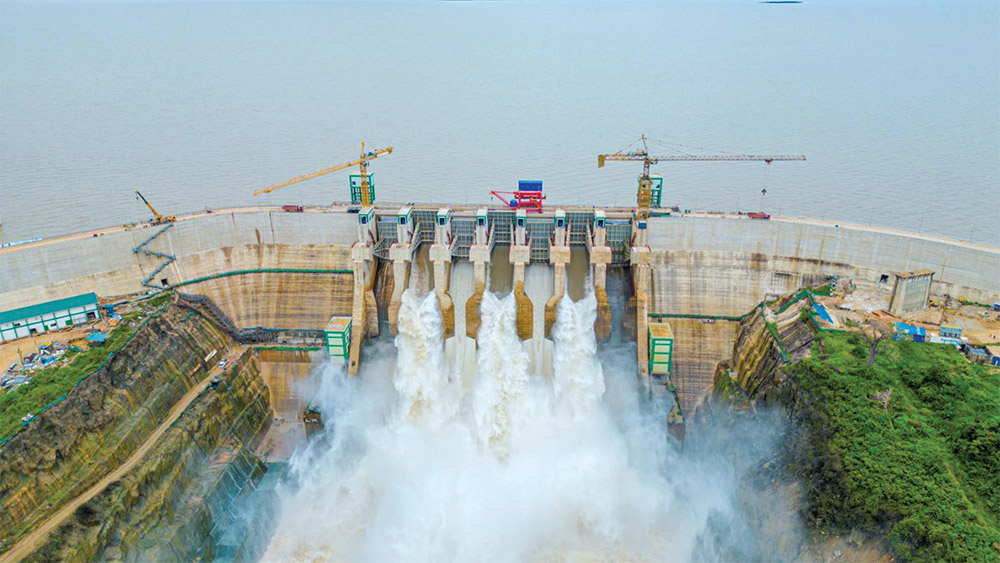
Photo courtesy of The Arab Contractors
The final turbine was activated in April on the Julius Nyerere Hydropower Plant in Tanzania. Built by the Arab Contractors (No. 93) in JV with Elsewedy Electric, the project required 2.6 million cu m of concrete with 4 million cu m of excavation. The plant has installed power capacity of 2.1 GW. Tanzania had only 1.6 GW as of 2021, says the U.S. International Trade Administration.
Tariff 'Contingencies'
Still, Skanska President and CEO Anders Danielsson cautions that “it remains to be seen how tariffs and macroeconomic uncertainty will continue to evolve during this year and into next year.”
According to the executive, the contractor has implemented strong coordination across its teams, customers, partners and strategic supply chain group to monitor and respond to evolving tariffs.

“It remains to be seen how tariffs and macroeconomic uncertainty will continue to evolve during this year and into next year.”
Anders Danielsson, President, CEO, Skanska
“Some of our contracts include tariff contingencies and escalation clauses, as do many of our public sector contracts,” says Danielsson. “What has been clear since the pandemic, during the war in Ukraine and now when we have uncertainties surrounding international trade is that you have to have high focus on the overall supply chain—securing material and costs early.”
Top 250-listed contractors overwhelmingly reported that labor shortages have continued to be top of mind across all regions where they do business. However, the companies say that shifts in project delivery models, preconstruction services and prefabrication are pushing the industry as a whole to require more skilled hands on deck to remain competitive and flexible.
For Dorçe, tapping into and strengthening local labor markets is a “core pillar” of the contractor’s global project delivery strategy, says general manager Coşkunsu. He emphasizes that this is in line with the company’s “commitment to localization and inclusive development.”
Sacyr’s Loureda adds that market trends are oriented toward “promoting collaborative models" where the “administration carries out joint development with companies, and arrives at a selection process of the chosen company with greater knowledge and more control over the project.” But he adds that a shortage of skilled labor remains one of the Spanish contractor’s “biggest challenges.”
Greater collaboration has resulted in Ghella S.p.A., ranked No. 73, strengthening its safety record through coordination by its health and safety, production and engineering departments, with company suppliers throughout all project phases.

In multicultural and multidisciplinary environments, collaboration is “key to delivering safe, integrated and efficient operations worldwide,” says Massimo Maffucci, Ghella overseas tunnel division manager.
Across his company's work in the infrastructure sector, Guillermo Lorenzo, CEO of Infrastructures, Engineering and Services for COMSA Corporación, says there is a collaborative “commitment to sustainability and digitalization, and the need to innovate and optimize processes to maintain competitiveness.” He adds that projects in the railway sector have been the main drivers of the No. 155-ranked contractor’s international work.
Loureda says that any “periods of international uncertainty are not good for economic activity.” Yet the international construction industry “successfully weathered the shocks of the COVID-19 pandemic and the war in Ukraine, and we are confident that we will do so again if new difficulties arise,” he says.