Renewable Energy
Google Secures Approval for Geothermal to Power Data Centers
Meta also eyes fracking for geothermal efforts
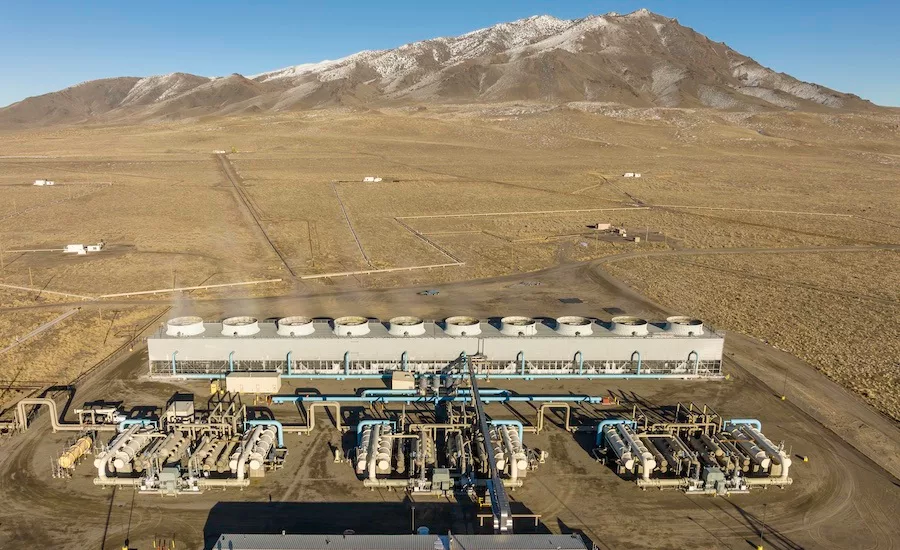
Project Red, a 3.5-MW geothermal commercial pilot project developed by Fervo Energy in northern Nevada in partnership with Google, drilled a horizontal well pair for commercial geothermal production in 2023.
Photo courtesy Google
In their quest to source lower-carbon energy to the electric grid, technology titans Google and Meta are investing in geothermal energy to power data centers as demand grows nationwide.
In Nevada, Google advanced toward its goal of round-the-clock lower-carbon power for its data centers and office campuses by 2030 with approval on May 13 by the state Public Utilities Commission for what Chris Mussett, a Google spokesman in Mountain View, Calif., claims is an unprecedented energy supply agreement to help power its data centers and the cloud region in the state
“The U.S. Dept. of Energy found that geothermal energy could provide up to 120 gigawatts of reliable, flexible generation capacity in the U.S. by 2050 and generate over 16% of the U.S.’ anticipated electricity needs,” a Google blog says.
Data centers under construction in North America grew by more than 60% from 2016 to 2023, says the U.S. Census Bureau’s Quarterly Workforce Indicators report. Consulting firm Peak Strategies predicts peak demand in summer will rise by 38,000 MW in the U.S. over the next five years.
Agreement Unlocks Geothermal Capacity
The power supply agreement, announced last year, will add 115 MW of 24/7 enhanced geothermal power generated by geothermal developer Fervo Energy and delivered by Nevada Energy, Musett says.
“This represents nearly 30 times growth in the geothermal capacity enabled by Google since it announced its successful commercial pilot with Fervo in 2023,” Mussett says.
In 2023, Fervo Energy launched exploration drilling in Beaver County, Utah at Cape Station, a next-generation geothermal energy project set to deliver 400 MW of 24/7 carbon-free electricity in 2026 and reach commercial scale by 2028, Fervo’s website notes. Researchers estimate that parts of Utah have more than 10 GW of high-quality geothermal reserves, it adds.
Looking for quick answers on construction and engineering topics?
Try Ask ENR, our new smart AI search tool.
Ask ENR →
Fervo did not respond to ENR inquiries and Google declined to comment on questions about the Nevada development.
After studying Google’s application, commission staff determined that through the agreement, “Google is providing significant financial support, which facilitates a new technology” developed by Fervo with potential for Nevada Energy customers.
Meta Explores New Tech
Meta is also supporting development of key geothermal projects. Meta is partnering with Houston-based Sage Geosystems, a geothermal baseload and energy storage company, to develop a 150-MW geothermal energy project using advanced fracking technology. Sage would not disclose the project cost.
Phase one will bring 8 MW of power by 2027, and phase two will deliver up to 150 MW, with an option for an additional 200 MW, says Cindy Taff, Sage Geosystems CEO.
The first phase should be completed and producing electricity by 2027, she adds.
Sage and Meta are currently leading the project, but “Sage will hire various companies to provide equipment and service once we are in the front end of design and construction phases,” Taff says.