Brazilian $3.21 Billion Rail Revitalization Project Tracks for 2012 Arrival
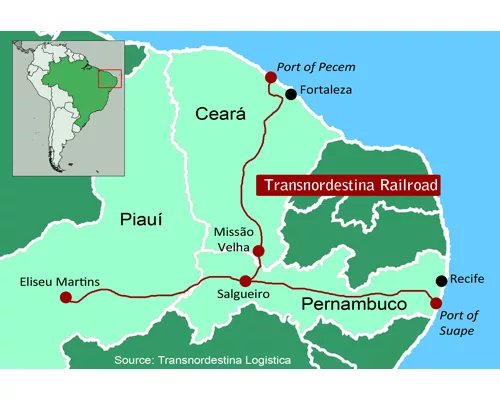
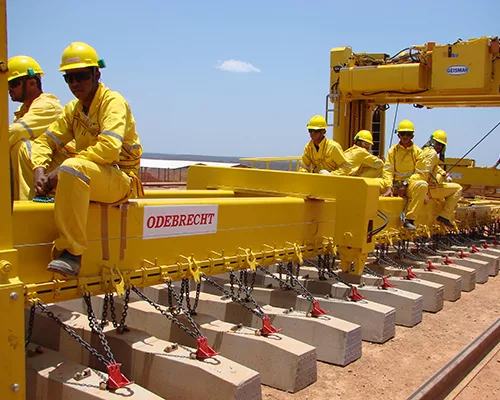
After decades of delays, Brazil’ ambitious railroad project to revitalize the infrastructure of its booming northeast is on track. The 1,728-kilometer Transnordestina rail line linking city of Eliseu Martins in the region’s interior to the ports of Pecém and Suape is slated to begin operations late next year.
The $3.21 billion effort is being built by Brazilian steelmaker Companhia Siderúrgica Nacional (CSN) which holds a 30-year concession that gives it a 75% stake in the line. The company has financed through regional development agency Fundo de Investimentos do Nordeste (FINOR) and Brazil's national development bank BNDES. CSN is providing almost a quarter of the funds itself.
The existing rail line in the region has an annual transport capacity of 2 million tonnes. When the Transnordestina project reaches its full capacity in 2019 that is expected to reach 30 million tonnes of grains, iron ore and minerals such as gypsum from the interior of the region each year.
The work involves replacing a meter-gauge network with a dual-gauge network as well as building a completely new alignment to the railroad in many sections. It will cross 85 cities in the three north eastern states of Ceará, Pernambuco and Piauí.
The initiative was first launched 21 years ago but stalled in 1992 due to lack of funds. Former president Luiz Inacio Lula da Silva revived the project in 2006 with the start of work on a
100-kilometer portion between Salgueiro and Missão Velha. In 2009, the main portions of the work were contracted out for construction.
Brazilian construction firm Odebrecht is handling 1,100 kilometers of the project including almost all of the stretch connecting Eliseu Martins and the port of Suape. The remaining portions are being built by Brazilian firms Andrade Gutierrez and Galvo.
Looking for quick answers on construction and engineering topics?
Try Ask ENR, our new smart AI search tool.
Ask ENR →
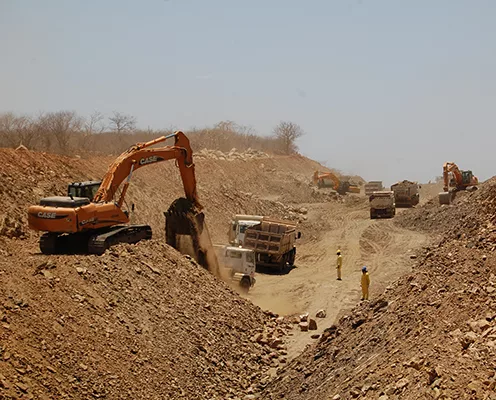
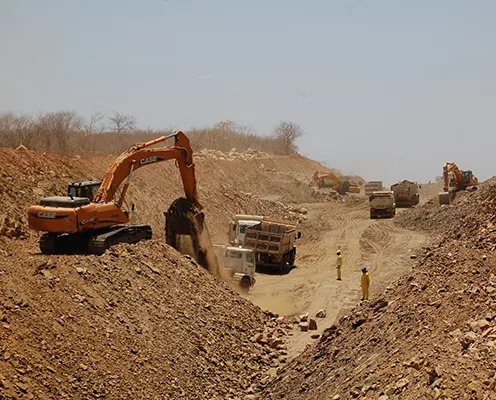
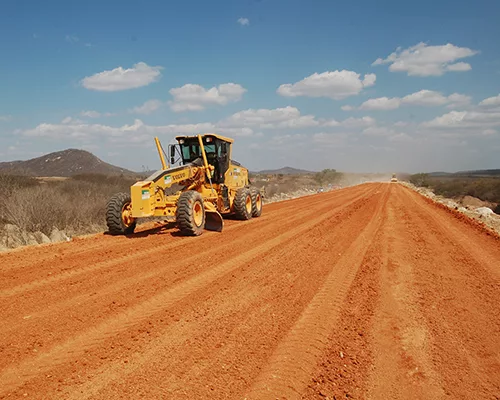
To handle the vast operation in the limited work schedule, Odebrecht divided the project into two phases; the first handling the earth embankment and works related to the construction of bridges, viaducts and culverts, the second phase includes the installation of the railroad itself.
The project requires excavating more than 90 million cubic meters of material, the installation of 1.5 million cubic meters of concrete and more than 3 million concrete beams supporting the railway known as sleepers. Odebrecht officials say the expected to be laying more than 2.4 kilometers of track a day when operations hit their peak this year.
To handle this, Odebrecht has built the world's largest factory for broad gauge sleepers in Salgueiro capable of producing 4,800 each day for the railroad project. The $115 million facility includes one of the country’s largest crushing plants as well as an extensive rail wielding unit.
Of the 11,000 people working on the effort, Odebrecht alone is employing 7,000. To handle the labor demand, the company has launched a training initiative, Programa Acreditar (Believe), to involve the local labor force in the project.
