Global Records
The 10 Largest Solar Photovoltaic Power Plants in the World
Solar power generation is on a roll, partly propelled from plummeting costs
Slide show
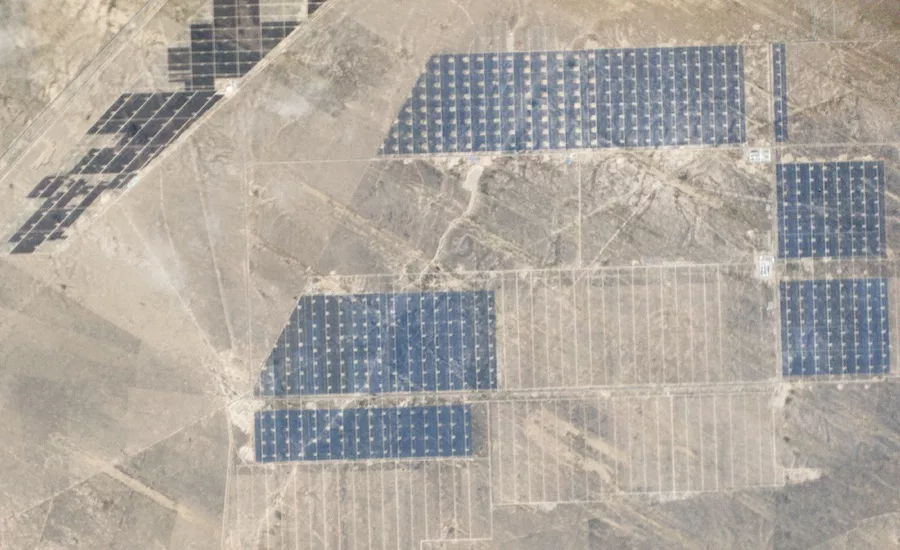
Longyangxia Dam Solar Park, an 850-MW project in China, was completed in 2015. Also named the Gonghe PV Station, this immense solar power plant was built in two stages. Click on page two of the main text to see how this project combines hydropower and photovoltaic systems.
Photo Courtesy Planet Labs
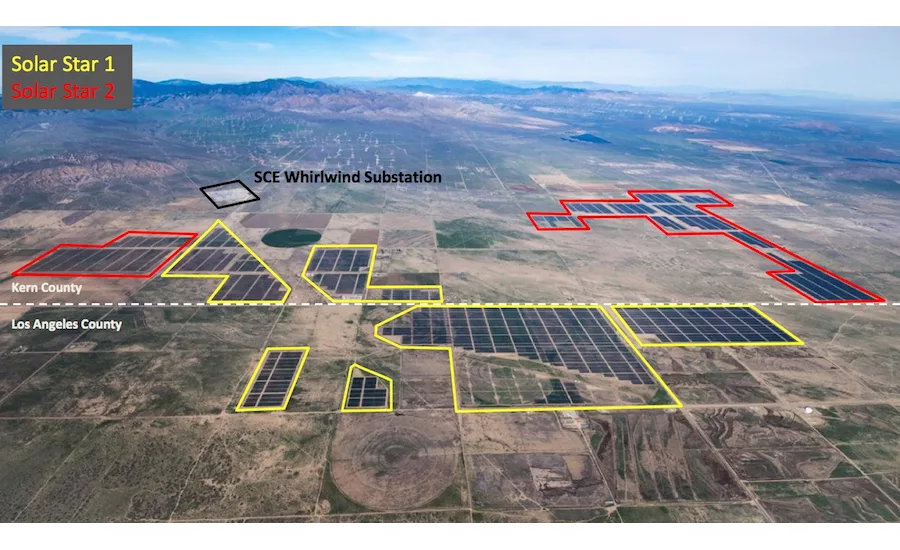
2. Solar Star I & II, 579 MW, U.S., completed 2015. BHE Solar, a subsidiary of BHE Renewables, developed this plant as two co-located installations on a 3,200-acre site near Rosamond, California, in the western Mojave Desert. The design-builder was SunPower, which supplied 3.8 million of its SunPower Oasis panels. Both Solar Star I and II feature panels mounted on single-axis trackers, where the panels are mounted on bars which rotate east and west to follow the sun’s movement, thereby increasing the yield. Construction began in 2013, and it became fully operational in June 2015. It supplies power to Southern California Edison. SunPower also provides ongoing operations and maintenance services for the plants. Solar Star was purchased in January 2013 by MidAmerican Solar for $2 billion. MidAmerican Solar is a subsidiary of Berkshire Hathaway.
Photo Courtesy BHE Renewables
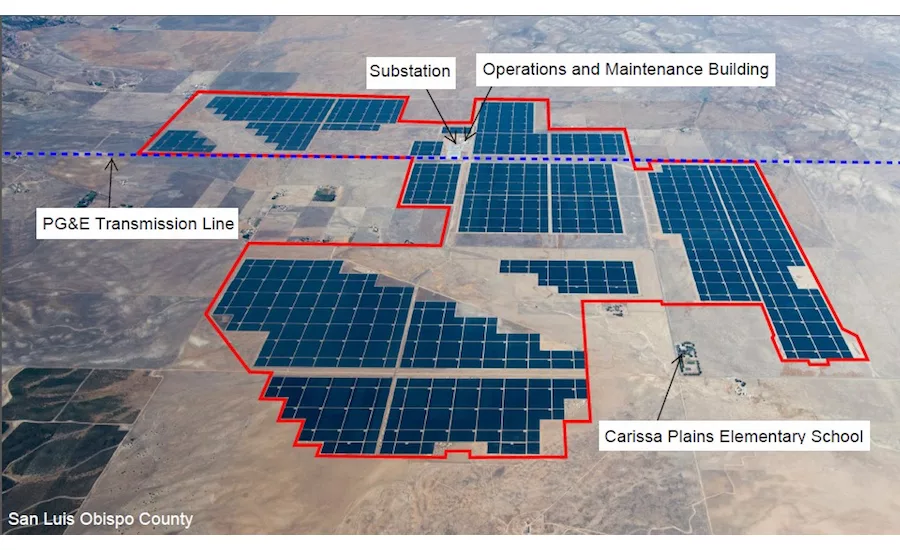
3. (tie) Topaz Solar Farm, 550 MW, U.S., 2015. BHE Renewables, the owner, developed this 4,700-acre plant in San Luis Obispo County, California. First Solar, Inc., supplied and installed 9 million photovoltaic modules. Topaz’s panels are mounted on fixed-tilt arrays. Construction began in 2011 and was completed in March 2015. It supplies power to Pacific Gas & Electric under a 25-year power-purchase agreement. Topaz was purchased in December 2011 by Mid American Energy Holdings from First Solar. The plant is located adjacent to the existing 230-kV Morro Bay-to-Midway transmission line.
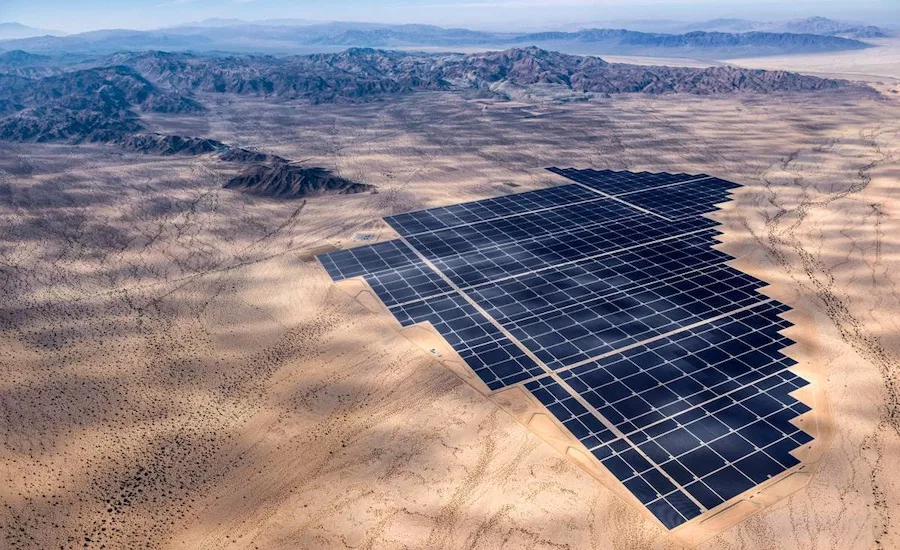
3. (tie) Desert Sunlight Solar Farm, 550 MW, U.S., 2015. It is co-owned by NextEra Energy Resources, GE Energy Financial Services, and Sumitomo Corp. of America. It is located on land managed by the federal Bureau of Land Management, six miles north of Desert Center. Construction started in 2011.
Photo Courtesy NextEra Energy Resources
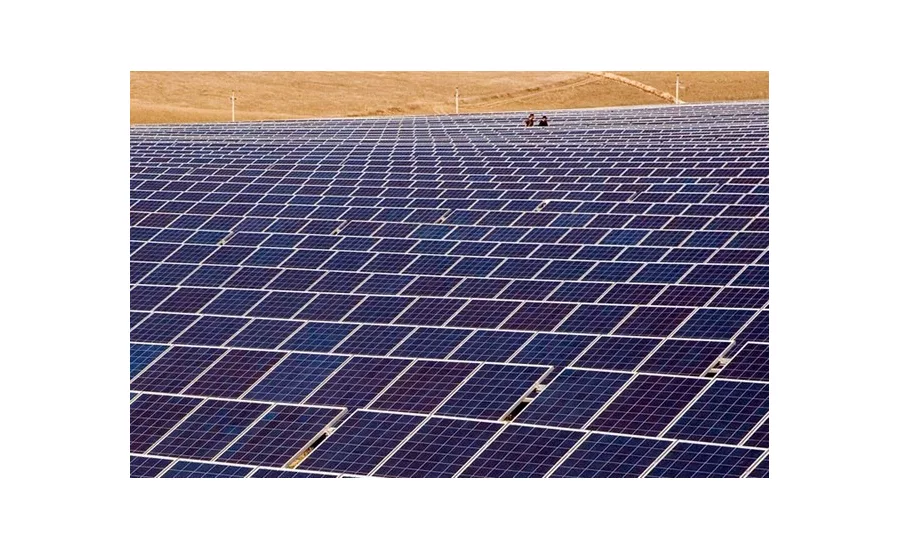
5. Huanghe Hydropower Golmud Solar Park, 500 MW, China, 2014. Huanghe Hydropower, the owner, built the park in two phases. It is located in Qinghai Province at an elevation of over 9,000 ft. Construction of the 200-MW first phase began in 2009 and was completed in 2011. The contractor was Yingli, which used photovoltaic modules supplied by Yingli Green Energy.
Photo Courtesy of Yingli Solar
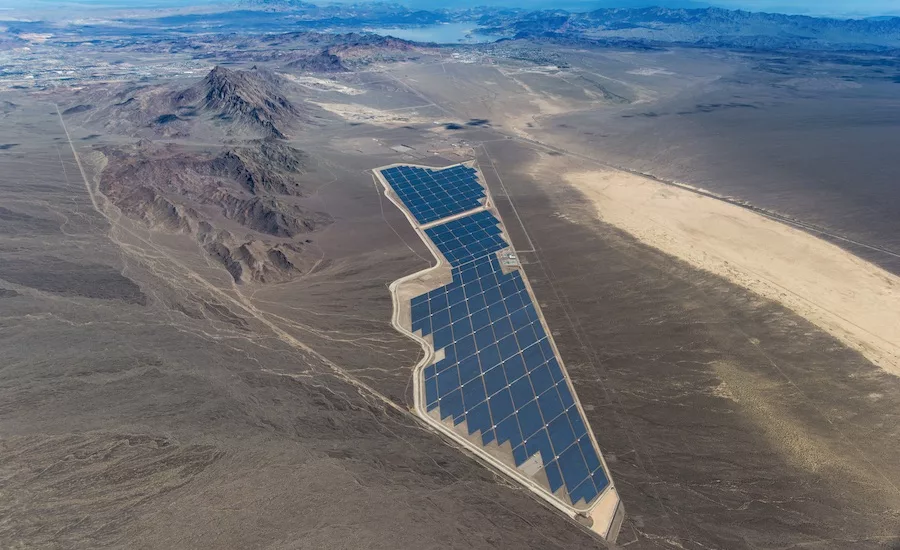
6. Copper Mountain Solar Facility, 458 MW, U.S., 2015. Boulder City, Nevada. The facility is jointly owned by Sempra U.S. Gas & Power and Con Edison Development. It is being built in four phases. It features fixed-tilt arrays of thin-film photovoltaic panels. Phase 1 was 58 MW and was completed by December 2010. Phase 2, completed in 2015, added 150 MW. The EPC contractor for Phases 1 and 2 was First Solar. Phase 3 added 250 MW and was completed in 2015. The EPC contractor for Phase 3 was AMEC. Phase 4 is currently under construction by AMEC, and when it is completed by late 2016, it will add 94 MW, bringing the plant’s total capacity to 552 MW.
Photo Courtesy of Sempra U.S. Gas & Power
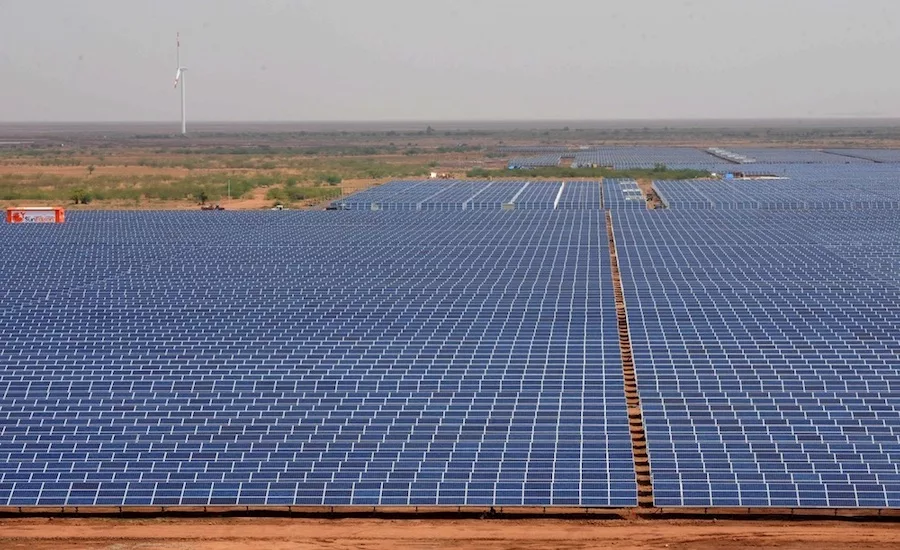
7. Tamil Nadu Solar Facility, 360 MW, India, 2016. The Adani Group is developing this plant in Kamuthi in the state of Tamil Nadu in southern India. 360 MW of capacity was recently grid-connected. When completed, the project will reach a capacity of 648 MW.
Photo Courtesy of Charanka Solar Park
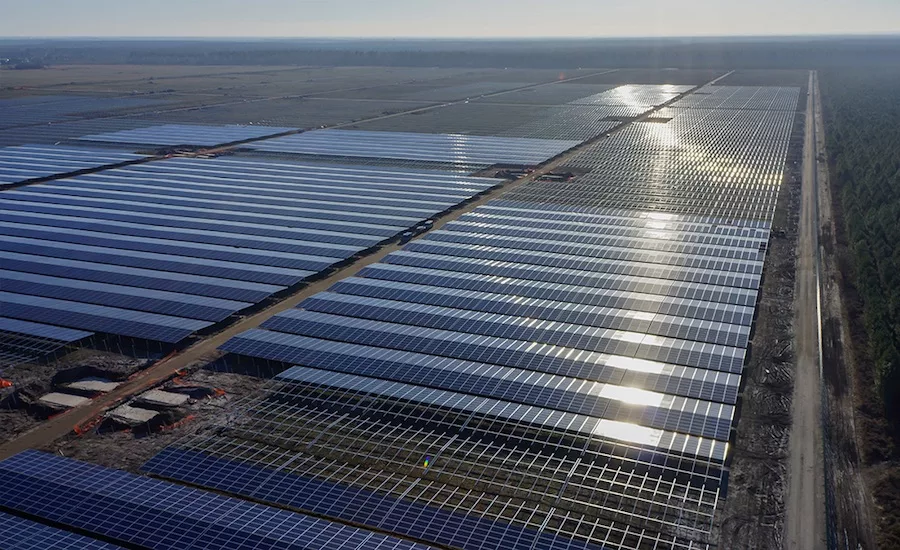
8. Cestas Solar Farm, 300 MW, France, 2015. Developed by Neoen, Cestas is Europe’s largest solar photovoltaic power plant. The construction cost was $382 million, and the plant covers 625 acres. It is located near Bordeaux, in southwest France. Eiffage and Schneider Electric are partners of the consortium, along with Neoen, a renewable-energy company based in Paris. The plant incorporates panels made by Yingli Solar, Trina Solar and Canadian Solar.
Photo Courtesy of Neoen
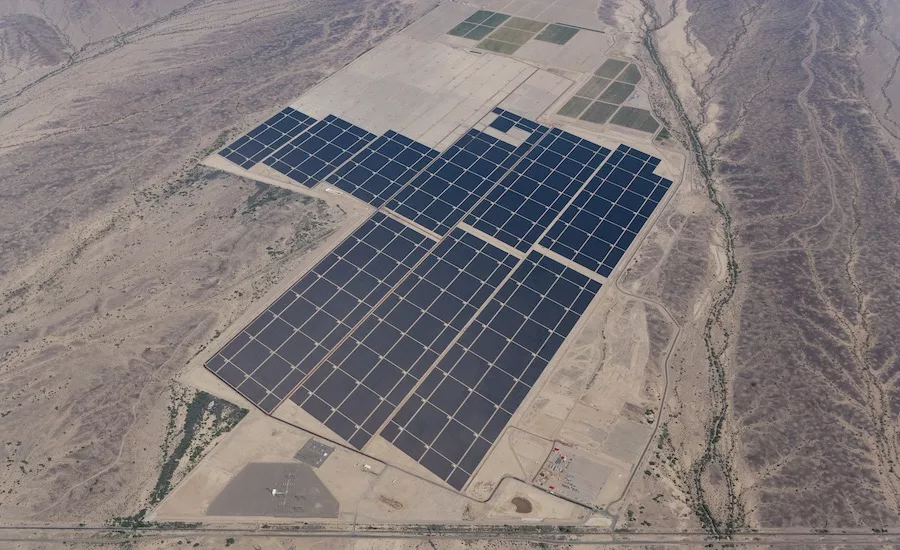
9. Agua Caliente Solar Project, 290 MW, U.S., 2014. Owned by NRG Energy and MidAmerican Solar, Agua Caliente was designed and built by First Solar, Inc. It is located on a 24,000-acre site 65 miles east of Yuma, Arizona. It features 5.2 million panels of thin film cells manufactured by First Solar. The panels are mounted on fixed-tilt arrays. The construction cost was $1.8 billion.
Photo Courtesy of NRG Energy
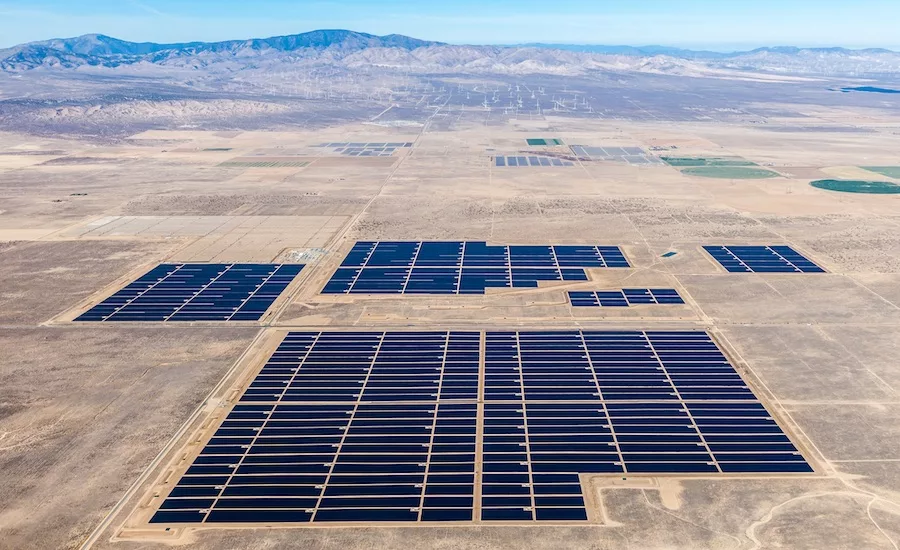
10. Antelope Valley Solar Ranch 1, 266 MW, U.S., 2015. Originally developed by First Solar, Antelope Valley Solar Ranch was bought by Exelon Corp. in 2011, as construction began. The U.S. Dept. of Energy issued a $646-million loan guarantee in 2011 to support the project’s construction. The loan guarantee was part of the American Recovery and Reinvestment Act of 2009. The total construction cost was $1.36 billion. The plant contains 3.8 million solar panels. The power generated by the plant is being purchased by Pacific Gas & Electric Co. under a 25-year power-purchase agreement. In 2013, after reports of a spike in cases of Valley fever (coccidioidomycosis) and complaints of fugitive dust from the construction site, some construction was stopped. Valley fever is caused by a fungus living in desert soil than can cause pneumonia when breathed in wind-borne dust. The dust mitigation plan was reviewed by First Solar, Los Angeles County, and the Antelope Valley Air Quality Management District, and the parties agreed to a number of changes in construction practice.
Photo Courtesy of Baker Electric
China's Huge Solar Park: The Basics
Longyangxia Dam Solar Park, 850 MW, China, completed 2015. Also named the Gonghe PV Station, this immense solar power plant was built in two stages.
Stage I involved the installation of photovoltaic panels covering an area of 9 sq km (2,200 acres) on an arid site near the northwest shore of Longyangxia Reservoir. The reservoir was formed by the Longyangxia Dam, built to hold back the mighty Yellow River, in Qinghai Province in northwest China. Stage I has a capacity of 320 MW, and is connected to one of the dam’s turbines by a 330 kV transmission line. This arrangement allows for operators to adjust output between hydropower and photovoltaic power generation, stabilizing the output of power fed to the grid, thereby raising the grid’s efficiency.
Stage I was designed and built by Powerchina, and completed in December, 2013. Stage II saw the installation of 11.2 sq km (2,700 acres) of additional PV panels, generating 530 MW.
Looking for quick answers on construction and engineering topics?
Try Ask ENR, our new smart AI search tool.
Ask ENR →