Energy Bill, Set To Be Signed, Is Filled with Industry Goodies
Bush and congressional Republicans praise the bill’s marketplace tilt. "I think you’re going to see the market choose to use nuclear plant technology for more powerplant construction," says House Energy and Commerce Committee Chairman Joe Barton (R-Texas), who chaired the conference committee that produced the final version.
|
Energy Bill Highlights |
|
| Source: U.S. congress |
Tax incentives for oil and gas, electric utilities, nuclear power and conservation total $14.6 billion through 2015. They include accelerating depreciation for energy infrastructure, extension of production tax credits for wind, geothermal, biomass and other renewable sources and new credits for clean-coal and nuclear-power facilities. The bill allows a deduction for commercial buildings that reduce annual energy and power consumption.
Repeal of the 1935 Public Utility Holding Company Act will spur spending to upgrade the nation’s transmission grid, say industry officials and lawmakers. "Now, companies will be more willing to make an investment in transmission upgrades outside their own system," says a spokesman for Entergy Corp., New Orleans. But some power providers are chafing at a dropped bill provision that would have required users, rather than utilities, pay for new transmission lines. "It’s a signal that they don’t have the weight in Washington they once had," says one industry executive.
The legislation seems to offer the best hope for new nuclear powerplants, say observers. Supporters insist that its extension of federal Price-Anderson Act liability protection for Dept. of Energy contractors and Nuclear Regulatory Commission licensees through 2025 will be essential.
Incentives now in place for new plants will mean hundreds of millions of dollars in construction, says the spokesman for Entergy, the nation’s second largest owner of nuclear powerplants. It is part of a nine-member consortium, called Nu-Start Energy, that plans to build two powerplants using new standard designs and next-generation nuclear power technology. "Louisiana, Mississippi and New York have asked us to build and we have filed for an early site permit in Mississippi," Entergy’s spokesman says.
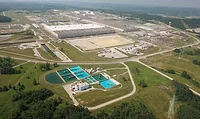
The Tennessee Valley Authority will decide in September whether to pursue nuclear development. It expects to need new capacity by 2015 and must begin the construction process now to meet that time frame, says Jack Bailey, TVA vice president. The federal utility also could build an advanced boiling water reactor plant there instead to produce up to 3,000 MW. The U.S. Energy Dept. has directed its Savannah River Site in South Carolina to begin land lease discussions with nuclear utilities interested in building a commercial nuclear powerplant at the site, says a spokesman.
The final bill also directs $1 billion in federal oil and gas lease revenue over five years for restoring ecosystems in six energy-producing states. Louisiana could receive as much as $540 million over the next four years, says O’Neil Malbrough, president of Shaw Coastal, a division of Shaw Group, New Orleans. "We look at this as a start," he says.
But it still may be awhile before the bill generates some new projects. For nuclear powerplants, "it’s probably 2010 or later," says Kim Mastalio, president of Black & Veatch’s strategic sales and marketing unit. "The planning has started but they have to get through the new process at the Nuclear Regulatory Commission."
The bill’s repeal of PUHCA will help stimulate investment and permit more industry mergers and acquisitions, according to Mastalio. But it will take time for agencies to formulate implementing regulations. "It all gets down to how the bureaucracy implements this law now," he adds.