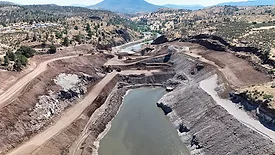
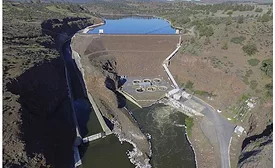
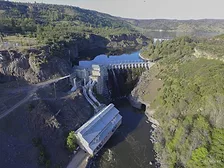
The Klamath River Dam Removal project was not only a massive undertaking—four hydroelectric dams deconstructed and removed across 40 miles of challenging terrain in California and Oregon—but also a multifaceted test.
This 1926 cover shows a wooden stave pipe under construction in northern California. The 16-ft-dia, 1,318-ft-long conduit connected two concrete-lined tunnels at a hydroelectric plant on the Klamath River.
Agency action sets stage for removal work to begin next year by Kiewit Infrastructure West, in effort to restore water quality and ailing salmon population.
Kiewit would start $445M Klamath River work next year to take down four dams in Oregon and California after FERC and Interior Dept. sign off on key environmental review.
California and Oregon now are dam co-licensees for estimated $450M Klamath River project to resolve federal concerns, but major work by contractor Kiewit is pushed back one year.
Removal of four dams on the Klamath River in California by 2020 will close the book on one of the most intractable issues in Western environmental management.
When the U.S. Congress adjourned in December, it scrapped a water-rights settlement package meant to end years of bitter haggling in California and Oregon’s Klamath Basin among farmers, fishermen, utilities ratepayers and environmentalists.