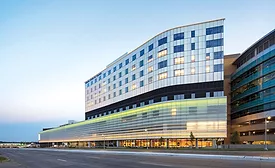
For the team executing the $450-milllion Hubbard Center addition at Children’s Hospital & Medical Center in Omaha, it was all about connections—from innovative interior and exterior lighting design linking facilities and users, to the state's first use of a more collaborative team delivery approach that saved $50 million.
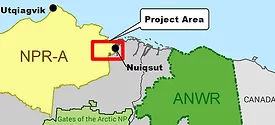
ConocoPhillips pauses work on project, cut from five planned drilling pads to three, after opponents filed suit for a preliminary injunction; the Interior Dept. also will propose new limits on protected Arctic region energy development.
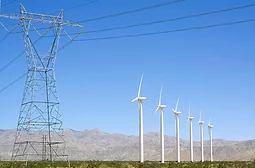
US Energy Dept. needs analysis estimates that 47,300 GW-miles of new lines must be built by 2035, a 57% increase, as renewable sources expand—but study says grid investment has steadily declined since 2015.
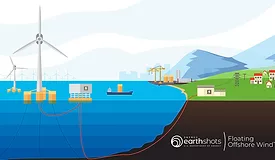
Report says US sector hit big development milestones last year, including project movements and three federal lease auctions that added 11.4 GW in capacity, with another set in the Gulf of Mexico, but advocacy group says this still likely won't meet Biden call for 30 GW of power deployed by 2030.
In just submitted comments, trade groups cite concerns in proposed rule to track direct and indirect emissions as it is set to finalize, but some join advocates in seeing it as key step to reduce climate impact
One year after Ukraine invasion upended energy supply and costs, more natural gas projects are in motion in the US and globally, but concern grows over greenhouse gas impacts as industry seeks design, construction and operations solutions.
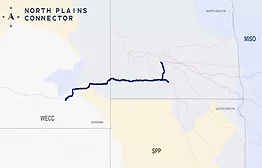
North Plains Connector from South Dakota to Montana would enable shared power and more system reliability for large US grids, but transmission experts decry big gaps in "planning, permitting and paying."
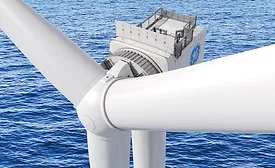
But even with emerging cost risks, New York's latest wind procurement that seeks up to 4.6 GW attracted a record 100 proposals from six wind developers, including one that awarded Skanska USA on Feb. 7 a CM contract for a planned $250M assembly hub at a Brooklyn marine terminal.
A 20-year effort to develop a process to eliminate radioactive and chemical wastes stored underground for decades at a former federal nuclear weapons production site reached a milestone last year with key facility testing, with work that had been overseen by the Bechtel project executive.
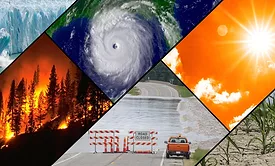
University engineering professor Jesse D. Jenkins has become a clear voice in predicting and understanding climate-change impacts now and in the future, and in leading efforts to model how solutions might work and get done.