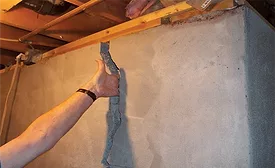
Code Requirements for Assessment, Repair and Rehabilitation of Existing Concrete Structures addresses spot fixes that might be needed after a structure has been in service.
At the end of the first day Tony Gerde, then 22, worked as a rodbuster—carrying rebar like a pack animal—he went home a wreck—with bruised shoulders, raw skin and his body aching from head to toe.
Two recently updated ASTM International standards for seismic risk assessment of buildings, intended to increase the quality of SRA reports, could also cause an uptick in inspection costs.
Connecticut’s commissioner of consumer protection, Jonathan A. Harris, expects to issue a report this fall on the “potential cause or causes” of failing concrete foundations in northeastern Connecticut.
The American Institute of Architects, the AIA Foundation and architect-engineer HOK are joining forces to bridge the gap between research and practice in the area of design and health
The American Institute of Architects has made it easier for its members to report their progress toward the AIA’s ambitious goal of carbon neutrality in the built environment.
Earlier this month, the first building in the U.S. permitted to treat rainwater for potable uses also became a Living Building—the highest level of ultra-green-building certification granted by the International Living Future Institute.