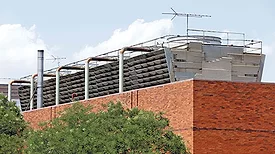
A trend in public health that had been building quietly for years finally burst into the news in July. First, more than 100 people sickened and 12 died in July and August in the Bronx in New York City.
Another sad day for the image of the construction industry and an example of the risks faced by industry companies in dealing with the media: the Washington Post’s publication of its story, “Virginia is getting soaked on Midtown Tunnel deal.”
With millions of people around the world on the move, it's tempting to see the immigration problem in the U.S. as a matter of what to do about the undocumented 11 million.
The U.S. Dept. of Transportation ended on Sept. 14 the suspension of Rocky Hill, Conn.-based Garg Consulting Services, which failed to properly vet the credentials of Barry Kenneth Purnell, Jr., a bridge inspector who falsely claimed to have an Engineer-in-Training certificate from the state of Connecticut.
Santa Clara County, Calif., announced Sept. 17 that it had issued Turner Construction Co. a “notice of termination” of Turner’s right to finish work on an overbudget and behind-schedule county hospital expansion project in San Jose.
With the exponentially increasing ability to capture and analyze vast quantities of data from objects—bridge piers and pavements, for example—the dream of an intelligent transportation infrastructure (ITI) is within reach.
With the recent Legionnaires’ disease outbreak apparently under control, the New York City Councils’ newly adopted law requiring building owners to certify, test and clean building cooling towers has set off a flurry of work.
Bridge inspector Barry Kenneth Purnell Jr. has not been shy about advertising his qualifications on LinkedIn, where he claims to be a licensed professional civil engineer with wide experience in project management and contract acquisition.
We’ve reached a teachable moment about risk when it comes to Boston’s bid to host the 2024 Summer Olympics, which is being promoted as a major driver of housing and infrastructure. To make its case, the Olympics bid committee's proposal includes a risk plan that is detailed—but not detailed enough. Will Boston win?Such moments have arrived before with other Olympic hosting proposals, most notably Chicago’s bid, in 2009, to host the 2016 Summer Olympic Games. There, the proponents also showed they had covered all the risks with a detailed plan, but they failed to win the bid.Construction costs and overruns