Several U.S. cities have used isochrones—lines that connect geographic points on a map to compare transit travel times—to redesign their transit systems.
On March 24, after years of delays and an earlier rejection by the Obama administration, the Trump administration approved TransCanada’s application to build the 1,200-mile cross-border Keystone pipeline.
A former Chicago-area concrete and carpentry subcontractor has been sentenced to a year and a day in federal prison for fronting a women’s business enterprise/disadvantaged business enterprise (WBE/DBE) fraud scheme that involved multiple major public infrastructure projects.
Former U.S. Secretary of Transportation Ray LaHood will lead an independent review of the Washington Metropolitan Area Transit Authority (WMATA) in an attempt to find solutions to numerous operations, governance and financial issues that increasingly have compromised service on the 118-mile Metrorail system.
The U.S. EPA has awarded Flint, Michigan, $100 million to improve its drinking water infrastructure as part of the water infrastructure bill approved by Congress last year.
After armoring the damaged Oroville dam spillway, California Department of Water Resources is draining the lake at a rate of 40,000 cubic feet per second.
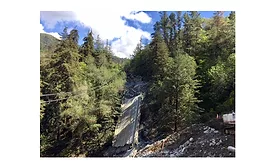
Adjustments to increase the velocity of a 6,000-lb wrecking ball had its desired effect more than a week after Caltrans engineers determined that the key Highway 1 connection on California's coast had been irreparably damaged during a series of storms.
The U.K. Nuclear Decommissioning Authority will cancel a 14-year contract worth about $7.7 billion awarded in 2014 and pay over $122 million compensation to the U.S.-based consortium that failed to win the contract.
 RSS
RSS