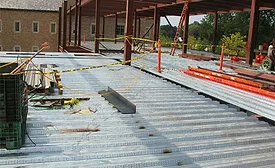
Unprecedented collaborative research on the seismic performance of steel floor and roof diaphragms has improved design methods and relevant standards used throughout the U.S. for steel structures.
While current seismic design codes address life safety issues, the report says stakeholders should also consider re-occupancy and functional recovery time, taking into account the potential impacts to a community as a whole.
Code-based earthquake engineering is on the verge of getting simpler, thanks to the National Earthquake Hazards Reduction Program’s recommendation to replace the traditional seismic hazards maps with an improved seismic hazards database.
Team building (W)rapper’s ribboned exoskeleton, which is not self-supporting until it is done, relies on falsework for stability during steel erection.
Miyamoto International, a seismic structural engineer, is opening a permanent office in Ponce, Puerto Rico, to offer its services to public and private entities to help with the repair and seismic strengthening of buildings damaged in the earthquake on Jan. 7.
More than a week after being rocked by a Jan. 7 earthquake that knocked out its largest power plant, the island of Puerto Rico is still contending with ongoing temblors that are disrupting recovery efforts.
Portions of the draft of an American Institute of Steel Construction standard, Seismic Provisions for Evaluation and Retrofit of Existing Structural Steel Buildings (AISC 342), are available for public review until Nov. 4.