Growing up, Brian Earle’s family moved every couple of years. He was born in Heidelberg, Germany; relocated several times to U.S. cities; and attended high school in Seoul, where he lived within artillery range of the North Korean border.
Amazon’s 2.1-million-sq-ft Metropolitan Park office development near the nation’s capital could become a model for other large-scale sustainable projects. The building team is tracking a 15% reduction in embodied carbon in the project's 200,000 cu yd of concrete and the two 22-story buildings are on course to qualify as net-zero operational carbon.
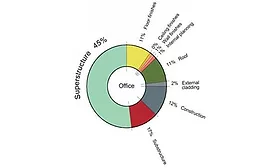
The Structural Engineering Institute of the American Society of Civil Engineers, which has kicked off the first U.S. campaign aimed at reducing embodied carbon in structural systems, is issuing a call for engineers to join the crusade.
The new International Energy Conservation Code provides residential and commercial builders flexibility in making their projects more energy efficient and for the first time includes provisions for electric vehicles and ways to reach net-zero-energy consumption.
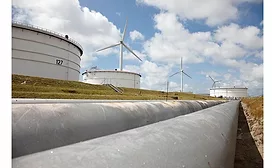
BP's plan would result in reducing the company’s emissions to net zero from a current total of 415 million tonnes of CO2 equivalent per year — and could create new work for the AEC industry.
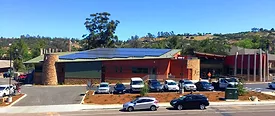
In aspiring to create the first structure in California to meet the Living Building Challenge—and become one of only a handful of such projects around the globe—the team behind the Sacramento offices for Architectural Nexus confronted a steep learning curve.