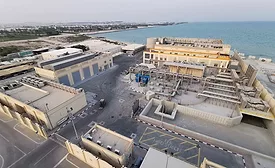
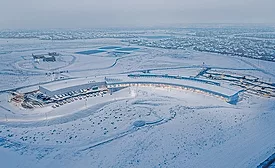
The Musaimeer pump station and outfall is a vital infrastructure addition in Qatar to meet demands of its increasing population and to deal with growing problems of rising brackish groundwater as well as flash flooding.
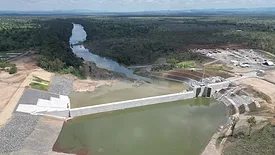
Despite six major flood events, COVID-19 restrictions, substandard soil conditions and a remote site location, the largest weir to be built in Queensland, Australia, since World War II now is operating and achieving what it was designed to do—provide water security for the region where it is located while protecting aquatic wildlife.
Agencies seek construction sector support for project contracting and workforce execution, with billions in investment seen to expand options for drought-plagued water systems and other overburdened infrastructure.
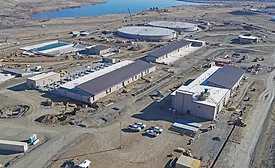
To rehabilitate and augment the Wylie Water Treatment Plant’s (WTP) existing filter walls—which had begun deteriorating—the project team on this $10-million endeavor developed a plan that allowed the facility to continue providing essential water services while the necessary upgrades were carried out.
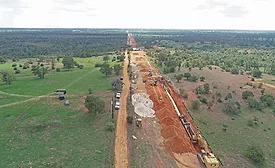
This $92-million effort included the installation of multiple pipeline segments on a large water supply project for the Alliance Regional Water Authority in Central Texas.
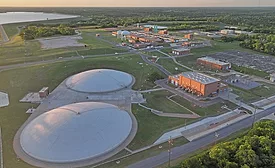
With a treatment capacity of 150 million gallons per day, the Draper Water Treatment Plant is the largest such facility in the state of Oklahoma and has a more drought-resistant supply than the city’s other water treatment plant.
The Los Angeles Board of Water and Power Commissioners approved the project, enabling the construction of the Donald C. Tillman Water Reclamation Plant in the San Fernando Valley.
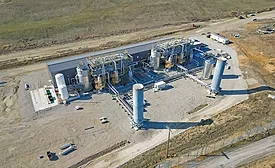
Maintaining safety was a priority at a $97-million project by WIN Waste Innovations that virtually eliminates the emission of sulfur dioxide —an acid rain precursor—at two landfills in Ohio.