Coastal Resilience
Army Corps Terminates Key NY Surge Barrier Contract
USACE says it ended the $133-million Staten Island project's contract due to lack of progress and safety lapses
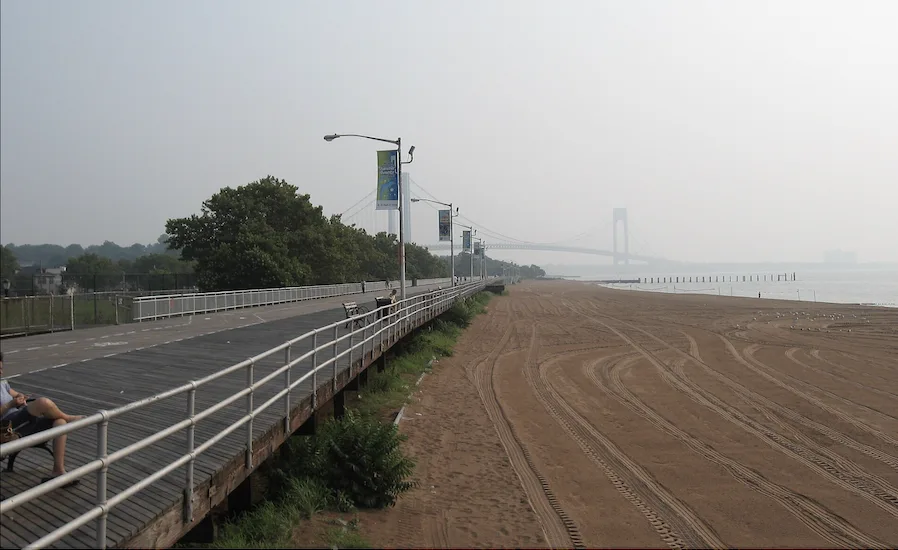
A Staten Island, N.Y., beach and boardwalk before superstorm Sandy, which struck on Oct. 29, 2012. Staten Island experienced the biggest rise in sea level in the city that day.
The U.S. Army Corps of Engineers terminated a key early contract in its overall $2.3-billion resilience project to protect the east shore of New York City's borough of Staten Island, accusing its contractor of failing to make progress and for lapses in safety.
Awarded to New York City-based Triumph Construction Corp. in Oct. 2024, the $133-million contract included detention basins, culverts, various gates and inlets and relocation of existing sanitary sewers.
Adding to the sting of the June termination notice was a videotaped message claiming not only had Triumph failed to make adequate progress on its work—its contract gave the company until January 2028 to complete the job—but that the company had experienced safety lapses, too.
In a videotaped statement about the termination posted to YouTube, Brig. General Jesse T. Curry said the firm "was not meeting the performance standards.
"When a contractor repeatedly doesn't adhere to the critical safety standards," Curry said, "to include overturning a drill rig on an active worksite and placing workers in unnecessary harms way, we take action."
Brian Gardner, an attorney who represents Triumph, says the termination is mystifying and that the Corps had poorly managed the project. He said he was preparing legal action on Triumph's behalf, possibly in the federal Court of Claims.
"Part of the litigation will be that the Corps didn't have sufficiently experienced people on the jobsite."
Looking for quick answers on construction and engineering topics?
Try Ask ENR, our new smart AI search tool.
Ask ENR →
The project has been eagerly awaited in Staten Island by shore area residents and local elected officials. Superstorm Sandy in 2012 inflicted heavy damage, and the storm barrier and related structures have been a priority for a long time. Other work on the project is continuing, Curry said in his statement, and a new schedule for completion will be issued.
The project remains a top priority for the North Atlantic Division, he said.