Health & Safety
Back Trouble? Construction Workers Shouldn't Wait to Get Help
California chiropractor explains how seemingly minor back pain can escalate into something worse

Dr. Brigitte Rozenberg
Much construction work involves lifting, carrying, climbing, reaching and twisting, often on uneven ground. Every shift can take a toll on the body.
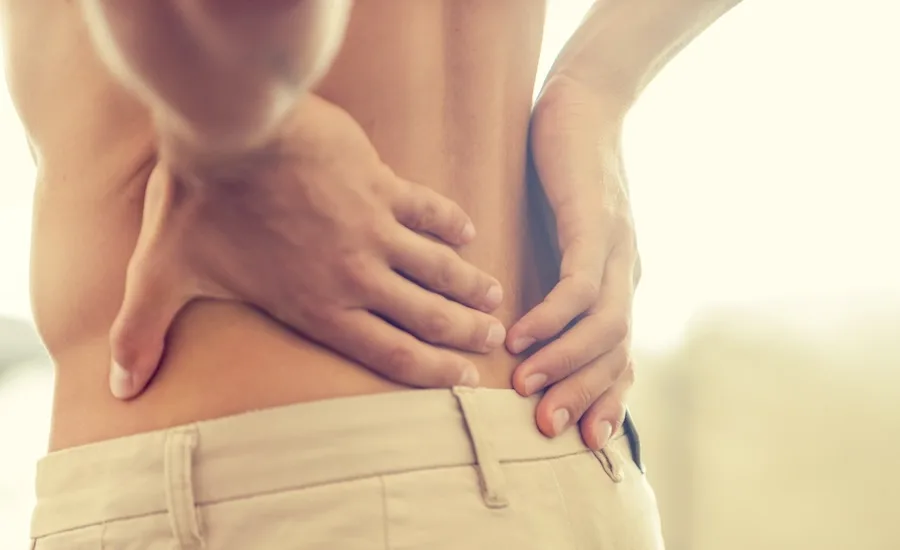
Given the often dangerous nature of the job and strict deadlines, it’s easy to keep your attention focused on the work in front of you instead of on signals your body is sending. You might register a sharp pain in your lower back, but you keep moving for the sake of the job.
Many construction professionals accept that push-through mindset as just part of the industry, especially when it’s how they provide for their families. They can’t afford to take extended time off.
The problem is that the body rarely goes from 100% fine to critically injured in a single jump, especially when it comes to the spinal system. There are typically smaller increments in between that are alerting you to a larger issue. You might try to compensate for each twinge of pain, but that only adds an extra load somewhere else in the body, which is where you run the risk of repeat injuries.
I see this time and time again. Construction professionals come to my clinic after months or years of pushing through the pain, looking for a solution that offers some relief without taking them out of the work they need to do.
I had one patient, a field workforce manager in his 50s who had spent decades lifting materials, climbing ladders and working long hours on hard concrete surfaces. When he first came in, he described his pain as normal wear and tear.
But his symptoms had moved well beyond routine soreness. He had severe pain shooting from his lower back into his leg, and he was beginning to lose strength in one foot. What bothered him most was not the pain itself, but the fear that his body was starting to limit his ability to work. We moved forward with conservative care, including spinal decompression, a noninvasive therapy that gently stretches the spine. The patient was fitted with a special harness and placed on a computer-guided table. The lower part of the table moves while the upper part stays in place, which helped to take pressure off his irritated sciatic nerve.
After multiple rounds of spinal decompression, coupled with additional supportive therapies, the shooting pain down his leg became less frequent and less intense as the pressure on his lower spine eased, giving the agitated nerve a chance to calm down and recover. He was able to return to work without surgery and drastically improve his daily function.
Looking for quick answers on construction and engineering topics?
Try Ask ENR, our new smart AI search tool.
Ask ENR →
Too Young For Back Trouble?
I also treated a construction worker in his 30s who ignored his recurring neck and shoulder pain for more than a year because he felt “too young” to be dealing with anything serious.
By the time he came in, he was experiencing numbness and tingling in his hand and struggling to grip tools properly. He told me that what finally pushed him to get help was the realization that he could no longer trust the strength in his arm while working overhead, which can be incredibly dangerous.
Once we identified the underlying disc and nerve involvement, we again focused on conservative treatment to reduce the nerve irritation and restore strength and mobility before his condition progressed further. He regained the function in his hand and calmed the irritation in his neck and shoulders, and was able to get back to the job with better stability.
Both cases are good reminders that the key to avoiding recurring back problems is to pay attention to the early warning signs. Surgery sometimes is unavoidable, but prevention can make all the difference.
Treat Pain as Information
When we treat pain as information instead of as an interruption, we set ourselves up for success. Look out for persistent lower back or neck pain, shooting pain into the leg or arm—known as sciatica, numbness or tingling in the hands or feet, weakness or loss of grip strength and pain that worsens with physical labor.Founder and clinical director of Spinatomy Spine & Disc Centers, located in Culver City, Van Nuys and Ontario, Calif., Dr. Brigitte Rozenberg can be reached at 818-901-1505.