Clean Energy
UPDATED Seven States Sue Feds Over $928B Offshore Wind Cancelled Lease Deal
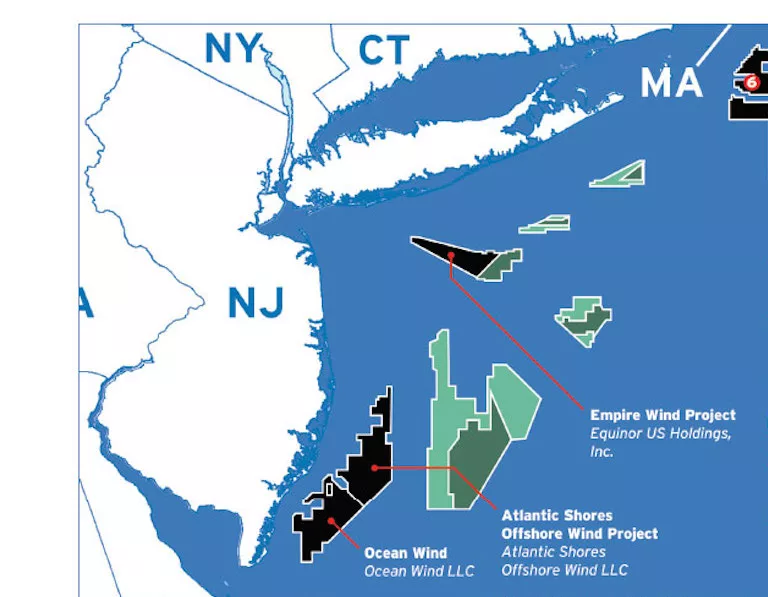
Cancelled TotalEnergies Attentive Wind projects were set to be built in area south or New York City between New Jersey and Long Island, N.Y.
Offshore wind energy proponents continue their legal battle against the Trump administration, following its change of strategy against the sector two months ago to allow developers to withdraw from Biden-era signed lease agreements if they agree to channel previous payments into oil and gas investments.
Seven states led by New York sued the Trump administration June 2, claiming its $928-million March buyout deal with French offshore wind developer TotalEnergies to cancel pre-project ocean leases in that state and in North Carolina in exchange for channeling refunds into Texas oil drilling and gas plant investments is “blatantly unlawful” and should be nullified.
Just In—Court Restores Wind-Solar Project Tax Credit Routes
Four days later, a federal district court judge in Washington, D.C. has ruled that Internal Revenue Service rules for federal investment and production tax credits on energy projects larger than 1.5 GW, used for more than a decade, cannot be restricted for developers of just wind and solar power. The rules added the fine print to restrictions included in the 2025 budget bill President Donald Trump signed into law last July 4. They no longer allowed a firm to start work on one of those projects and claim credits by incurring costs of 5% or more, known as the "safe harbor." Developers only could lock in credits by showing proof of starting “physical work of a significant nature.”
Judge Christine Kollar-Kotelly wrote that excluding the 5% safe harbor for solar and wind projects had no explanation in any federal documents, terming it "arbitrary and capricious.“
One lawsuit plaintiff, Oregon Environmental Council, termed the decision "a huge win for clean energy development," terming the IRS guidance a "barrier ... another example of the federal administration causing energy market chaos." But sector attorneys caution that the upside may be limited because the altered tax-credit rules do not change the other key credit deadline of July 4, 2026 for wind or solar project work to start to avoid an end of 2027 mandate for the project to operate. Trump administration spokespersons did not comment to media on status of an appeal, but that action and other changes may not cancel all risk, attorney noted.
"This decision carries significant implications for developers, investors and other stakeholders in the renewable energy sector, but given the short timeline before the July 4 beginning of construction deadline" and other unsettled issues, "it is not advisable to rely on" the 5% safe harbor for wind and solar projects, said attorneys at Foley & Lardner.
Looking for quick answers on construction and engineering topics?
Try Ask ENR, our new smart AI search tool.
Ask ENR →
Taking on TotalEnergies Buyout
The June 2 legal showdown aims to overturn a deal that allows TotalEnergies to revoke a $795-million lease agreement to develop two Attentive Energy wind projects in a federal ocean area between New York and New Jersey, as well as a $133-million site pact in North Carolina, New Jersey joined the suit, as did Connecticut, Maine, Massachusetts, Rhode Island and Vermont, filed in U.S. District Court in Washington, D.C., seeking to have the lease cancellation and settlement pact vacated.
ENR could not verify at story posting if that ruling would compel TotalEnergies to build a project on its lease site, which it had previously said it would pause in light of Trump administration policies.
“After repeatedly losing in court, this administration cooked up a sham deal to pay a foreign energy company hundreds of millions of taxpayer dollars to abandon offshore wind and invest in oil and gas instead,” said New York Attorney General Letitia James. Gov. Kathy Hochul described the TotalEnergies agreement as a "pay-not-to-play scheme" and "an outrageous abuse of taxpayer dollars that hurts our ability to meet our energy needs, create good jobs, and help secure American energy independence while reducing emissions."
Trump administration officials, including Interior Secretary Douglas Burgum, have defended the TotalEnergies agreement as voluntary.
Separately, a coalition of renewable energy groups filed a complaint in a federal district court in Oregon last month that challenges actions by U.S. Defense Dept.in not completing national security reviews of onshore wind energy projects on private lands, with estimates of as many as 160 project approvals halted. Departmemt officials have said the review process delay relates to its complexity.
Meanwhile, more than 50 environmental groups and non-government organizations are moving to stop new developer deals, reports say. Friends of the Earth says the groups have written to Markus Krebber, CEO of German energy developer RWE, asking that the firm halt its rumored negotiations with the administration to return more than $1 billion in offshore wind lease payments to reinvest in gas sector projects they claim would be a "very real financial risk for your company and shareholders."
Sector participants and observers also are watching the trajectory of the fiscal 2027 Interior-Environment spending bill, which a House Appropriations subcommittee advanced in May, It seeks to impose a range of inspection fees on offshore wind projects that analysts and Democrats said could be much higher than what is paid by offshore oil companies for their projects, since it calls for per-turbine inspections.
The Coastal Virginia Offshore Wind project off Virginia Beach is set to have 176 turbines when completed next year. Annual fees for offshore oil and gas operations under the bill are not charged per well. “The lack of clarity and predictability on inspection fees for offshore wind is concerning,” said Pasha Feinberg, an offshore wind strategist at the Natural Resources Defense Council.

.webp?height=200&t=1766484839&width=200 "Wind-Farm-Pause-(2)")