Economics
Data Centers, AI Drives Industry Momentum in First Quarter
Material prices continue to drag on projects
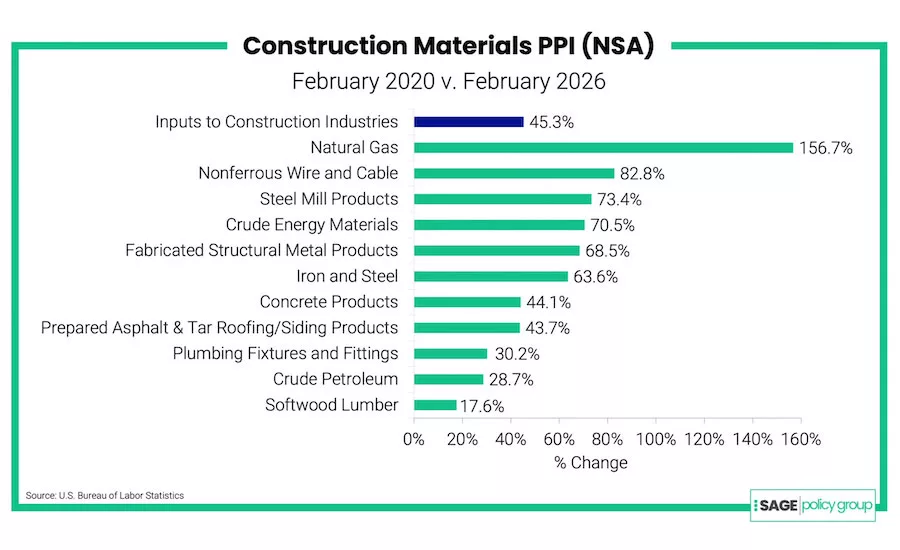
Many material prices have seen sharp increases since the COVID-19 pandemic.
Growth in construction activity is expected to continue through 2026 but ongoing concerns persist, Anirban Basu, chief economist at Associated Builders and Contractors, said in a forecast webinar on April 8.
Ongoing investments into data center construction and artificial intelligence by "hyperscaler" companies like Amazon, Meta and others continue to drive much of the current growth as hiring and activity across the industry as a whole softens.
“Job openings are no longer as available, [material] prices keep rising [and] people are having a tough time meeting basic obligations,” said Basu, adding that while Silicon Valley and Wall Street will be fine, “Main Street [will be] a little rocky.”
While total job openings are down, Basu noted that he had expected those in construction to rise due to changes in immigration policy, since about 25%r of construction workers are foreign born, but the uptick had not materialized. “I had expected … a bit of a surge… as more employers look to hire native-born workers or [documented workers] but we haven’t seen that,” he said.
Material Price Pressures Continue
Tariffs and inflation continue to push up material prices. Between February 2020, the month before the COVID-19 pandemic, and February 2026, total construction input prices have risen 45.3%, according to the U.S. Bureau of Labor Statistics. Gas prices are up a whopping 157% in that time, while nonferrous wire and cable and steel mill products also saw substantial increases, at rates of 82.8% and 73.4%, respectively. “I don’t think it’s a coincidence that many of the categories that have experienced the largest price increases [are subject to] tariffs,” said Basu.
Total non-residential construction spending fell 0.1% between January 2025 and January 2026, with manufacturing seeing the largest drop, at 15%. Residential construction also declined as millennials continue to be priced out of the single-family market, Basu notes. “People talk about the housing affordability crisis [but] we’re not actually solving the problem.”
“I think there’s enough to keep the economy afloat,” he added, but maintains that there’s still “real risk” of recession in this current volatile market.
Looking for quick answers on construction and engineering topics?
Try Ask ENR, our new smart AI search tool.
Ask ENR →


