Construction History
From the Archives: April 11, 1985

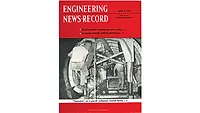
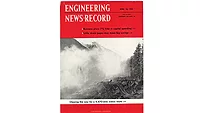
This 1985 cover image depicts the largest iron ore mine in the world, Carajas, in Para State in Brazil, developed by CVRD, now known as Vale.
The remote location, heavily jungled and malaria-ridden hills and plateaus tucked between the Tocantins and Xingu Rivers, posed a major challenge. The solution was an 890-km rail line to bring the ore to the port of Sao Luis.
Construction was confined to the six-month-long dry season, and lasted seven years, with 14 contractors placing 105 million cu meters of embankment fill.
The route crosses a coastal flood plain, savannah and tropical forest and required only one major bridge, 2,310 meters long, spanning the Tocantins River at Maraba. Prime contractor Odebrecht used a track welding method pioneered by the French.
Twelve-meter-long rail sections were put through a feeding line, their ends heated to 1,050°C to improve electrical conductibility, then flash-welded together into 396-meter-long strings. Two million ties of indigenous jatoba wood were first dried and then creosoted in a vacuum chamber.
The workforce for the entire Grand Carajas Project—ore processing facilities, rail line and port—peaked at 27,500. Given the remote location, a temporary town for 8,000 workers had to be built. The jobs and amenities proved powerful lures to the region’s poor inhabitants.
To ward off a potential flood of itinerant workers, CVRD improved the existing hamlet of Parauapebas by installing utilities and erecting a hospital, school, administration building and jail.
Looking for quick answers on construction and engineering topics?
Try Ask ENR, our new smart AI search tool.
Ask ENR →