ENR 2025 Top 25 Newsmakers
Jorge Vizcaya: Led Development and Implementation of a Novel, Sustainable Changeover Solution for a Soccer Field
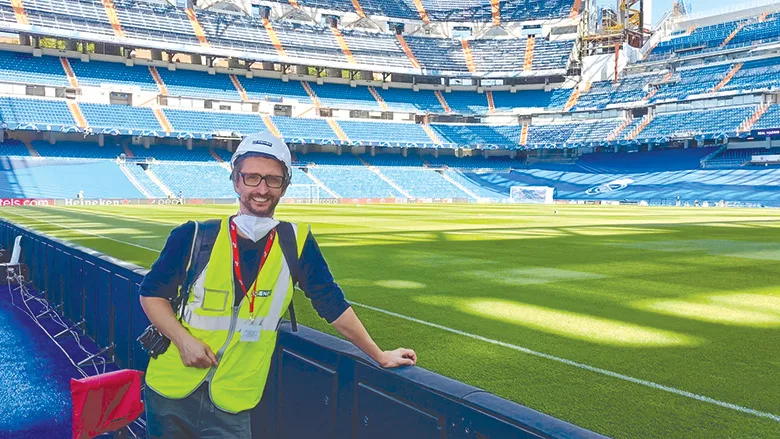
Sener’s Hypogea system allows the stadium to be used year-round through rapid removal and storage of its natural grass field, or “pitch,” to a climate controlled underground storage space, says architect Vizcaya.

Related Article:
Best Project, Specialty Construction: Fully Automated Pitch Changeover Solution at Santiago Bernabéu Stadium
Back to:
25 Top Newsmakers
Jorge Vizcaya, architect at Spain-based design firm Sener likens the company’s patented retractable system to use and store a stadium soccer field to installing a car engine. “It’s just very compressed with many different conduits and electricity and you need to consider the whole design at the same time,” he explains.
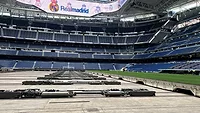
As a marquee component of the renovation of Madrid’s Santiago Bernabéu Stadium—home of Spain’s renowned Real Madrid soccer club—the Hypogea system enables the venue to be used year-round through the rapid removal and storage of its natural grass field, or “pitch,” to a compact, advanced maintenance storage space below that preserves grass quality with lighting, irrigation, ventilation, heating and drainage. It is the first application of the system in a sports stadium worldwide.
Intense collaboration was required among owner, design and construction stakeholders to tailor the system to fit the needs of the team’s topsoil, according to Vizcaya. This meant blowing up the stadium’s original renovation game plan to account for Sener’s design, he says.
“This is not a matter of splitting the project up into different parts, that’s not the way to tackle this kind of project,” says Vizcaya. “This forced us to be very well connected and coordinated in the design.”
The excavation for the system, which reached depths of 25 to 30 meters, required installation of concrete retaining walls and containment structures to maintain soil stability and prevent displacements that could compromise integrity of the stadium and surrounding buildings. This included a continuous monitoring system with sensors to record vibrations, settlements and ground movements in real time. Additionally, Paul Burgess—Real Madrid’s Groundsman at the time—added to Sener’s pioneering vision with key agronomic contributions and know-how that Vizcaya says contributed to the overall success of the solution.
Hitting the Goals
According to Vizcaya, stadium owners had been in search of a solution for more than five years to expand facility use without compromise, so it was important for Sener’s system to meet all project goals for Real Madrid and the club’s die-hard fans. Vizcaya says the pressure was on for his team to deliver off the field, as it is for the soccer players. “It’s the same. You have to win. You cannot lose,” he says.
Vizcaya says pressure to deliver was just as intense as it was to ensure that the renovation would not interrupt events, and would be something the soccer club can seamlessly integrate into its operations.
Looking for quick answers on construction and engineering topics?
Try Ask ENR, our new smart AI search tool.
Ask ENR →
“We can say most of the project was fast-track,” Vizcaya adds, with challenges such as navigating the COVID-19 pandemic and keeping the stadium open for games that affected construction logistics. “The project forced me and colleagues involved to not only be focused on my specific part of the project but to also consider the full thread at the same time.” The World Football Summit named the Bernabéu facility the “best stadium in the world” in 2024, specifically citing the retractable pitch and other innovations.
In terms of his own professional growth, Vizcaya calls the project “life changing,” adding that it encouraged him to think more like an engineer in his architectural work. “I can say that now I am probably more engineer than architect,” he says. The project also shifted his views on sustainability, noting that the pitch changeover system adds to the building’s usage and capacity, and can be potentially applied to other buildings, Vizcaya adds.
“Many times we think about sustainability as resources such as water and power. This project not only put the focus on these [things] but also on the system itself,” he says. “This solution tries to change these buildings and their use.”