Energy
Proposed German-Dutch Hydrogen Pipeline Faces 2026 Test as Execution Details Lag
Operators see a viable cross-border hydrogen link, but regulatory issues, certification and missing timelines remain
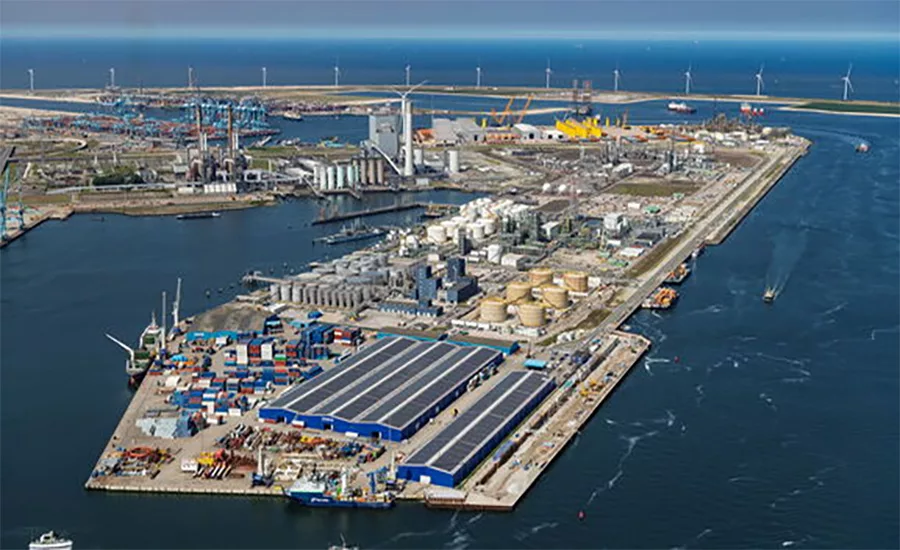
The Port of Rotterdam, Europe’s largest industrial port, is being developed as a hydrogen import and distribution hub and is expected to anchor proposed cross-border pipeline links between the Netherlands and Germany.
A proposed cross-border hydrogen pipeline linking Germany and the Netherlands cleared a critical technical hurdle, but as 2026 begins, the project remains constrained by regulatory sequencing, certification requirements and the absence of construction timelines.
That challenge centers on how the pipeline would be built. Under a framework agreement announced at the end of December, Gasunie, Thyssengas and Gasunie Deutschland agreed to jointly develop plans for the first cross-border hydrogen transport infrastructure between the two countries, relying primarily on repurposing existing natural gas transmission assets rather than constructing a new corridor.
RELATED
Southern California Bets on Hydrogen With Gas Plant Conversions
The companies said the arrangement is a joint development agreement, a preliminary step designed to define technical and regulatory requirements ahead of any future network interconnection contract, according to Thyssengas.
Sophie Hermans, the Netherlands’ minister for climate and green growth, speaking with S&P Global Commodity Insights about hydrogen transport coordination with Germany, described the agreement as part of a broader North Sea energy integration. She noted that the Netherlands views cross-border hydrogen infrastructure as “essential for a functioning Northwest European hydrogen market,” but stated that regulatory alignment and market rules “must mature alongside the pipelines.”
Feasible, but Not Yet Build-Ready
In published technical materials, Gasunie describes a significant share of its high-pressure steel gas transmission system as suitable for hydrogen service, subject to asset-specific validation based on steel grade, weld type, age, operating pressure and fatigue history. The operator emphasizes that conversion decisions must be made on a pipeline-by-pipeline basis rather than assumed at the network level.
In outlining the cross-border concept, the operators identified potential interconnection points at Oude Statenzijl in Groningen and Vlieghuis in Drenthe, both within existing transmission corridors in the Netherlands, the companies said.
Looking for quick answers on construction and engineering topics?
Try Ask ENR, our new smart AI search tool.
Ask ENR →
“The agreement reached enables transport not only via our infrastructure between the Netherlands and Germany, but also to and from Denmark,” Helmie Botter, Gasunie’s director of hydrogen transport, said in a joint statement announcing the agreement.
"We are striving to create an integrated hydrogen market and are working closely with our partner network operators to make cross-border transport as easy as possible," she added.
Technical planning documents issued by the European Hydrogen Backbone consortium—which includes Gasunie and German transmission system operators—support that assessment.
The consortium reports that converting existing gas pipelines to hydrogen service can reduce capital costs by roughly 60% to 80% compared with new-build hydrogen lines, depending on the extent of required upgrades.
Its guidance outlines typical conversion work, including internal inspection, material compatibility testing, replacement of incompatible valves and seals, updates to metering and monitoring systems, and, in some cases, revised operating pressures.
Thyssengas said it is contributing an existing gas pipeline segment between Vlieghuis and Ochtrup in North Rhine-Westphalia, where conversion work began in summer 2025 as part of Germany’s hydrogen core network and the GET H2 initiative. The company described that work as an early building block rather than a completed cross-border system.
Dr. Thomas Gößmann, CEO of Thyssengas, said in the same statement that, "the signing of this contract marks a significant milestone in the expansion of the international hydrogen infrastructure." Gößmann noted the chosen connection point between the two countries makes a "valuable" contribution to the project.
"It will enable cross-border hydrogen transport [and] support the development of the German hydrogen core network," he said, "and drive industrial decarbonisation in the Ruhr and Rhineland regions through its connection to the GET H2 system."
Technical Detail
ASME | Hydrogen Piping and Pipelines
The process of converting existing infrastructure from one fuel to another also explains why operators have approached conversion as a phased, highly regulated process rather than a complete network shift.
Technical rules issued by DVGW, which governs gas and hydrogen infrastructure standards in Germany, recognize hydrogen transport in pipelines originally designed for natural gas but require updated material, safety and operational compliance.
Those rules also mandate formal certification of converted assets, validation of material performance under hydrogen service and adherence to revised pressure and safety limits before hydrogen can be introduced.
-600px.jpg "Hydrogen Network Netherlands map")
A map published by Gasunie shows the planned Hydrogen Network Netherlands, illustrating proposed hydrogen pipelines, import points and cross-border connections linking Dutch industrial hubs with neighboring markets, including Germany.
Map courtesy of Gasunie
International standards bodies apply similar constraints. Guidance from ASME and ISO permits hydrogen transport in steel pipelines but flags hydrogen embrittlement, higher leakage potential and fatigue under pressure cycling as key engineering risks, requiring conservative design assumptions, enhanced inspection regimes and modified operating practices.
Taken together, operator studies and standards explain why conversion is viable on paper but still slow to certify and sequence into build-ready work, helping explain why the project remains in planning despite broad policy alignment.
For contractors, that technical framework translates into work scopes that differ markedly from greenfield pipeline construction. Conversion projects emphasize integrity assessment, materials engineering, system modification, testing and commissioning—often executed in stages to maintain continuity of existing gas service—rather than large-scale earthwork and new right-of-way development.
RELATED
Has Hydrogen's Time Finally Come?
Navigating Overlapping Regulatory Regimes
The operators have identified potential connection areas near the Dutch-German border in the northern Netherlands, including regions near Groningen and Drenthe, with the goal of enabling bidirectional hydrogen flows once national networks on both sides are in place. While final routing and parcel-level alignments have not been published, the named regions overlap with existing pipeline corridors and emerging hydrogen production and import hubs, providing geographic context without committing to finalized alignments.
The corridor is intended to ultimately support industrial hydrogen demand in western Germany, including the Ruhr and Rhineland regions, where steel and chemical producers are among the earliest expected off-takers, according to the operators.
Although both countries operate within the European Union, national regulators in Germany and the Netherlands continue to control hydrogen and gas transmission assets. Permitting, safety certification, tariff approval and cost recovery must be secured separately in each country.
EU-level hydrogen strategy supports cross-border corridor development and may enable priority treatment or access to funding mechanisms, but it does not replace domestic approvals or ensure synchronized construction schedules. In practice, the German-Dutch link functions as two interdependent infrastructure projects that must advance in lockstep.
The operators have not disclosed construction schedules, capital cost ranges or procurement strategies, leaving unclear when contractors might see bid packages emerge.
That uncertainty reflects unresolved network sequencing decisions now moving from policy into early execution planning. Germany’s hydrogen core network, approved in late 2025, outlines thousands of miles of pipelines to be converted or built by the early 2030s, but many segments still require permitting, tariff approvals and phased certification. Under current plans, the German-Dutch interconnector would tie directly into that network, making its sequence dependent on when adjacent German assets are converted and cleared for hydrogen service.
The Dutch side faces comparable sequencing constraints as Gasunie advances its national hydrogen backbone in stages tied to industrial demand and hydrogen supply availability. Operators indicate in filings that cross-border hydrogen transport will be phased, with initial capacity limited and expansion contingent on demand growth rather than delivered as a single large-capacity buildout.
RELATED
Europe Starts Tough Debate on Scope, Costs of Clean Energy Scaleup
What’s Next?
For now, the German-Dutch hydrogen pipeline remains a signal of intent rather than an imminent construction opportunity. Progress in 2026 depends on whether operators can translate technical feasibility—already established in operator studies and formal standards—into certified assets, aligned regulatory approvals and bankable demand signals.
Until those execution mechanics are resolved, sustained construction activity is likely to remain just over the horizon.

Bryan Gottlieb is the online editor at Engineering News-Record (ENR).
Gottlieb is a five-time Society of Professional Journalists Excellence in Journalism award winner with more than a decade of experience covering business, construction and community issues, including finance, law and real estate. He has reported for Adweek and the San Diego Daily Transcript and led a community newsroom in Santa Monica, Calif. He served as editor-in-chief of the Detroit Metro Times and as managing editor at Roofing Contractor, where he helped shape national industry coverage. At Engineering News-Record, Gottlieb covers breaking news, large-scale infrastructure and megaprojects, regulatory developments and business trends across the U.S. and global construction sectors.
email: gottliebb@enr.com | office: (248) 786-1591