ENR 2025 Global Best Projects
Project of the Year Finalist, Best Project, Office: The Henderson
Flowing form creates Asia landmark

The sculptural form of The Henderson was inspired by the bud of the bauhinia flower, the symbol of Hong Kong.
The Henderson
Hong Kong, China
Best Project, Office
Submitted by WSP
Owner: Henderson Land Development Co. Ltd.
Lead Design Firm: Zaha Hadid (HK) Ltd.; Ronald Lu & Partners (HK) Ltd.
Contractor: Hip Hing Construction Co. Ltd.
Civil Engineer: CM Wong & Associates Ltd.
Structural Engineer: CM Wong & Associates Ltd. / LERA Consulting Structural Engineers
MEP Engineer: WSP
Sustainability Consultant: Ove Arup & Partners Hong Kong Ltd.
FaCade Consultant: Eckersley O’Callaghan Asia Ltd.
Blending flowing form and precision-engineered systems, The Henderson rises in Hong Kong as a new architectural landmark—a 190-meter-tall office tower that shows what a commercial building can be. Designed by Zaha Hadid Architects and inspired by the bud of the bauhinia flower, the symbol of Hong Kong, it spans 465,000 sq ft across 36 floors, featuring offices with commercial spaces, a banquet hall and extensive smart infrastructure. Bringing the building’s sculptural form into reality involved a complex construction and engineering journey—one that demanded interdisciplinary collaboration, advanced digital tools and innovative problem-solving.
The tower’s tight urban space immediately adjacent to six live mass transit railway tunnels required advanced geotechnical strategies to prevent ground movement or vibration that could disrupt the essential transit network. Top-down construction, rigorous vibration control and real-time monitoring were essential to maintain full operational safety during excavation and construction of the tower’s five basement levels.
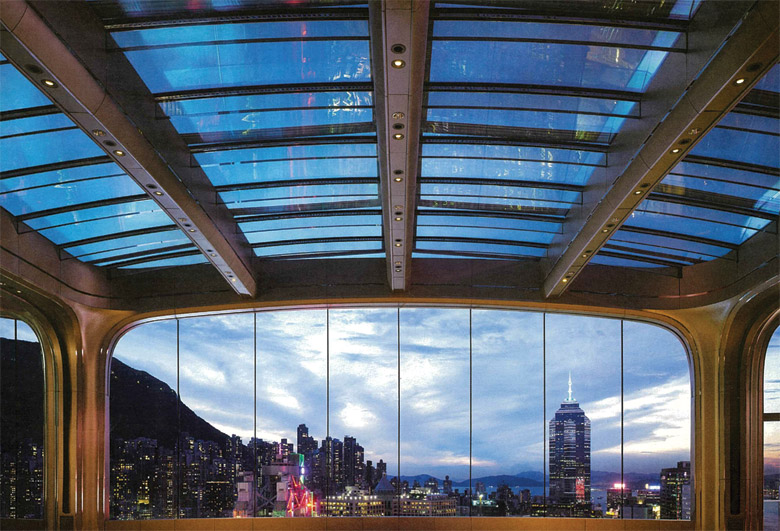
The Henderson, which stands 190 meters high and encompasses 465,000 sq ft across 36 floors, was built in a constricted urban space. It includes offices with commercial areas, a banquet hall and smart infrastructure.
Photo by Henderson Land Development Corp.
“One of the most significant engineering challenges was constructing the five-level basement in an extremely constrained site,” says Derek So Kwok, executive director of Hip Hing Construction Co. “The excavation was within close proximity—approximately 3.3 meters—of the live tunnels for both the MTR Island Line and Tsuen Wan Line.”
The structural system required innovation to achieve both the tower’s organic form and its functional performance. Six mega columns and a side-core steel structure enabled column-free office floors that support the tower’s curved geometry. This mix of structural elegance and strength allows the building to bear loads exceeding typical skyscraper criteria.
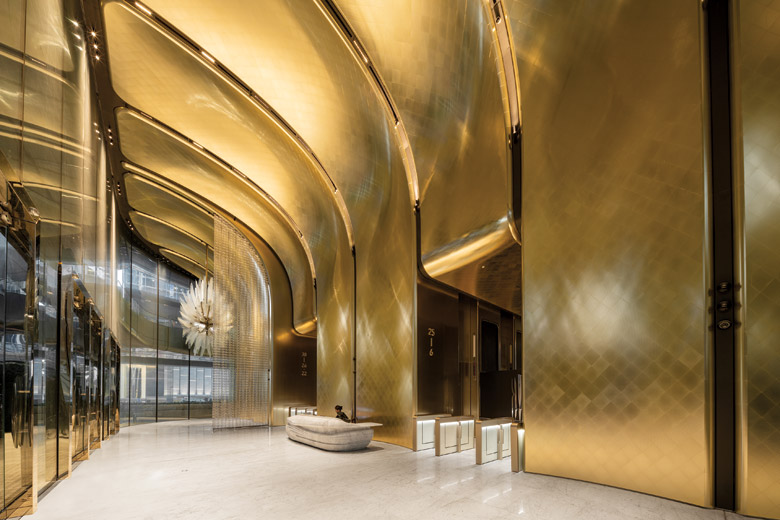
Photo by Henderson Land Development Corp.
The basement, structure and plantroom layouts were further complicated by the tower’s curved architecture. These non-orthogonal spaces demanded exacting design coordination across all disciplines. Full building information modelling (BIM) was used throughout the project to address clashes, optimize routes and integrate structural, architectural, and MEP systems within extremely tight tolerances. This was especially critical in the curved plantrooms, where equipment was arranged with millimeter-level precision to maintain both efficiency and design integrity, the team says.
“One of the biggest challenges we faced was accommodating all the mechanical, electrical and plumbing (MEP) systems within a highly valuable and spatially constrained site, all while meeting our ambitious goals for sustainability, well-being, and smart technology,” says Rob Davies, managing director for WSP, which did MEP work.
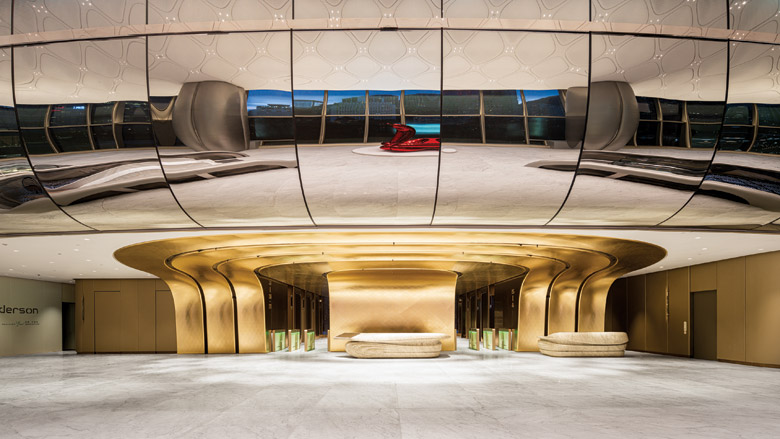
The Henderson, which stands 190 meters high and encompasses 465,000 sq ft across 36 floors, was built in a constricted urban space. It includes offices with commercial areas, a banquet hall and smart infrastructure.
Photo by Henderson Land Development Corp.
“Our team employed 4D modeling from the earliest stages to coordinate all disciplines and maximize space utilization,” she says. “We also implemented innovative MEP solutions, including patented technologies, such as solar-responsive ventilators, air-based chillers and rainwater harvesting systems for irrigation.” The facade comprises more than 4,000 panels of four-ply, double-laminated insulated glass. These curved units create the tower’s signature petal-like form while delivering key performance benefits—such as maximized natural light penetration, carefully controlled solar heat gain and reduced building reliance on artificial lighting and cooling systems to maintain occupant comfort.
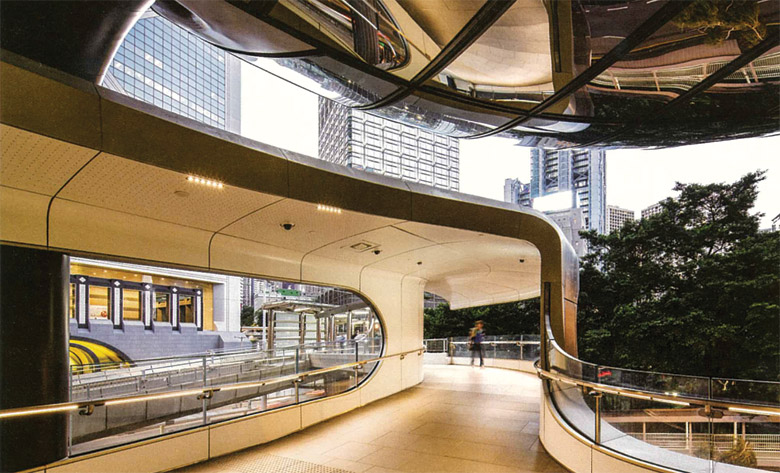
Photo by Henderson Land Development Corp.
Still, the extensive glazing introduced unique MEP challenges—particularly along the perimeter zones exposed to Hong Kong’s intense solar load. The design team implemented a patented solar-responsive ventilator system that creates an air cushion along the interior side of the curtain wall. Operating only when needed and powered by rooftop photovoltaic panels, the system enhances thermal comfort, reduces energy demand and demonstrates the tower’s commitment to science-based sustainable innovation.
Looking for quick answers on construction and engineering topics?
Try Ask ENR, our new smart AI search tool.
Ask ENR →