Nuclear Waste Cleanup
Long-Awaited Process Finally Starts to Vitrify Radioactive Waste at Hanford Site

Vitrification plant at US Energy Dept. Hanford site in Washington state, which has begun the process to transform long-stored nuclear and hazardous wastes into inert glass for storage, will operate on a 24/7 schedule, officials said.
After a design and construction investment of more than 20 years and $30 billion, the US. Energy Dept and its contractor Bechtel National officially started up—for the first time on Oct. 15—the newly built industrial plant at the giant federal Hanford former nuclear weapons production site in Washington state to turn long-stored radioactive waste into vitrified glass for safer long-term storage.
The milestone announcement came on the same day a long-standing federal-state consent decree had ordered the vitrification process to start for millions of gallons of mixed low-level nuclear and hazardous wastes originally stored in 177 underground tanks since World War II.
Low level waste makes up about 90% of Hanford's overall nuclear waste stream. Site facilities to treat more complex high-level waste are still undergoing technical redesign, but treatment must begin by 2033 under the consent decree.
The process start also faced reports of pushback in recent weeks from Trump administration officials related to final permits and funding to start the process, with disputes involving state congressional legislators and the Dept. of Ecology, said publication Tri-City Herald.
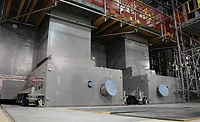
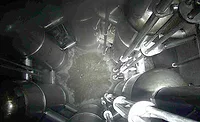
The first batch of stable vitrified glass is being produced in the Hanford site Waste Treatment and Immobilization Plant, called the Vit Plant, and the Direct-Feed Low-Activity Waste Facility, where waste is mixed with glass-forming materials and heated to 2,100° F inside one of two 300-ton melters before being poured into stainless-steel containers for cooling and long-term disposal elsewhere on the 580-sq-mile site.
The vitrification plant will run 24 hours a day. A Bechtel spokesperson told ENR the current federal government shutdown is not impacting operations.
Bechtel National designed and constructed the plant, calling it the largest radioactive waste treatment facility in the world. “This milestone represents the realization of a vision ... to solve one of the nation’s most complex environmental challenges safely and permanently,” said Dena Volovar, president of Bechtel’s nuclear, security and environmental business, in a statement.
Looking for quick answers on construction and engineering topics?
Try Ask ENR, our new smart AI search tool.
Ask ENR →
Bechtel plans to continue feeding waste and glass-forming materials into the melters, filling steel containers with vitrified waste to be transported to the site disposal facility. The firm expects to process an average of 5,300 gallons of tank waste per day. An Oct. 9 waste transfer brought 25,000 gallons into the vitrification facility.
The annual federal budget across the site is roughly $3 billion.
“This achievement enables us to shift focus to safely operating the plant,” said Ray Geimer, DOE Hanford site manager, adding that the focus now shifts to safely operating the facility while advancing work to ready operation of its direct-feed treatment approach for high-level waste
“It’s pretty incredible to see this first-of-its-kind plant come online,” Casey Sixkiller, director of the state ecology department, regulatory oversight agency for the entire process for more than two decades, said in a statement. So far, the state Dept of Health has issued eight radioactive air emissions licenses to ensure plant operations are meeting all health and safety standards
In the next 18 months. Bechtel will eventually transfer plant operation and waste dis[osal to a new contractor, Hanford Tank Waste Operations & Closure (H2C) It is a joint venture of prime contractors BWX Technologies Inc., Amentum and Fluor Corp., with teaming subcontractors dss+, DBD Inc., Longenecker and Associates Inc. and INTERA.
The state said it will continue oversight as the process moves toward full operation, aiming to issue a final permit for the decades it will take to treat all of Hanford’s tank waste.
“It’s difficult to overstate how important this milestone is in the Hanford cleanup effort,” said Gov. Bob Ferguson in a statement.