History
From the Archives: December 4, 1958
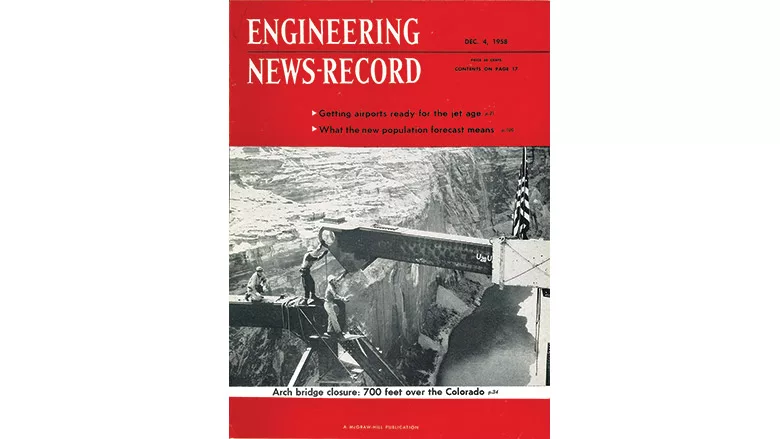

This 1958 cover image shows ironworkers atop the Glen Canyon Bridge in Arizona. It was built to transport materials for the construction of Glen Canyon Dam, given the dam’s remote location in a deep sandstone canyon over the Colorado River.
The bridge was designed by the U.S. Bureau of Reclamation and built by a joint venture, Kiewit-Judson Pacific Murphy.
The canyon’s 700-ft depth meant that falsework was impossible, so cableways were employed to service the job, and the partially completed arches were supported by means of tie-back cables.
One cableway, with a 12-ton capacity, ferried workers and small supplies, while the main cableway, with a 25-ton capacity, hauled bridge members.
The use of tie-back cables in swinging the span into its final position and the method of tensioning the cables were new to bridge building.
At completion the bridge’s 1,028-ft main span made it the second longest steel arch bridge in the U.S. and its height from the canyon floor made it the highest arch bridge in the world.
Looking for quick answers on construction and engineering topics?
Try Ask ENR, our new smart AI search tool.
Ask ENR →

.webp?height=200&t=1760896328&width=200 "ENR-12-6-1928-cover-(2)")