Water System Builds Cleaner Future for Buenos Aires River
July 23, 2025
Water System Builds Cleaner Future for Buenos Aires River
July 23, 2025Photo courtesy of Webuild

The Matanza-Riachuelo River in Argentina has historically been one of the most notoriously polluted bodies of water in all of Latin America.
Located near a heavily industrialized section of Buenos Aires, the river, along with the soil beneath it, is full of lead, cadmium, copper and other heavy metals and contaminants dumped for more than a century by tanneries, animal slaughterhouses, factories and chemical facilities.
The contamination has sickened many of the nearly 4.5 million people living within the river basin, 10% of whom live below the national poverty line. Rashes, breathing problems and elevated lead levels among residents in the basin are widely reported.
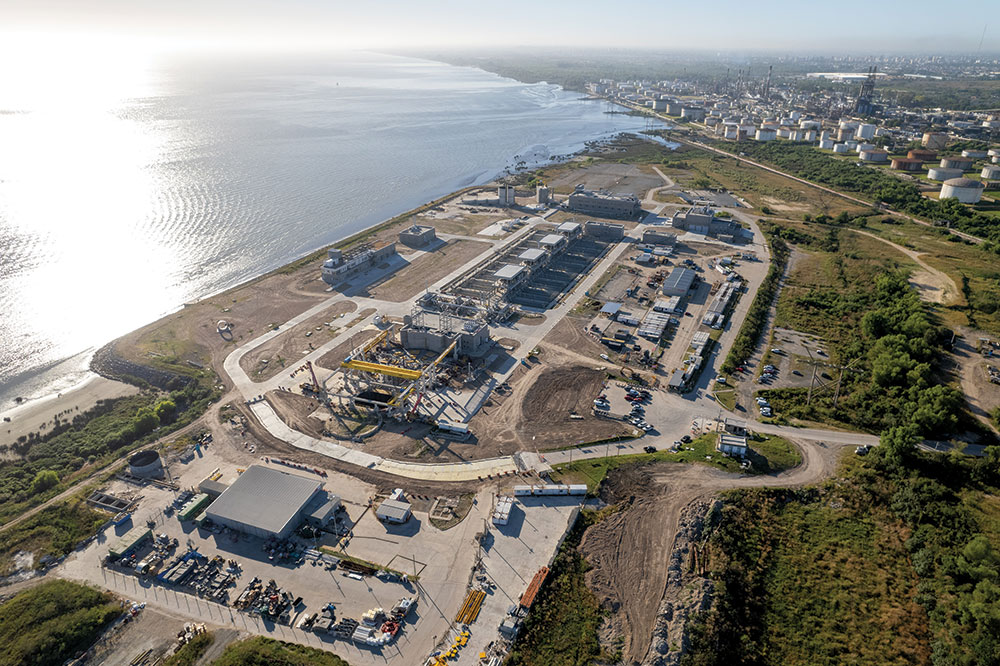
The Webuild team added dredge material to expand the site over what had previously been part of the river.
Photo courtesy of Webuild
A mega infrastructure project—the Riachuelo wastewater treatment system—is approaching final delivery by the end of this month. It aims to halt the stream of waste and raw sewage into the river that has historically been habitual. The system collects waste through an intricate network of tunnels, followed by pretreatment, and disposes solids while releasing pretreated effluent back into the river through a first-of-its-kind riser system built inside of the outfall tunnel.
The project—the largest expansion to the city’s sewer system in 70 years—is 87% financed by the World Bank at a cost of $1.228 billion, according to the bank, which says the loans represent its largest-ever investment in Latin America and the Caribbean.
The Riachuelo system was built under three contracts with the state-owned Argentine sewer and water authority, AySA. Lot 1 was designed and built by Rome-based Ghella via a $470-million contract; Lot 2 was designed and built by a joint venture of Fisia Italimpianti S.p A., Genoa, Italy—a Webuild subsidiary—and Madrid-based Acciona, for $390 million; and Lot 3, was built by Webuild under a $520-million design-build contract, with Jacobs as design lead.
Once fully operating, the system will treat up to 2.3 million cu meters of wastewater per day with an average flow rate of 27 cu m per second. It will also expand sanitation access to 1.5 million additional residents across 14 municipalities.
“We are very proud” to have worked on the project, says Mario Pierobon, Lot 2 contract manager at Fisia Italimpianti, who has worked on the program since its inception.
Looking for quick answers on construction and engineering topics?
Try Ask ENR, our new smart AI search tool.
Ask ENR →

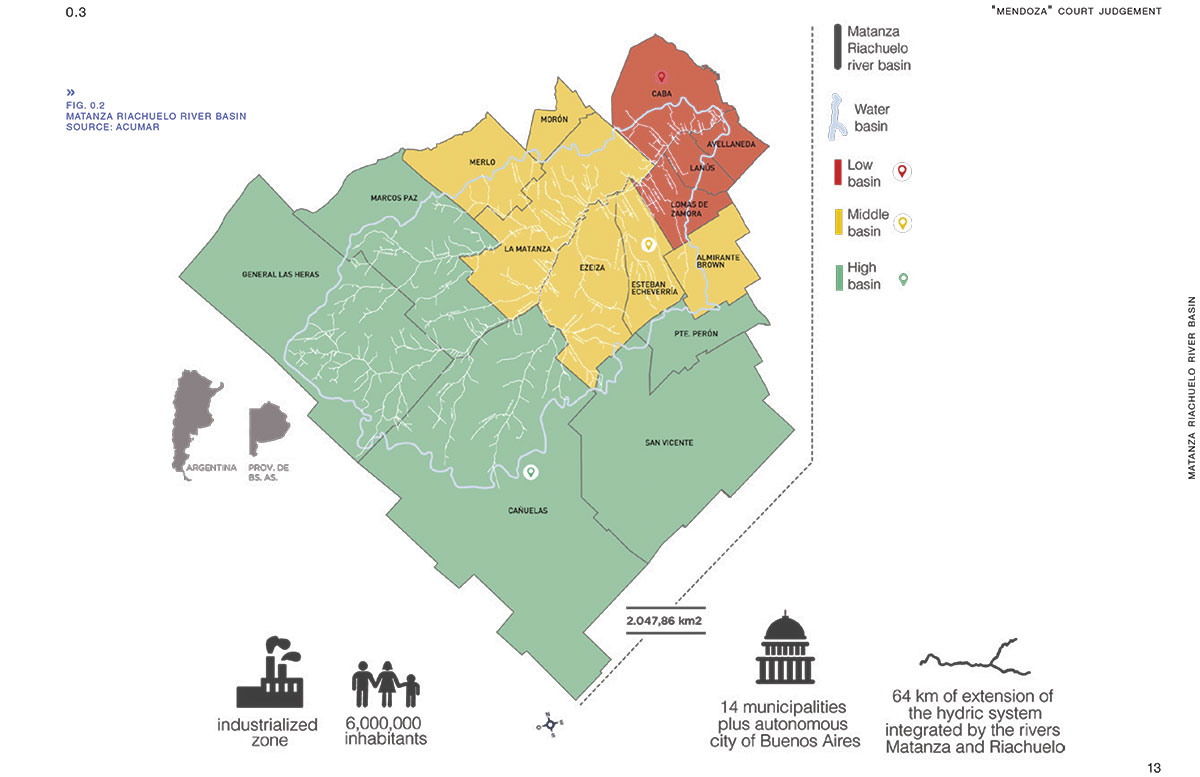
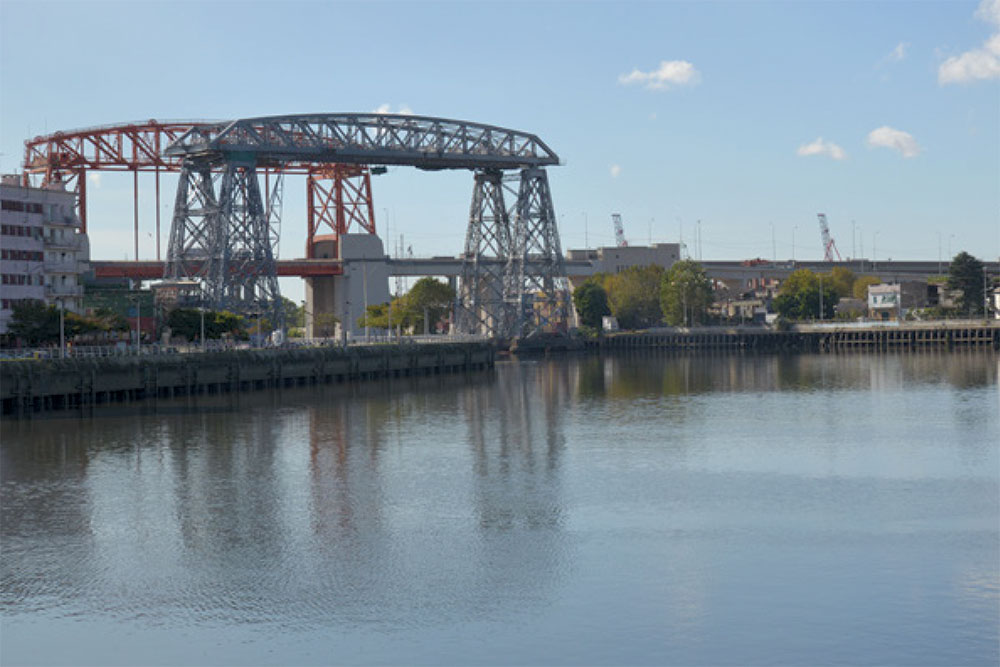
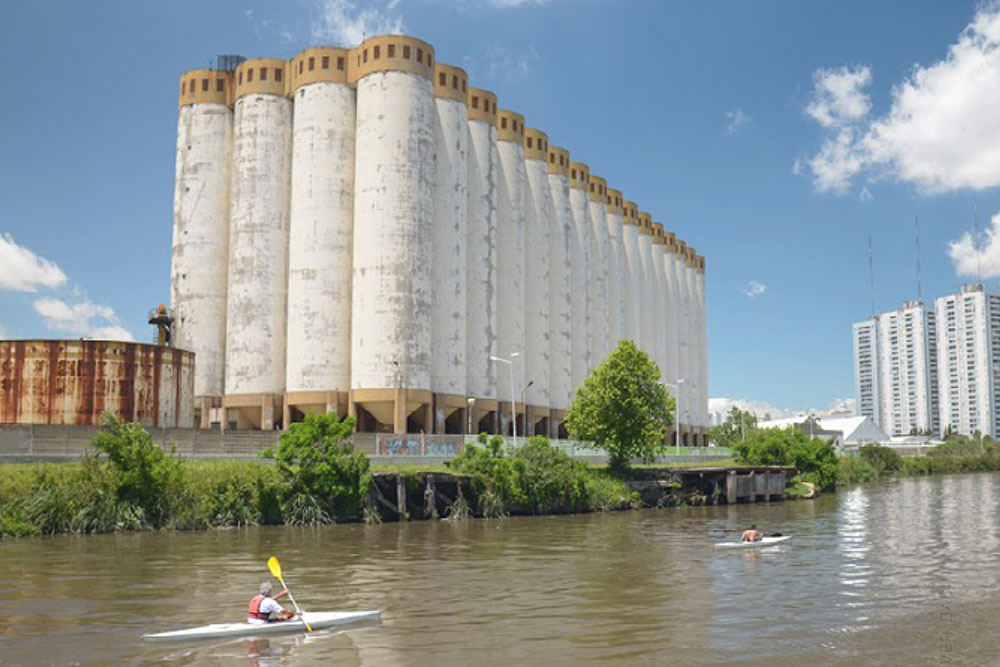
The river basin (above) has historically been largely populated by tanneries and industrial facilities that typically have dumped waste directly into the river, creating a toxic soup of chemicals.
Drawing and photos courtesy of ACUMAR
Community Demands
The project is the end result of a 2008 decision by Argentina’s Supreme Court in a class-action lawsuit, Beatriz Silvia et al. v. National State, brought by a group of residents who called themselves “the Guardians of the Riachuelo” against the government, city and province of Argentina, and 44 companies. The locals, led by activist Beatriz Silvia Mendoza, demanded that the river and the natural environment around it be remediated and made safe for the community.
The court ruling established the Autoridad de Cuenca Matanza Riachuelo (ACUMAR) to oversee development and implementation of the cleanup plans, It tasked AySA with procurement and project implementation.
ACUMAR developed a plan that involved several additional projects beyond the pretreatment system. These included relocating people most at risk, redeveloping blighted neighborhoods, retrofitting bridges to allow foot and bicycle traffic and new public parks with extensive green spaces. But with the rise of President Javier Milei to power, the future of most of those projects is in jeopardy, says Ana Di Pangracio, deputy director and biodiversity director at FARN, an Argentine non-governmental organization NGO focused on sustainable development and human rights.
Philosophically aligned with U.S. President Donald Trump, Milei has slashed funding for infrastructure programs in Argentina since taking office in 2023. “While some partial infrastructure works began, the comprehensive neighborhood improvements and public spaces envisioned have been largely abandoned or indefinitely stalled,” Di Pangracio says.

The three components of the system move and pretreat effluent back to the river.
Drawing courtesty of Webuild
The System
The Riachuelo system is integrated into three primary components. Lot 1, completed in 2022, collects wastewater through a winding network of tunnels and water collection basins; Lot 2, now wrapping up, handles pretreatment; and Lot 3 discharges treated water into the Río de la Plata, the estuary that the Matanza River feeds into in the town of Dock Sud via a 7.5-mile subfluvial tunnel, built 131 ft beneath the riverbed. The 14-ft-dia tunnel carries water to an outfall with an advanced diffuser system consisting of 34 vertical steel pipes, 90-ft-long, that push the water out along the riverbed.
Lot 1, which began construction in 2015, includes nearly 10 miles of sewers. Ghella used two tunnel boring machines to excavate the main tunnel line. Pipe jacking connects branch sewers and an additional 1,739-ft tunnel was excavated using conventional digging methods, according to the firm.
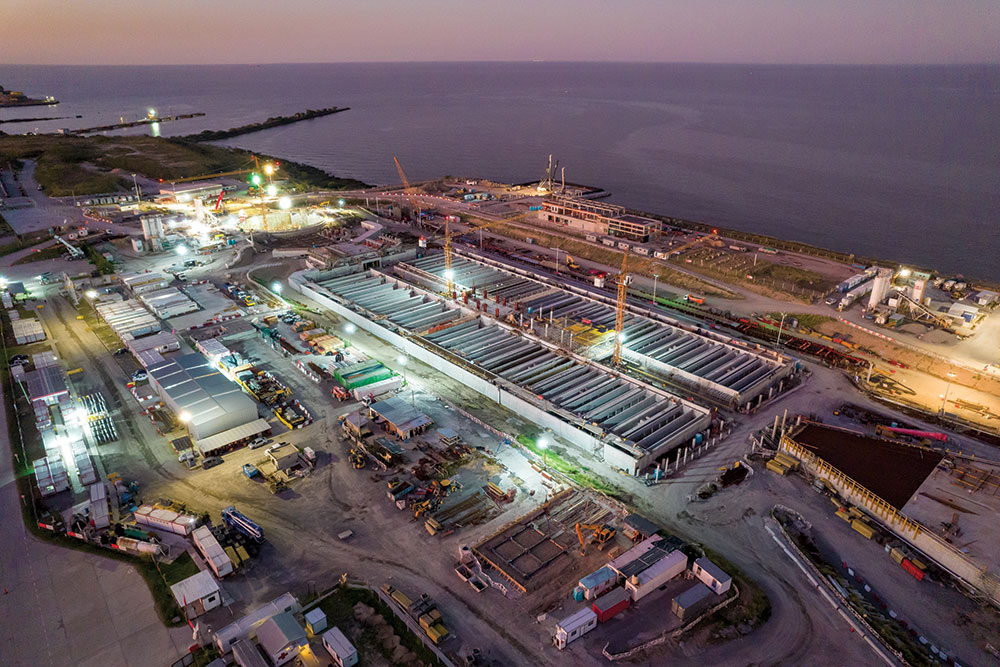
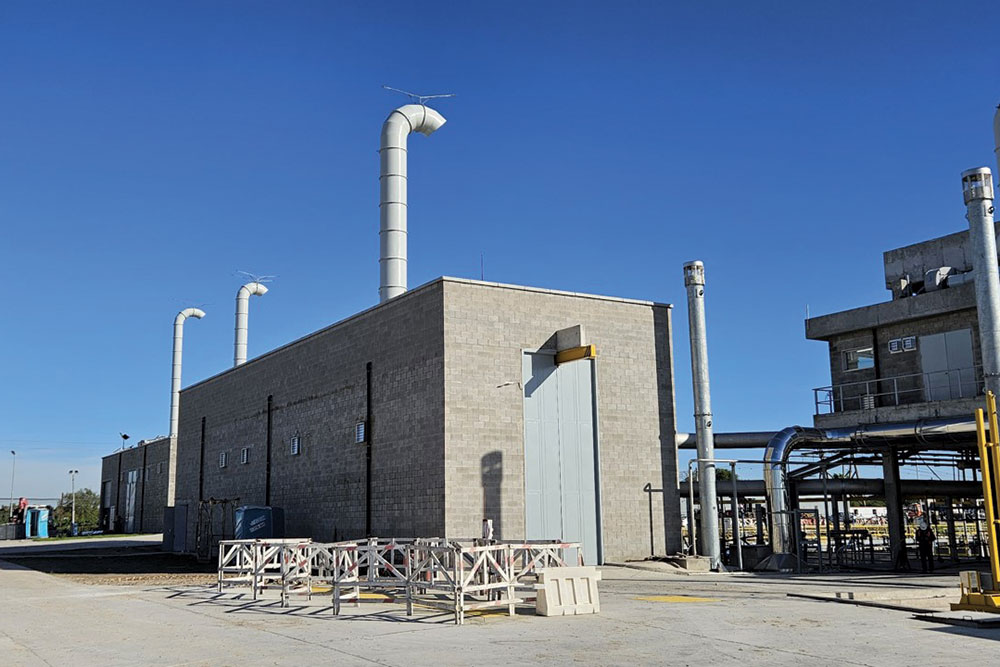
The pretreatment facility uses tanks to remove solids and cooking grease from the effluent while chimney blowers remove air pollutants created during the pretreatment process at heights safely removed from waste streams.
Photos courtesy of Webuiid
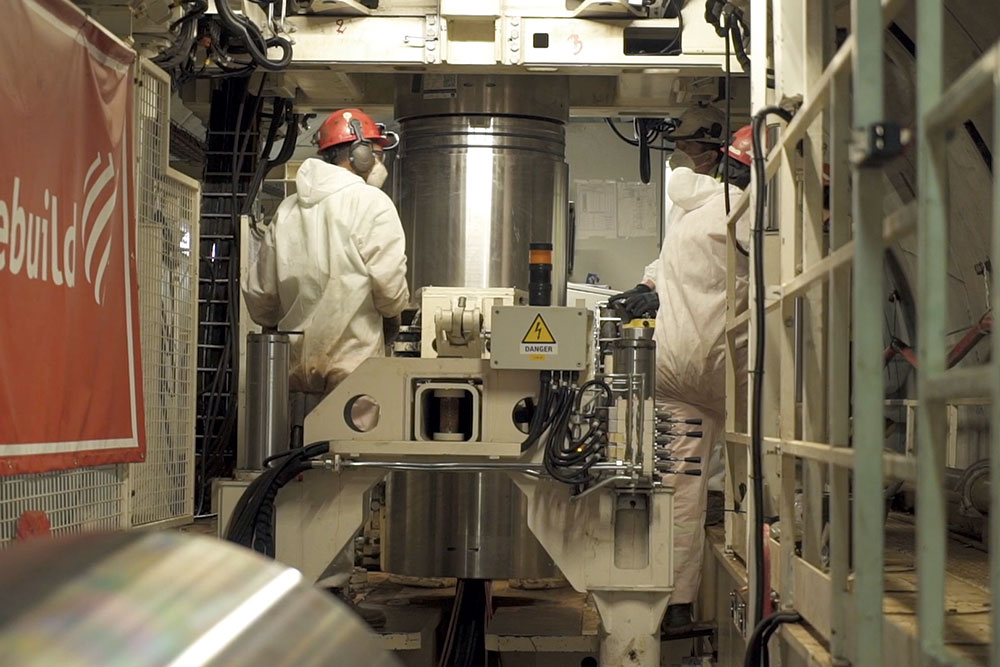
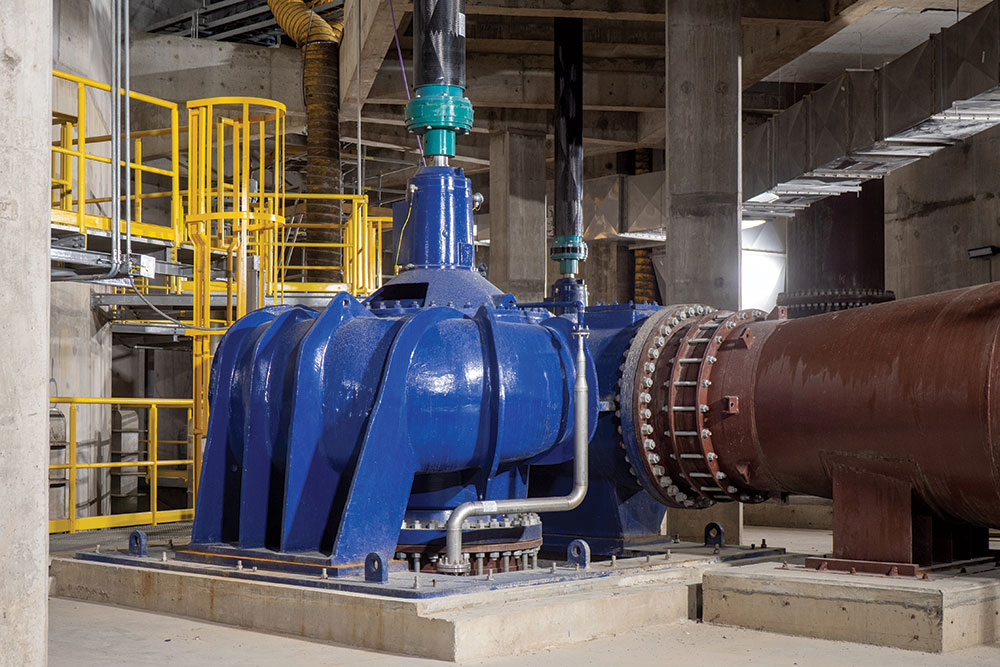
Technology used included the manufacture and installation of a riser system to diffuse pretreated water back to the river, and 16 pumping stations that move effluent from the collector basins to treatment, then out of the facility for discharge.
Photos courtesy of Webuild
The plant on Lot 2 is equipped with 16 automated pumping stations that are able to adapt to water volume and velocity changes. The plant provides only pre-treatment, using settling tanks and clarifiers to separate solids and grease from effluent, and subsequently trucking them offsite.
Mirko Martini, who served as project technical director for Webuild on Lot 3 for six years before moving to its U.S. subsidiary Lane Construction Corp., says the Río de la Plata will do much of the heavy lifting in reducing water pollutants.
“All inhabitants are entitled to the right to a healthy and balanced environment fit for human development in order that productive activities shall meet present needs without endangering those of future generations; and shall have the duty to preserve it. As a first priority, environmental damage shall bring about the obligation to repair it according to law. The authorities shall provide for the protection of this right, the rational use of natural resources, the preservation of the natural and cultural heritage and of the biological diversity, and shall also provide for environmental information and education.”
— Section 41, “New Rights and Guarantees” Chapter, Argentine Constitution (1994)
Source: Text from 1994 Amendments to Argentine Constitution
“The Río de la Plata is such an immense water body with great dilution capacity that allows you to use dilution as a means of treatment,” Martini says.
Lot 3 provides a pathway for treated water to leave the plant. Treated effluent moves downstream through a series of 164-ft-deep shafts that lead to a subfluvial outfall tunnel, from which the water is discharged through a riser system within a tapered diffuser tunnel.
Part of the Lot 3 scope-of-work involved siting the pretreatment plant, which juts out over the Río de la Plata. The construction team filled the portion of the site built over the water with non-contaminated material dredged from other parts of the river.
AySA’s initial Lot 3 concept envisioned an outfall tunnel feeding into a transition shaft connected to a pipeline with a vertical riser system of steel pipes to return the pretreated effluent back to the river, with the shaft and pipeline set atop a system of piles.
Nicola Valiante, Webuild engineering director of design services, says his team analyzed AySA’s concept and concluded that the initial design could be improved. It was “crystal clear in looking at the layout that [the initial concept gravity system] would produce additional hydraulic losses, because … there are different changes of diameter, change of direction, so this would include additional head losses,” he says.
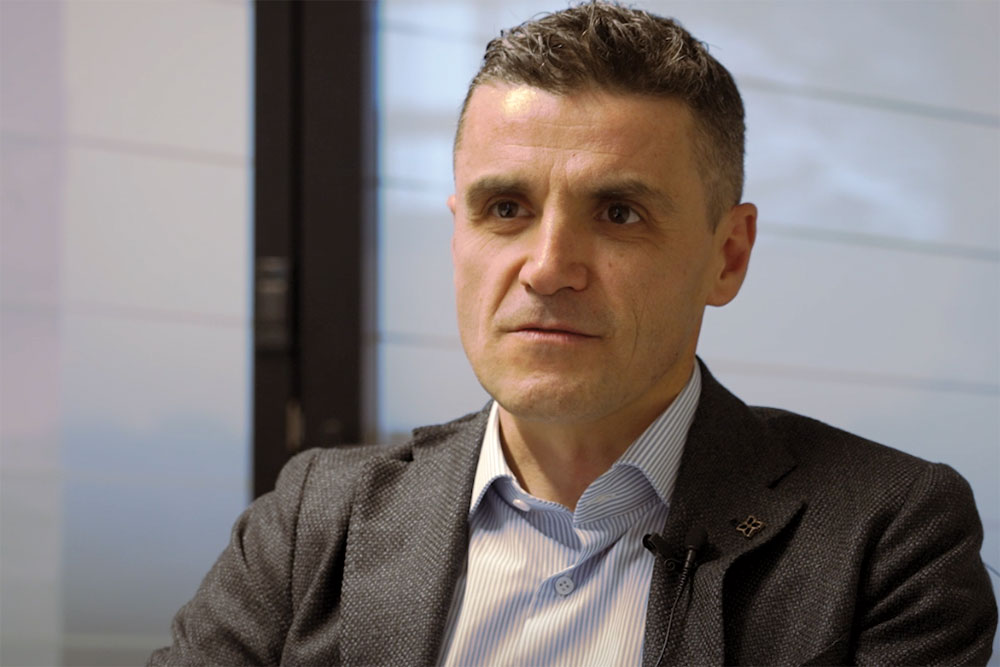
Webuild engineering director Nicola Valiante took two years to improve the concept for the risers, with the result a first-of-its-kind solution.
Photo courtesy of Webuild
Additionally, placing piles to support the tunnel would only stir up contaminants in the sediment, potentially releasing more chemicals and toxins into the river, and installing piling would require workers to enter the river, along with equipment. This presented safety concerns in an area heavily navigated by the shipping industry, Valiante says.“Any dredging activity, piling activities, offshore activity would have put into suspension [contaminants] and would have created significant environmental impacts." Removing those elements would not, he says.
Valiante proposed an alternative approach—vertically pipe jacking the 34 risers from inside the end of the outfall itself, and both lengthening and widening the tunnel in order to enable crews to perform their work from within the tunnel, rather than in the river.

The coarse material shaft at the Inlet Pumping Station is shown being filled with river water to begin the testing process.
Photo courtesy of Webuild
This approach would not only reduce leaks and improve safety, it also would increase discharge capacity, Valiante said. The initial discharge capacity was set at 24 cu m per second, but the final discharge is 27 cu m per second, an increase of almost 10% over what was originally proposed.
The owner agreed to the change, and Valiante and his team spent two years developing the riser system design, which is a first-of-its-kind worldwide, he says.
While the project is expected to have a significant impact in Buenos Aires and, according to the World Bank, meets some United Nations sustainability goals, many local activists say that the project will be less effective in isolation than it would as part of a comprehensive program as initially ordered by the Argentine Supreme Court.
Yet Argentina’s highest court shut down further oversight of ACUMAR in October last year.
“The Rio de la Plata is such an immense water body with great dilution capacity that allows you to use dilution as a means of treatment.”
Mirko Martini, project technical lead, Webuild
FARN’s Di Pangracio says the end of legal oversight is a violation of basic human rights. Budgetary austerity measures and discontinuities across political administrations has undercut ACUMAR’s original goals, she says, resulting in a population where 50% lack access to basic sanitation and 30% lack access to safe drinking water.
“These realities point to an alarming regression in the commitments made under the 2008 Supreme Court ruling in the Mendoza case that were meant to uphold environmental justice and restore the dignity of affected communities,” she told ENR.
As a result, in April, FARN, along with other human rights groups, filed a complaint with the Inter-American Commission on Human Rights that Di Pangracio says hopefully “reactivates international human rights protections.”
Still, the water infrastructure project now completing will have major positive impact in the community and within the basin, says María Catalina Ramírez, World Bank senior water supply and sanitation specialist. “We are already seeing improvements, with reduction of solid waste in the margins and in the river notable, together with some indirect biodiversity markers ... in the river such as the presence of birds and other animals.”
Noting that it took several decades to improve environmental conditions of the Thames River in England, Ramírez says improvement in the Riachuelo basin will similarly take time.
“As in any other major urban river, cleanup efforts are a continuous process and require many actions from many parties including neighbors, industries and state,” she says. However, Ramírez adds, with the Riachuelo river system work now complete, “It is expected that improvements in certain areas of the river regarding water quality will be monitorable.”