A Slide Show History of the World Trade Center
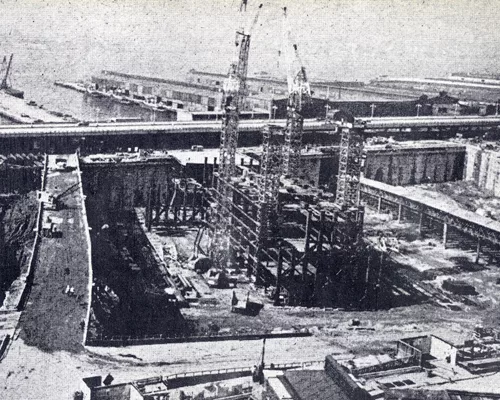
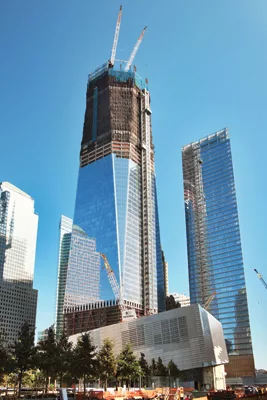
2009 - Bovis Lend Lease starts construction of the 185,000-sq-ft National September 11th Memorial and Museum. Federal stimulus of $500 million funds help revive the Fulton Street Transit Center, designed by Arup. The Freedom Tower is renamed One World Trade Center.
Photo courtesy 9/11 Memorial and Museum
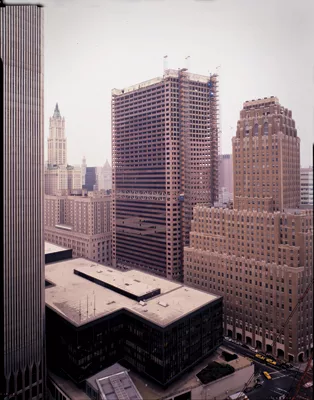
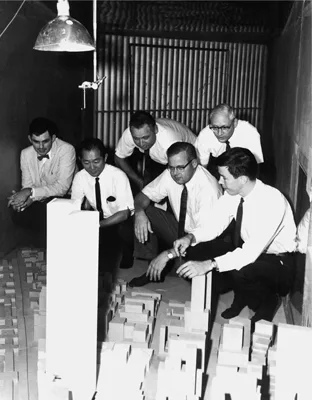
1964 - Tests at Colorado State University, led by wind engineer Alan G. Davenport, launch a new tool for tall-building design. Plans for each twin tower call for an extruded square, some 209 ft on a side, framed in structural steel. Perimeter moment frames would form Vierendeel trusses so that the frame acts like a giant hollow tube, cantilevered vertically from the ground. From left: Davenport, architect Yamasaki, port authority planner Malcolm P. Levy, structural engineer John Skilling, wind engineer Jack E. Cermak, structural engineer Leslie E. Robertson.
Photo Courtesy of Davenport
1969 - Crews begin erecting megacolumns shaped like short-handled pitchforks�currently called 'tridents'�near the base of One WTC. ENR 3/13/69
ENR Archive
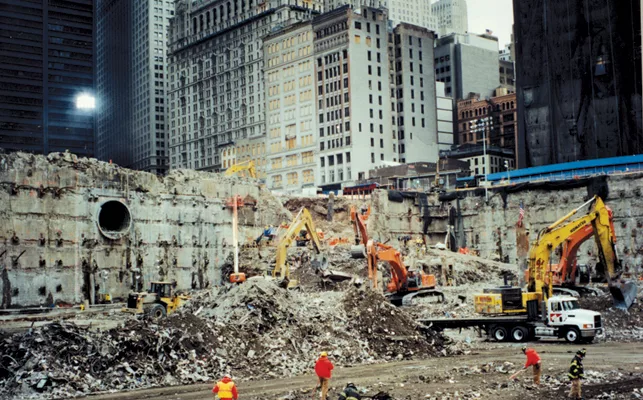
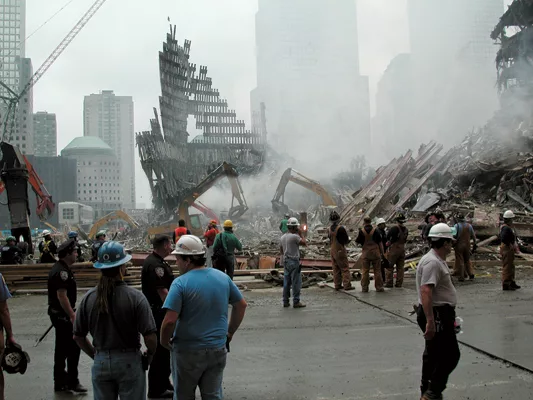
September 11, 2001 - The collapse of the towers destroyed the terminus for the PATH train, and inflicted extensive damage on the surrounding buildings and subways. ENR 9/17/01 p. 10
Tom Sawyer
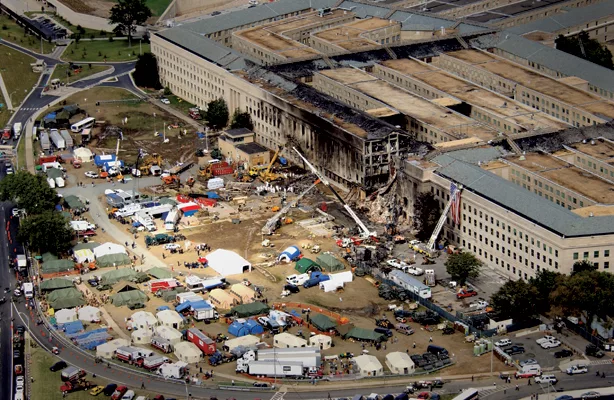
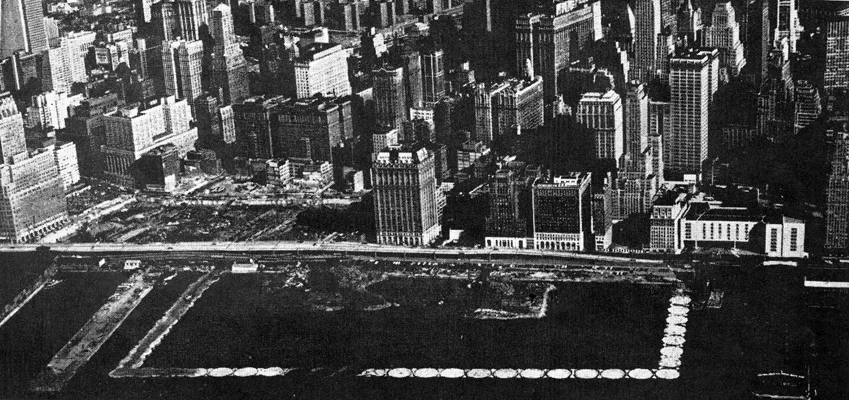
Soil from the excavation is moved directly west to extend Manhattan Island into the Hudson River, creating a 23-acre landfill for the future Battery Park City. ENR 4/18/68 P. 44
ENR Archive
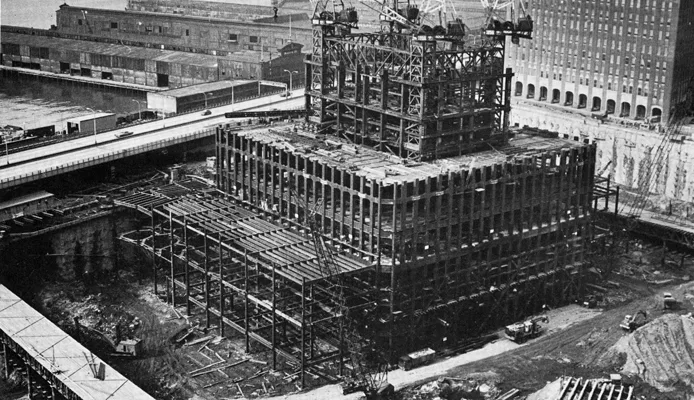
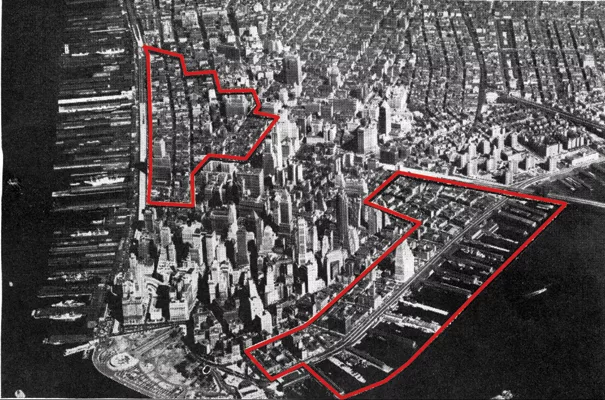
1958 - The Downtown Lower Manhattan Association releases a master plan to revitalize two sections of New York City's financial district. One area was along the East River, and the other, which included the 15-acre site that would become the World Trade Center (WTC), was along the Hudson River. ENR 10/23/58 p. 77
ENR Archive
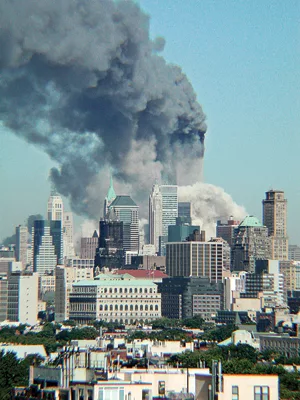
September 11, 2001 - Terrorists also crashed a plane into the Pentagon in Virginia. In total, 2,982 victims perish that day, including 2,753 in New York City, 184 at the Pentagon and 45 near Shanksville, Pa., where a fourth hijacked plane crashed. ENR 9/17/01 p. 10
Photo Courtesy of Dept. of Defense
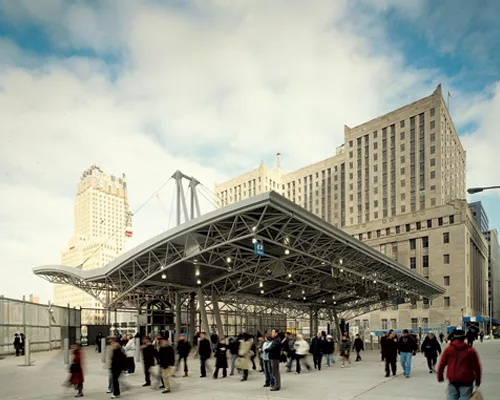
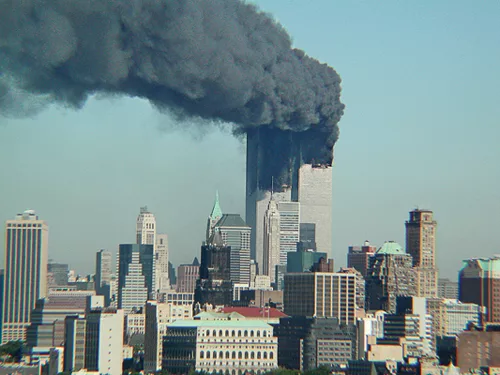
September 11, 2001 - Six weeks after Silverstein Properties signs a 99-year real estate lease with the port authority for the 10-million-sq-ft WTC, suicide terrorists, using two hijacked planes as missiles, bring down the twin towers and destroy the entire WTC. ENR 9/17/01 p. 10
Tom Sawyer
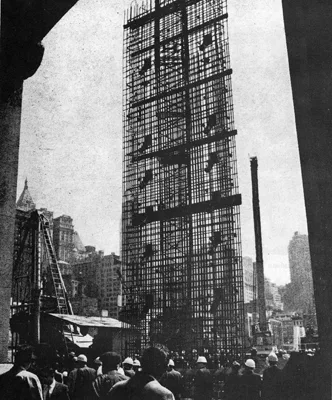
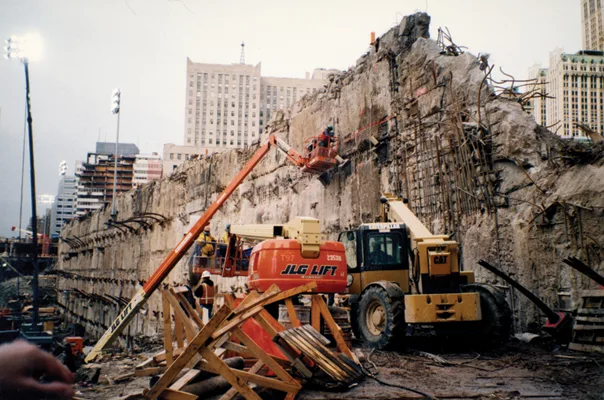
Seven-story steel cages, each almost 25 tons, are lowered into the ground to reinforce the 3,300-ft-long, 80-ft-deep cutoff basement wall around an 11-acre section of the site. ENR 4/13/67 p. 62
ENR Archive
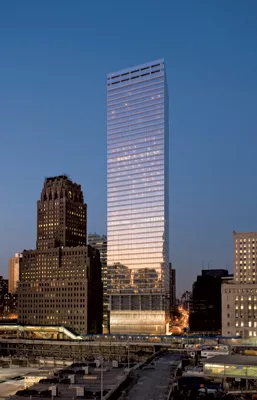
2002 - In February, workers begin rebuilding the No. 1 subway line, damaged in the attacks. In May, works begins on a new 7 WTC, designed by Skidmore, Owings & Merrill with Tishman Construction as construction manager. On May 22, Beyer Blinder Belle Architects & Planners, with civil engineer Parsons Brinckerhoff, is named to plan a 16-acre WTC development. ENR 6/3/02 p. 11
Nadine Post
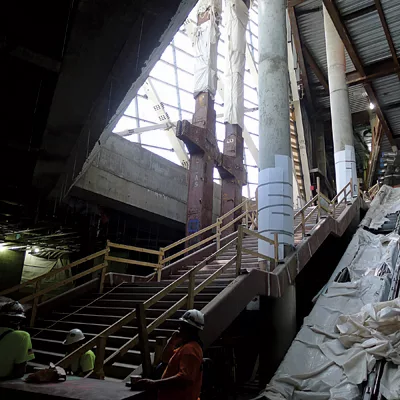
2011 - Museum exhibits are installed during construction. The entrance stair to the underground museum offers view of one of the columns, called a trident, from the original towers. The 'survivor stair,' covered during construction, is flanked by a new viewing stairway. Part of the original bathtub wall also will be on view in the museum.
Nadine Post
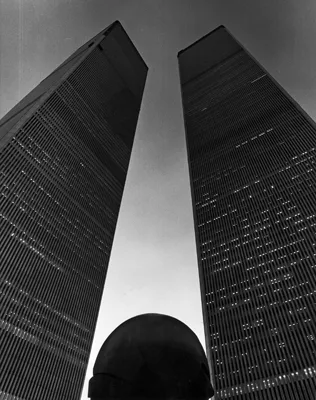
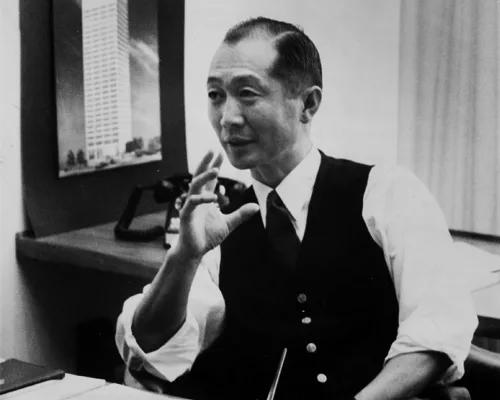
1962 - New York and New Jersey laws direct the Port of New York Authority to erect the WTC and acquire and renew the commuter rail, currently known as the PATH, whose trains to New Jersey pass under the site. Projected cost: $470 million. The port authority also names architect Minoru Yamasaki (left) & Associates and associate architect Emery Roth & Sons to design $270-million WTC, including a 72-story high-rise. ENR 9/27/62 p. 13
ENR Archive / Joe Clark
The port authority selects Tishman Realty & Construction Co. as WTC consultant-contractor in February. (Tishman became general contractor in 1967.) Demolition of low-rise buildings on-site begins in March, followed by an Aug. 5 groundbreaking. ENR 3/3/66 p. 15
ENR Archive
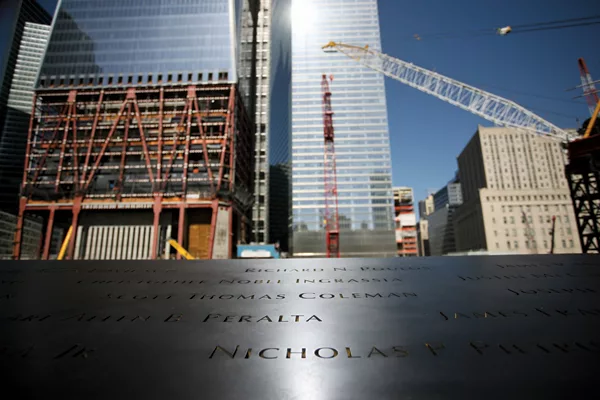
2011 - Eighty percent of the 9/11 memorial, an eight-acre park in the heart of the redevelopment, is scheduled to open to the public on Sept. 11.
Photo courtesy 9/11 Memorial and Museum
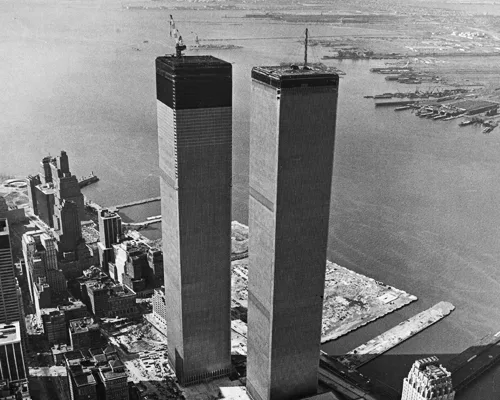
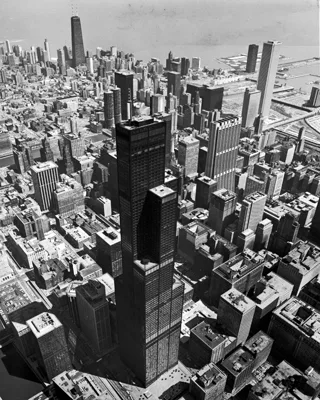
1973 - When the Sears Tower is complete at a record height of 1,451 ft, 1 WTC becomes the second-tallest building in the world. Two WTC finishes up in July.
ENR Archive / Ms. Rita P. Krider
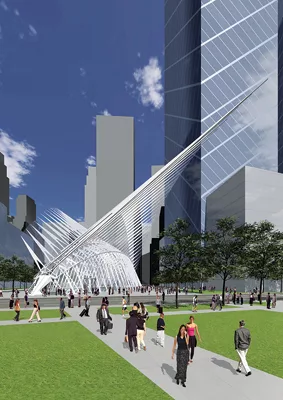
2004 - 'Reflecting Absence' is announced as the winning design for the WTC memorial. The concept by unknown architect Michael Arad with landscape architect Peter Walker centers around acre-size reflecting pools to mark the footprints of 1 and 2 WTC. On Jan. 22, the conceptual design by architect-engineer Santiago Calatrava is unveiled for the port authority's planned $2-billion, multimodal WTC Transportation Hub. ENR 1/12/04 p. 7, ENR 2/2/04 p. 12
Courtesy of Port Authority of New York / New Jersey

2002 - Also in May, the $650-million cleanup ends, under budget and without a serious injury. The 'bathtub' is stabilized by July, when the Lower Manhattan Development Corp. is formed to oversee the planning for the rebuild. On July 16, LMDC releases six land-use proposals in preparation for an unprecedented public hearing. The July 20 'town hall' draws 4,000 people. ENR 7/22/02 p. 7
Unknown
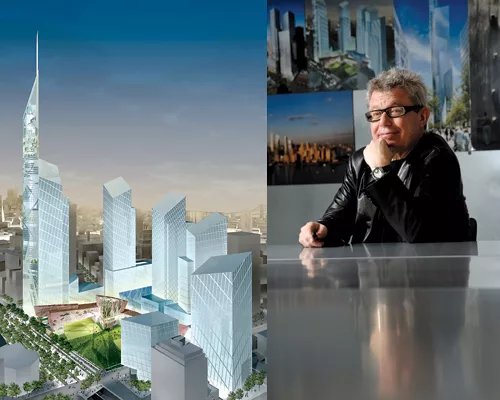
2003 - Studio Daniel Libeskind's winning WTC master plan, unveiled on Feb. 26, envisions a transportation hub, memorial, museum, garden, performing-arts center, four commercial office high-rises and an iconic broadcast tower rising to 1,776 ft and joined at the hip to a 70-story office tower. Libeskind calls his skyscraper the Freedom Tower. ENR 3/10/03 p. 12
Photo coutesy of Studio Libeskind
2003 - LMDC announces that Libeskind will collaborate, through schematic design, with Skidmore, Owings & Merrill's David Childs on the Freedom Tower. SOM was already working for Silverstein for the replacement 1 WTC, as well as the replacement 7 WTC, which collapsed on 9/11. On Nov. 23, the $323-million temporary PATH station opens. ENR 7/28/03 p. 9, ENR 12/1/03 p. 10
Courtesy of Brookfield Properties
2006 - On April 27, two days after the lease agreement is formalized, Freedom Tower construction begins. In May, budget hikes threaten the $750-million Fulton Street Transit Center. The extra costs are associated with land acquisition. On May 23, Silverstein's 52-story replacement for 7 WTC opens. ENR 9/12/05 p. 37
Photo courtesy of Silverstein Properties
The redevelopment of the World Trade Center site is only the latest chapter in a construction story that began more than a half century ago. This slide show timeline covers the full scope of the World Trade Center's history, from the earliest planning to the current reconstruction efforts.
Unknown
1985 - With construction well under way, the 47-story WTC 7, developed by Silverstein Properties, will open in 1987. ENR 11/28/85 p. 30
Photo Courtesy of Silverstein
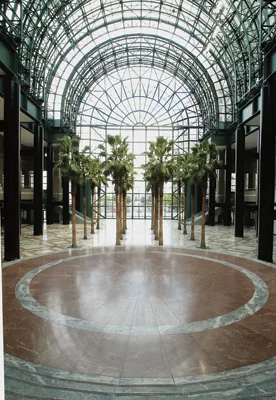
2002 - In August, the restored Pentagon is reoccupied. Brookfield Properties, owner of the damaged the World Financial Center, the WTC's neighbor, completes a $50-million reconstruction and improvement of the Winter Garden, the WFC's showpiece, in time for the first anniversary of 9/11. ENR 9/9/02 p. 8
Courtesy of Brookfield Properties
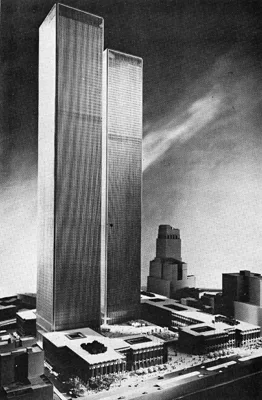
In June, the National Institute of Standards & Technology releases its final draft of a $16-million study of the twin towers' collapse scenario, triggering a debate over the report's 30 recommendations for changes to tall-building codes, standards and design practice. In October, the 10,000-page NIST study concludes that the twin towers' structural frame, though severely damaged by the planes, would likely have withstood the heat of the jet-fuel-triggered fires had the planes and the debris from the impact not compromised perimeter-column fireproofing. ENR 6/28/04 p. 12, ENR 11/1/04 p. 10
Tom Sawyer
1972 - In January, the first tenants for 1,362-ft-tall 2 WTC move in. The port authority's name changes to the Port Authority of New York & New Jersey. One WTC is completed in December.
ENR Archive
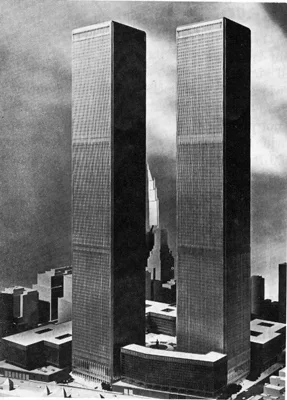
2011 - First Lease for One WTC Conde Nast to lease one million sq ft in 1 WTC. In July, Westfield Group and port authority agree on joint-venture terms for 500,000 sq ft of retail at the WTC.
Joe Woolhead
1966 - Yamasaki unveils a new design for the WTC complex, which would grow in cost to $575 million by 1967. Otis Elevator wins a record $35-million contract for 46 of the largest high-speed elevators ever built, plus 154 other elevators and 49 escalators. The twin towers' 192,000 tons of structural steel will be erected under a $20-million contract awarded to Karl Koch Erecting Co. The $21.2-million curtain-wall contract called for Alcoa to fabricate and erect 43,600 windows. ENR 3/24/66 p. 17
ENR Archive
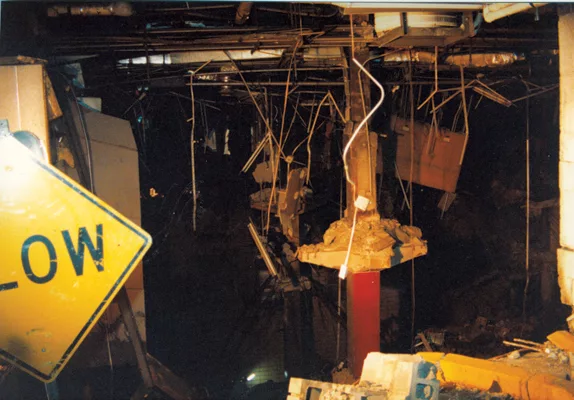
1993 - A truck bomb explodes in the WTC's underground garage, killing six people, creating a giant crater in the basement floor slabs and damaging the Vista Hotel, which is part of the WTC complex. ENR 3/8/93 p. 8
Unknown
1964 - On Jan. 18, the port authority unveils plans for 1,350-ft-tall twin towers. Each would beat the Empire State Building by 100 ft. Consultants for the $350-million WTC include structural engineer Worthington, Skilling, Helle & Jackson, mechanical engineer Jaros Baum & Bolles and electrical engineer Joseph R. Loring and Associates. ENR 1/23/64 p. 33
ENR Archive
The redevelopment of the World Trade Center site is only the latest chapter in a construction story that began more than half century ago. This slide show timeline covers the full scope of the World Trade Center's history, from the earliest planning to the current reconstruction efforts.

Related Products
See More Products


×