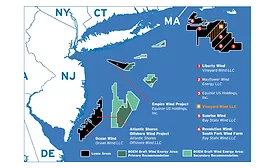
Massachusetts, Connecticut and Rhode Island aim to share developer project proposal selection and boost cross-border economies of scale to meet clean energy production goals.
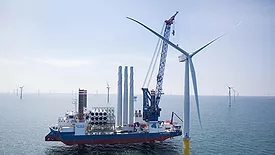
Offshore wind’s dual tendency to highlight critical needs and shatter expectations has shown itself more than once. Like our other infrastructure, it needs large-scale, long-term investments in which both public and private sectors play a role.
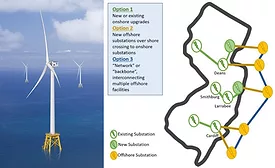
New England state reveals details of fourth round of developer bids—with new terms on cost hikes—while New Jersey launches expanded bid for ocean-to-shore power transmission options and permits first construction of 1.1-GW Orsted project.
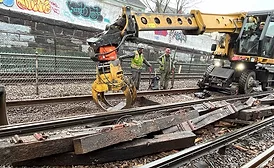
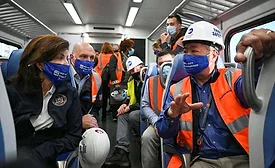
The MBTA submitted a four-part safety plan with the Federal Transit Administration after a rash of near miss accidents and an incident that left a worker seriously injured.
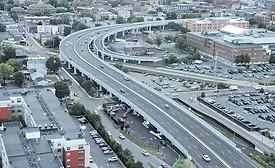
Providing a 75-year design life for the structurally deficient critical link between the city of Chelsea, Mass., its northern suburbs and Boston, the rehabilitation of the Chelsea Viaduct involved night work with heavy equipment and posed many risks.
Maintenance and repair work is planned for two spans linked to mainland Massachusetts while designs for their estimated $4-billion replacements move forward.
The project involved careful planning and construction to rehabilitate 113 Brattle St.—one of Cambridge’s most historic addresses—as well as build an expansion onto the back of the building.
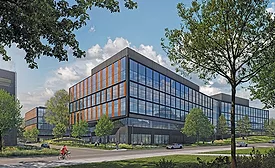
Located on a 6-acre site in Greater Boston’s innovation and life sciences cluster, the five-story, 500,000-sq-ft office and lab building provides a flexible, column-free floor plan to maximize custom interior layouts and provide structural and building system capacity for tenants.