Reaching the Paris Agreement’s greenhouse-gas-emission reduction targets to limit global temperature rise to 1.5°C by 2100 is possible but extremely difficult without huge commitments and major actions of G20 nations and others, says a new study.
House-Senate committee measures would have up to 10 times more impact than the Energy Act of 2020, says analysis, as Chevron says it will grow lower carbon energy businesses by $10 billion through 2028.
Achieving ambitious greenhouse gas emission mitigation goals in the building sector is essential to limiting global warming, but accomplishing this goal requires firms to assess their regional challenges.
China announced last week at the United Nation’s 75th General Assembly and first virtual General Debate thatit will scale up its climate commitment with the aim of peaking carbon dioxide emissions before 2030 and achieving carbon neutrality before 2060. The meeting coincided with the virtual Climate Week NYC 2020.
New York has finalized regulations designed to significantly reduce the use of greenhouse gases called hydrofluorocarbons—a refrigerant common in air-conditioning systems.
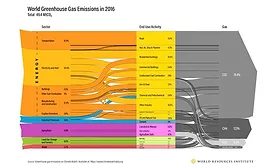
Energy consumption is by far the biggest source of human-caused global greenhouse gas emissions, accounting for 73% of the total GHGs, according to the World Resources Institute.
A radiation-shielded, inflatable greenhouse with a hydroponic growing system designed by undergraduate students at Dartmouth College’s Thayer School of Engineering could sustain four astronauts on a 600-day mission to Mars as soon as 2030.
The target window is shrinking for serious design change to cut GHG emissions. Engineers know what works and what doesn't. Veteran engineer says: Let's do it!
Increasing electric vehicle fleets, along with walkable and bikeable streets and access to public transportation in cities, suburbs and rural and low-income communities across the Northeast and Mid-Atlantic regions are among the strategies in a new report calling for a regional clean transportation plan.