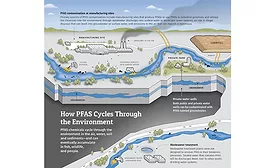
As the number of communities in the U.S. discovering high levels of per- and polyfluoroalkyl substances in water supplies continues to grow, industry and local officials are waiting on legislative and regulatory leadership to set limits and standards for this pollutant class.
The outlook for new U.S. Environmental Protection Agency guidance aimed at streamlining permit approvals for natural gas pipelines and other energy infrastructure projects is murky, at best, and could lead to more frequent legal skirmishes, some observers say.
Water recycling and other forms of reuse—such as direct potable reuse—have become mainstream enough to attract the attention of the U.S. Environmental Protection Agency.
While the Environmental Protection Agency has proposed a clean up standard of 70 parts per trillion for some PFAS chemicals, the Environmental Working Group says a safe standard is 1 part per trillion.
The U.S. Environmental Protection Agency’s 2017 Toxics Release Inventory National Analysis indicates that since 2007, releases of toxic chemicals by manufacturers declined, despite a growing economy.