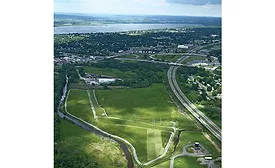
As one of five projects that are part of the Hurricane and Storm Damage Risk Reduction program, the West Bank and Vicinity project improves hurricane and flood-control protection, decreasing the potential for damage in New Orleans and the surrounding parishes.
To combat failing prestressed concrete cylinder pipe (PCCP) in its system, the Washington Suburban Sanitary Commission has placed a high priority on replacing sections of existing PCCP with ductile iron or steel pipe.
The new wastewater treatment plant is designed for an average daily flow of 332,000 gallons and provides nutrient removal to meet effluent requirements of 3.0 mg/l total nitrogen and 0.3 mg/l total phosphorus.
One Water, also known as integrated water management, is an approach that not only helps the environment and makes a community more resilient but also helps utilities to manage their bottom line.
A comprehensive panel discussion covering lessons learned during last spring’s spillway failure at Oroville Dam was a highlight of the annual Dam Safety conference.
The Newtown Creek Wastewater Treatment Plant in Brooklyn is the largest of 14 wastewater treatment plants owned and operated by the New York City Dept. of Environmental Protection.
The former unlined landfill that operated in the town of Salina, N.Y., from the late 1950s to the mid-1970s and accepted all types of waste had been dormant for nearly 20 years.