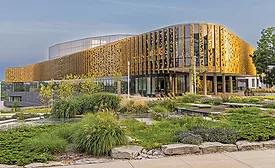
With a design inspired by WMU’s natural surroundings and its Native American heritage, this project realized a student center that fosters connection, community and collaboration.
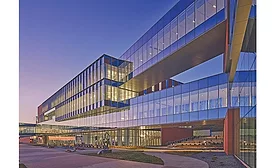
At more than 600,000 sq ft, the Jeffrey T. Fort Neuroscience Research Building is one of the largest and most advanced neuroscience facilities in the U.S.
Transforming a three-building complex that houses and supports campus programming and initiatives related to access, equity and inclusion, the project includes a mass timber hybrid addition and comprehensive renovations to an adjacent 19th-century building that now has all new electric systems.
The 165,000-sq-ft biotech production facility has a conferencing center, shipping and logistics areas, underground parking, collaboration spaces and multiple roof terraces.
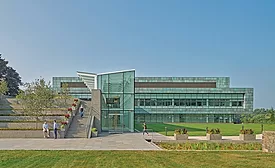
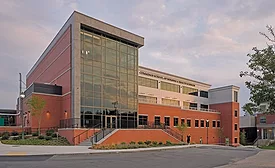
Situated in the heart of the Endicott College campus, the four-story, 70,000-sq-ft Cummings School building is designed for experiential learning with linking classrooms, labs, offices, multipurpose meeting rooms, lounge spaces and support rooms.
The 126,000-sq-ft multidisciplinary building is designed to be a creative hub for innovation by showcasing RIT’s technological and arts programs with five large classrooms, studios for music and dance, a flexible event theater and seven maker/shop spaces ranging from wood and metal shops to 3D printing, electronics and textiles.
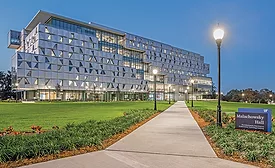
The University of Florida’s Malachowsky Hall Data Science and Information Technology building is an interdisciplinary hub that brings together the colleges of engineering, medicine and pharmacy.



-New-Build-02.webp?height=168&t=1730488743&width=275 "Rochester Institute of Technology")