Ongoing Effort to Rehabilitate Portland's Aging Sewer System
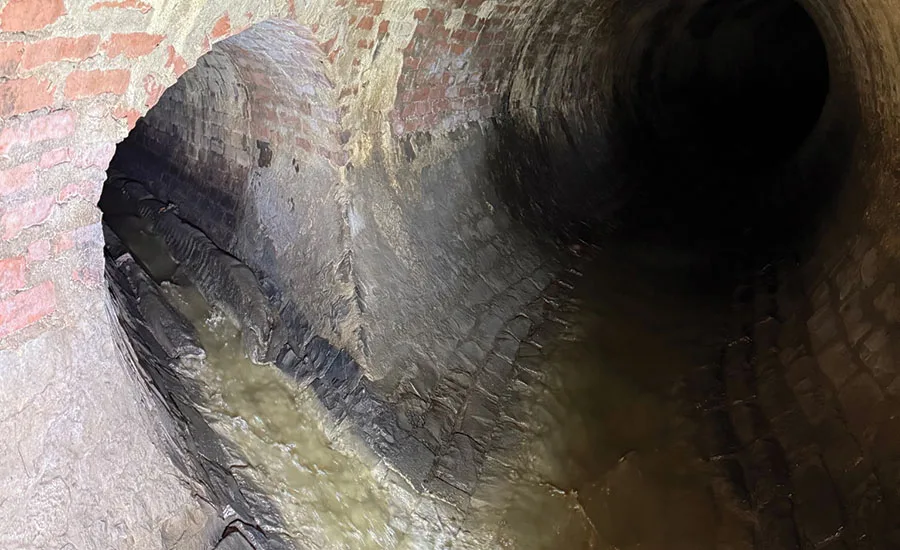
Around a third of sewers in Portland are more than 80 years old, with some, including unique egg-shaped brick pipe, dating to the early 1800s.
To repair and replace its aging sewer system, the City of Portland Bureau of Environmental Services has several programs running concurrently, including a small-diameter program, a bespoke Downtown–Old Town program and the large-diameter program (36 in.-plus), which includes the Carolina Trunk replacement. Some of the pipes date back to the early 1800s; around one-third of the city's sewer lines are more than 80 years old. On average, the city spends about $30 million to $50 million annually on the rehabilitation programs, funded by BES ratepayers.
While the Carolina project is the largest so far, there are several other major projects currently in the design phase. "Right now, the large-diameter program is targeting some of our brick sewers, where we've seen failures," says Amy Dunning, BES engineering supervisor. Inspectors typically use CCTV to analyze pipe conditions, though BES has piloted some drone inspection. "Making sure we're having a signal is the biggest challenge with the drone inspections, but I expect that technology will move along and get better."
As with the Carolina project, many other trunk lines have unique hurdles to overcome, including some older brick pipes and lines that are not circular. "We have an egg-shaped sewer that we're tackling right now" that is approximately 42-in. x 79-in., Dunning says. The shape provides an "extra special challenge when it comes to rehab," which will likely use cured-in-place piping.
Many of the trunk lines lie in much flatter areas than the steep slopes at the Carolina site. The recently completed Stark Trunk Rehabilitation Project, for example, utilized spiral wound lining as a seismically resilient solution since the project was located near the Willamette River, where soil conditions are more soft and liquefiable.
The agency employs a robust team to tackle the challenges. "We have in-house construction management, inspection, safety and public involvement teams that are accustomed to delivering this type of work, and it's really helpful for us to have those in-house resources to make sure that we're getting the best value for the citizens of Portland," says Ryan Carney, BES engineering supervisor.
Looking for quick answers on construction and engineering topics?
Try Ask ENR, our new smart AI search tool.
Ask ENR →