Mental Health
Six Quanta Services Units Try Australian Suicide Prevention Model
MATES North America seeks to expand following pilot program
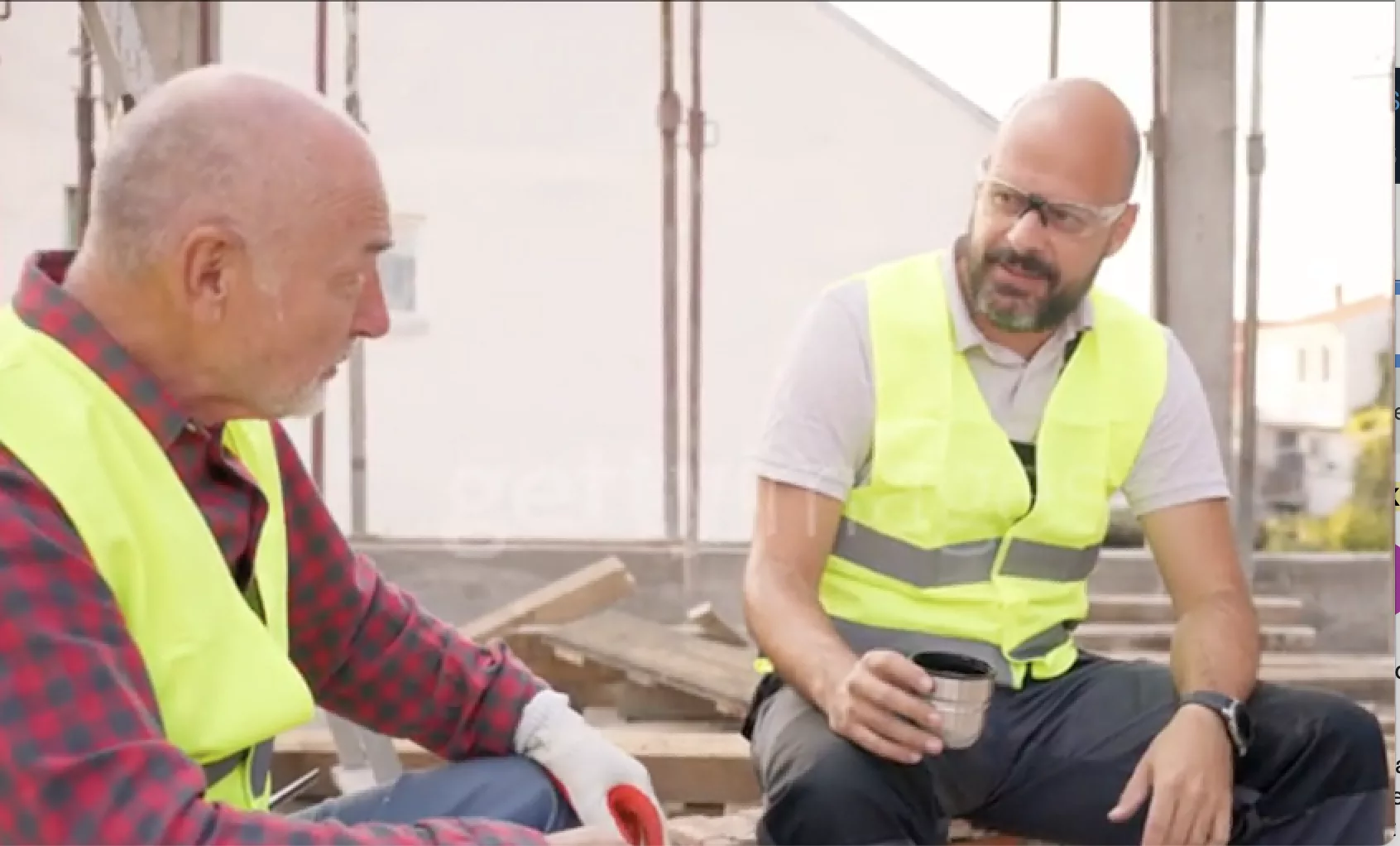
Peer-to-peer relationships and training are at the heart of the MATES North America pilot program, being adapted from the successful program used in Australia.

Katie Deal
Six companies operated by specialty contractor giant Quanta Services are now using an Australian suicide prevention approach—called MATES, that is based on building connections among employees—as part of a pilot to adapt the program to North American workplaces.
MATES in Construction is based on a peer-to-peer approach and its effectiveness has attracted attention in the U.S., leading to the North America pilot that started this year. It provides educational materials, builds capacity for peer support, supplies case management to help workers connect with professional services and supports jobsites that have experienced a suicide.
The MATES North America pilot program, which Quanta initiated, has been several years in the making.
In 2023, Quanta Services approached MATES leaders in Australia to become a partner so that the model would be tested across several union and non-union sites in the U.S. The pilot will help evaluate and refine MATES to ensure it is optimized for "the fragmented North American construction and healthcare environment," according to the program website. The goal is to "unite more employers, unions and safety orgs as partners in our cause."
The six Quanta units and their base locations are Blattner (Avon, Minn.); Hallen Construction (Plainview, N.Y.); Mears (Rosebush, Mich.); Potelco (Sumner, Wash.); Service Electric (Chattanooga, Tenn.) and Summit Line Construction (Heber City, Utah). All are contributing financially to the program with Quanta and other partners.
To prepare for the pilot, the MATES team listened to workers in the field and engaged an advisory group of industry leaders, unions, trade associations and workers, says Katie Deal, the Washington, DC-based head of engagement, partnerships and growth for MATES North America.
That input is being used to "localize" the program to reflect regional and company language and cultural norms.
Looking for quick answers on construction and engineering topics?
Try Ask ENR, our new smart AI search tool.
Ask ENR →
The MATES approach to relationship-building can also be seen as building "capacity," a term Quanta uses to describe its company-wide safety program.
In Deal's words, relationships "are really at the heart of a MATES program—both the relationships between the MATES staff delivering the program with the people participating in it, and those between workers themselves, who learn how to look out for and support each other when someone is thinking about suicide or in emotional distress, and connect them with further help if needed."
Those people "begin to build more awareness and capacity, to look out for each other, to notice signs if someone is struggling, either that they're thinking of suicide, or maybe they're not thinking of suicide necessarily, but they're in emotional distress, and they might need some support."
Relationships, awareness and capacity open the door to peer support for anyone who is struggling.
A key part of the program are general awareness talks that introduce workers to the problem of suicide, challenge mental health stigma and equip participants to start a mental health conversation. Those talks invite people to volunteer to play a more active role as a source of peer support, called Connectors.
That Connector receives training that includes recognizing if an individual is struggling or in crisis, and, when needed, helping that individual get together with a MATES case manager.
"There's usually no shortage of volunteers to go through that next level of training," says Deal. "So, it's not putting all the onus on the person struggling to raise their hand and seek help."
"And what we've seen," she adds, "from research on MATES in Australia and New Zealand, where this program's been around a long time, is that it provides capacity for the worker or for the Connector to reach out."
"MATES provides a sustainable system that supports our men and women, not one meeting or one training, a system of continual support," says Matt Compher, Quanta's senior vice president for operational performance. "It’s all about caring for our employees."
As a reminder, Deal notes that "suicide doesn't discriminate, it can impact anyone on a jobsite" or anyone who works at a company.
But, Deal says, "anyone on a job site can be part of suicide prevention."
For more information, visit the MATES North America website.