Water Infrastucture
Southern California Water Agencies Mount Massive Push for Reuse
June 3, 2026
Water Infrastucture
Southern California Water Agencies Mount Massive Push for Reuse
June 3, 2026The Groundwater Replenishment Project at the Tillman reclamation plant in Los Angeles is the largest active water project in California.

Related Links:
EPA Highlights Plan to Push for Greater Water Reuse by Utilities, Energy Sector
Where Parched California Is Finding New Water Sources
Construction Begins on Nation's First Direct-to-Distribution Water Reuse Facility
Not so long ago, the idea of treating wastewater to drinkable standards and reusing it to boost drinking water supply faced enormous public opposition. During the 1990s, Los Angeles officials were on track to build a facility to treat wastewater to highly purified standards before conveying it to spreading grounds in California’s San Fernando valley, where the water would trickle and filter down to groundwater basins and aquifers.
But the project was scrapped due to political and public fears about the safety and quality of water derived from treated effluent. Time and technology have changed since then. Today, water and wastewater utilities across the U.S. are testing, even embracing, the concept. Significant numbers of prospective users are also on board, as water scarcity has become a fact of life in a changing climate in California, and elsewhere.
Texas has been at the forefront for decades in development of programs to capture and reuse almost every drop of water in the typically dry state. The first direct treatment-to-distribution water reuse project in the U.S. is now under construction in El Paso. The 10-million-gallon-per-day (mgd) plant, designed by Carollo Engineers, is being built by a joint-venture of contractors PCL and Sundt Construction.
While California has been active in water reuse for years, officials now are ramping up a big way. State agencies in extremely water-challenged southern California are adopting reuse strategies on a grand scale and are in various stages of planning and building multibillion-dollar programs to treat and recycle wastewater for public consumption.
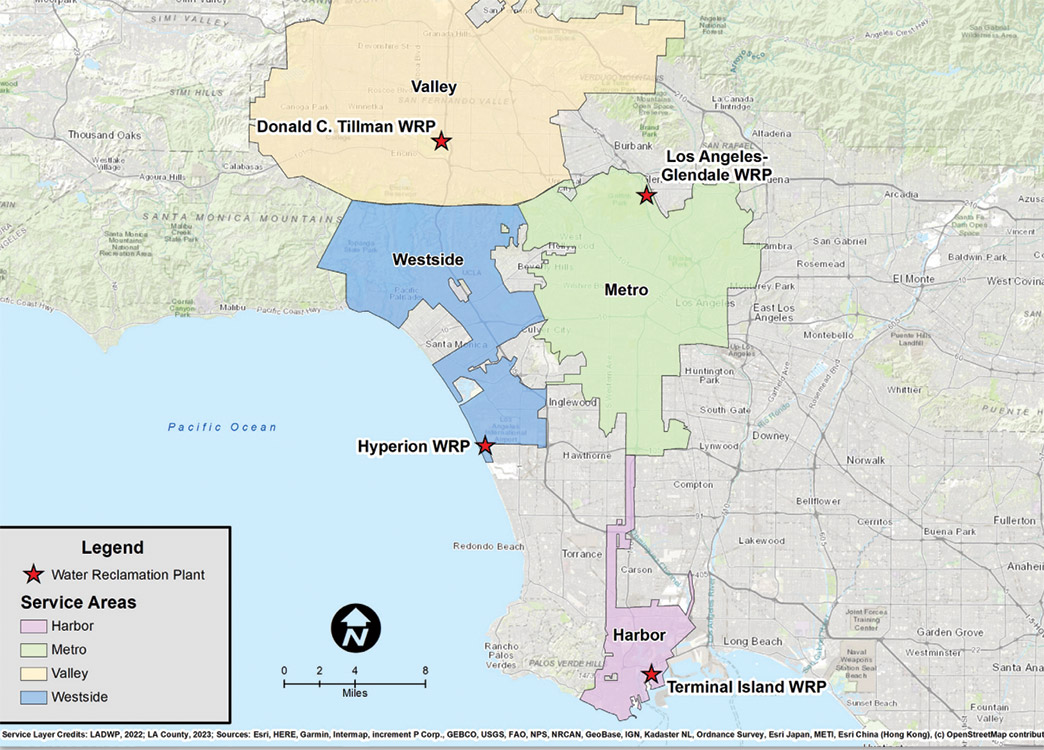
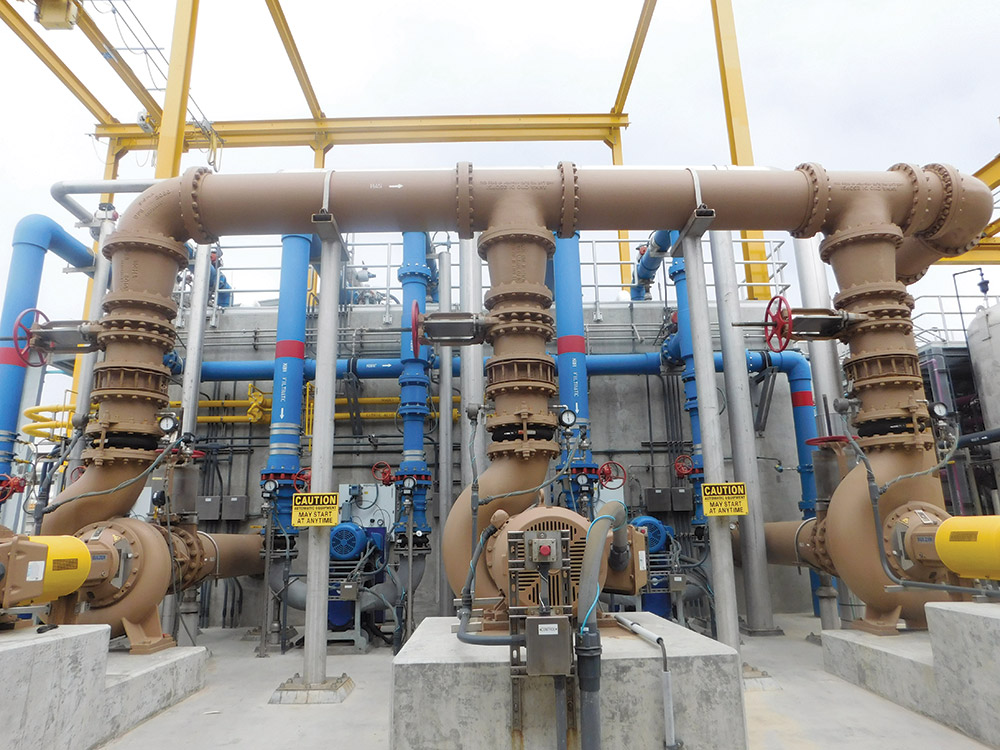
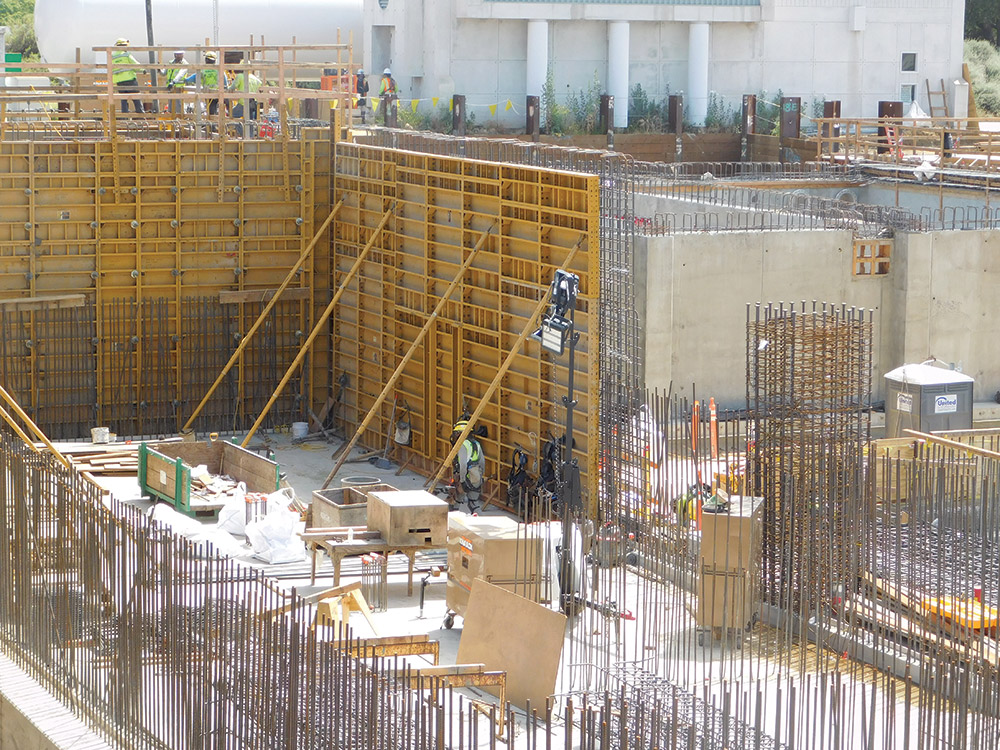
New facilities at Hyperion and Tillman are part of separate programs with different teams, but they have a cumulative impact in meeting state goals to recycle more wastewater, and to produce more local supply.
Photos by Pam McFarland for ENR, map courtesy LADWP
Need for Local Supply
In December 2021, the California Dept. of Water Resources announced that for the first time in its history, Los Angeles would receive a “zero” water allocation—meaning it only receives the amount that meets minimum health and safety water needs, and no more—the following spring from the State Water Project, the city’s primary supply source, along with the Colorado River and area aqueducts. That severe cut in allocation was required, state officials said, due to dramatically reduced quantities of snow melt in Northern California, along with drought conditions in the southern part of the state.
Los Angeles currently imports about 70% of its water supply, and city officials want to change that metric. To do so, they are turning to a solution that’s becoming more widely accepted: a combination of indirect, and potentially direct, potable reuse.
"Imported supplies are in dire straits [because of reduced] snow melt,” said Jesus Gonzalez, recycled water program manager at the Los Angeles Dept. of Water and Power (LADWP), in April at the Donald C. Tillman water reclamation plant in San Fernando Valley. “The state fully recognizes we need supplies,” he said, noting that recycling wastewater provides reserves of drinking water that are “drought-resistant,” unlike imported sources from nearby states such as Nevada and Colorado whose reservoirs are also shrinking at record levels.
The Tillman plant, built in 1985 to treat up to 40 mgd and expanded to 80 mgd in 1991, is currently the base for the state’s largest active water construction project. The new $1-billion Groundwater Replenishment Project, overseen by both the city water agency and the Los Angeles Sanitation and Environment agency, involves construction of an advanced water purification facility that will provide up to 45 mgd of treated water that ultimately will replenish drinking water supplies.
Looking for quick answers on construction and engineering topics?
Try Ask ENR, our new smart AI search tool.
Ask ENR →

The project is just one component of a broad effort by water agencies in Southern California to reduce the need for imported water supplies—a group of initiatives state and city officials hope will benefit not only regional and state residents, but also much of the southwestern U.S.
More municipal agencies are implementing indirect potable reuse projects to treat water to drinking water standards and filter it through spreading grounds, groundwater basins, injection wells or aquifers before the new supply enters the drinking water distribution system. Many of those same agencies are contemplating direct potable, where the water flows directly into drinking water pipes, down the road.
The trend also is spreading to other localities across the U.S., including Loudon County, Va., Washington, D.C., and parts of Ohio that are exploding hubs for water-guzzling data centers, says Bruno Pigott, executive director of the WateReuse Association. “We’ve seen water reuse employed from coast to coast,” he says.

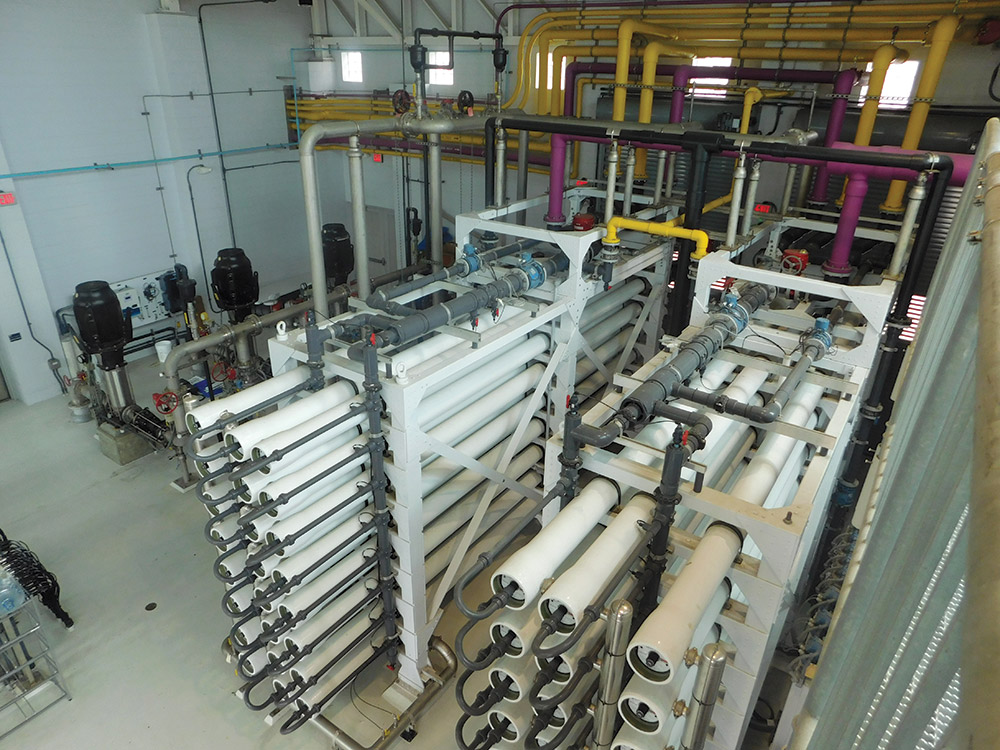
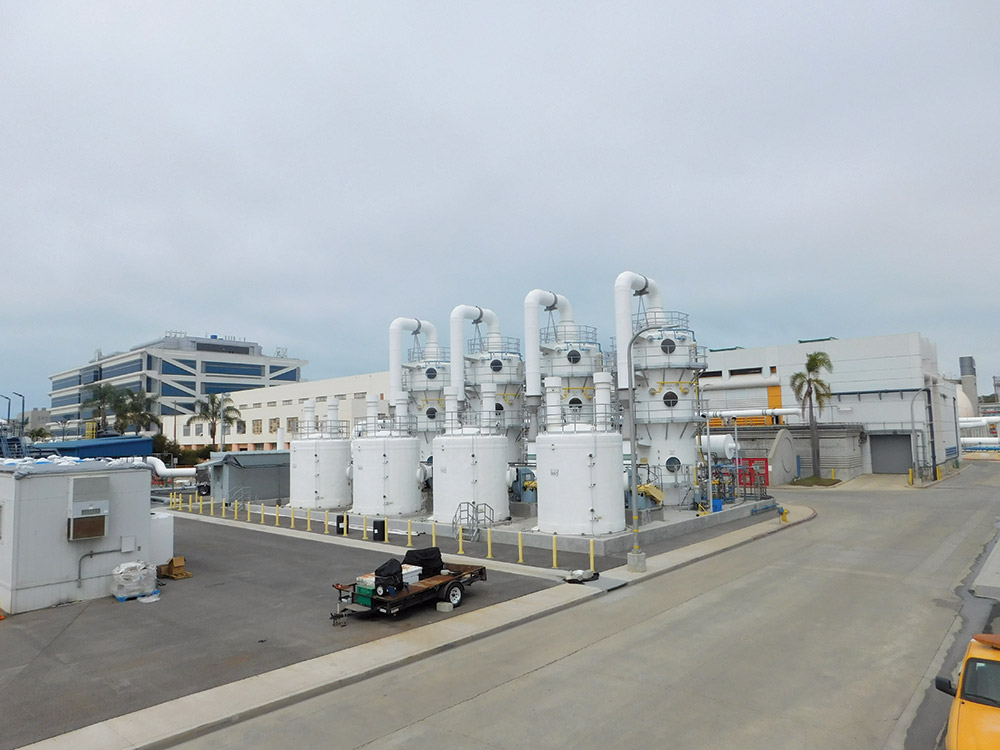
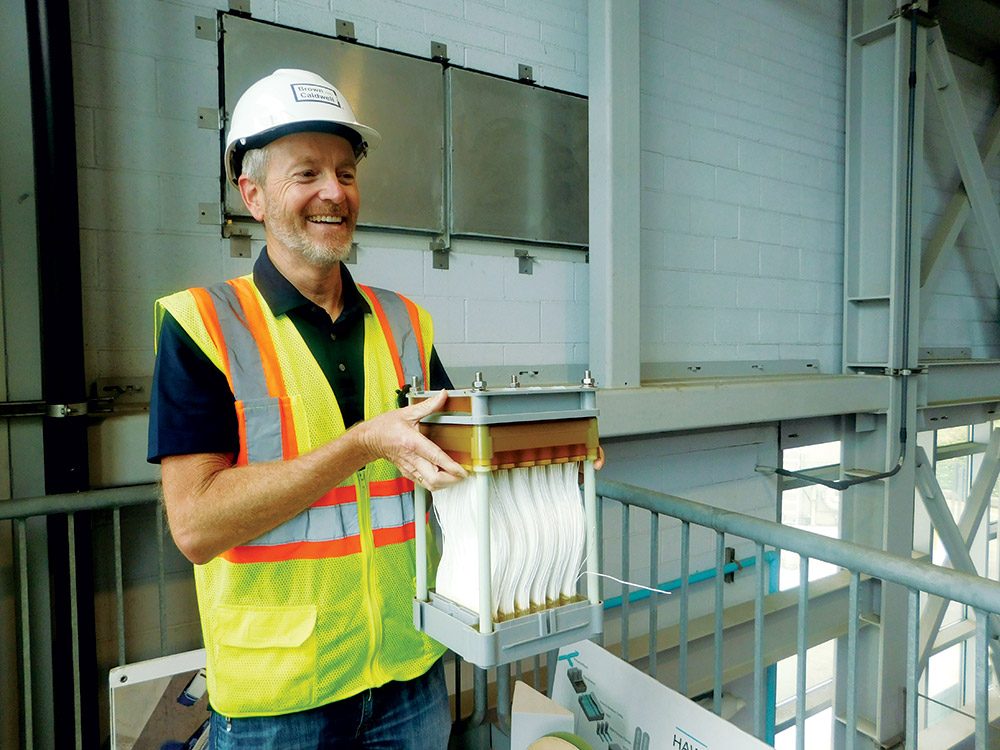
The new 1.5-mgd advanced purification facility at Hyperion is a fully active plant with, from left, recycled water pipes; reverse osmosis; membrane filters, as shown by Brown and Caldwell’s Andrew Lazenby; and a pilot project evaluating different MBR technologies.
Photos by Pam McFarland for ENR
The Long Game
Southern California’s programs are managed independently, but intended to work in tandem toward goals established by Los Angeles and state officials who view water recycling as a viable way to be less reliant on imported sources.
Many projects are still in planning stages with decisions needing to be made on how to pay for them. The Pure Water Los Angeles program, based at a large reclamation facility in the city, is expected to be phased in over the next three decades to minimize impacts on ratepayers, said Johan Torroledo, the program team manager for LADWP.
The program is a response to a call in 2019 by then-mayor Eric Garcetti (D) for 100% of city wastewater to be recycled by 2035. The actual percentage to be recycled will likely be lower, Torroledo said, and reaching that target will take longer than originally anticipated.
“After we did some preliminary assessment to figure out what was feasible from the context of resources … [the team realized that] 2035 was more of an aspirational goal, but realistically … it was going to be a 30-year effort,” he said.
The core of the Pure Water LA initiative is the city’s gargantuan Hyperion wastewater reclamation facility in Marina del Rey, with current wet weather peak capacity of 800 mgd, and average daily wastewater flows into the plant of 260-270 mgd. About 27% of the treated water is recycled for non-potable reuse on golf courses and industrial sites.
The goal, project team leaders say, is to boost that percentage to 85% and to treat the water to meet drinking water quality standards.
While LA’s sanitation and water agencies plan indirect potable reuse in the near term, direct potable reuse still could be in the mix, said Christina Becerra Jones, environmental engineer at LA Sanitation and project manager at the Hyperion advanced purification facility. Much of that is still being worked out. Pure Water LA managers plan to issue a request for proposals this summer for a programmatic management services consultant to help shape the program scope and long-term framework, said Torroledo. In the meantime, demolition of unused facilities has begun.
Before moving forward with active work to convert Hyperion into a purification facility, project team officials hired Walsh Construction to serve as prime contractor/project director and engineer Brown and Caldwell as design subcontractor to use progressive design-build delivery to construct a 1.5-mgd “proof of concept” plant to demonstrate that advanced treatment processes using membrane bioreactors, reverse osmosis, advanced oxidation and ultraviolet disinfection could work at the scale required at the larger Hyperion plant.
The facility opened in April as an educational center, but it is very much an active treatment plant, notes Andrew Lazenby, senior director at Brown and Caldwell, and project and design manager for the Hyperion advanced plant. “This is a full-scale facility,” he said during an April project tour. “Every drop of water it produces goes to beneficial [non-potable] reuse” at Los Angeles International Airport for toilet flushing and cooling towers, as well as for operating needs at the Hyperion reclamation plant. “Water we produce here and send to those end users is one less drop of imported water or potable water that we could use elsewhere within the city of Los Angeles.”
One District Tests Deep-Sea Desalination to Keep Water Flowing
By Debra K. Rubin
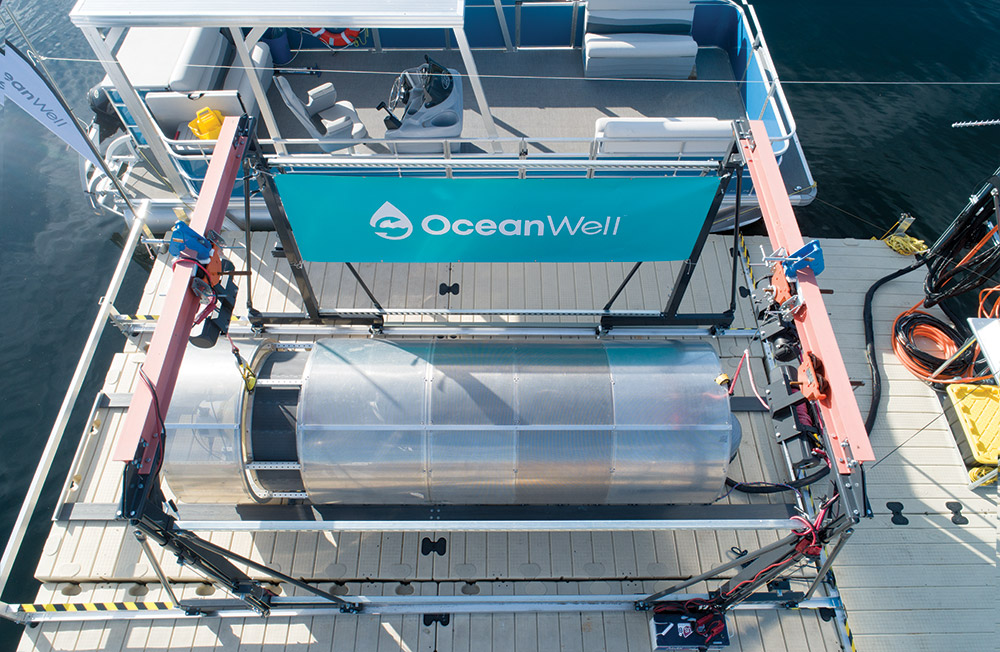
Las Virgenes Municipal Water District completed a test last December in a local reservoir of a cylindrical cartridge, or “pod,” designed by tech startup OceanWell, with an intake pump that will draw in and filter seawater and cut energy use, brine and salty byproducts.
Photo courtesy of Las Virgenes Municipal Water District
Los Angeles area water agencies were hard hit in 2022 by successive years of drought and an unprecedented meager State Water Project allocation, but none was more impacted than Las Virgenes Municipal Water District, which serves about 70,000 users in an upscale section of the city with virtually no other supply alternatives, in-state or out. The severe per-person water-use limit prompted officials to come up with a plan to create new supply through ocean desalination.
“We cannot stand idle for a repeat of 2022 when our water supply from [the Metropolitan Water District of Southern California] was reduced by 74%. It was not an anomaly” says David W. Pedersen, water district general manager. But onshore desalination used elsewhere in California is energy intensive and can cause environmental harm—prompting him and other officials to link up with developer OceanWell to test its offshore approach, using cylindrical “pods” placed as deep as 1,400 ft that would rely on ocean pressure to power seawater intake pumps and filters to produce potable fresh water through reverse osmosis. Las Virgenes completed pod testing in its own reservoir in late 2025.
The three-month pilot “exceeded expectations,” says Mark Golay, OceanWell director of engineering projects, noting that it “helped us prove” that the underwater reverse osmosis process “is a practical and economic way to reduce the cost, energy, and environmental impact of water treatment applications.” He says the tested pod had recoverable flowrates of 85% over the study period, and 93% operating efficiency. Adds Pedersen: “A number of mitigation strategies were developed and tested during the pilot study to determine the most effective means to clean the pod.”
The goal is to scale to an ocean-based “farm” system about 4.5 miles offshore of Malibu that could produce, when operating by 2028, about 1 million gallons per day of water pumped to shore through one or more landfall pipelines, an effort supported by six other water agencies, says Pedersen. “We are working to form a joint powers authority to provide a more structured means to work together on this effort and on other water supply and reliability strategies,“ he adds. The agencies also hired engineer HDR to design a conveyance system to move the desalinated water to coastal and inland communities using existing and new infrastructure.
Next steps now include an ocean trial set for fall in Santa Monica Bay with a pod suspended at depth from the back of a boat and a demonstration project that places a pod in-situ anchored to the ocean floor at depth for about one year to collect data, Pedersen says. “We are preparing feasibility studies on both the onshore and offshore infrastructure that would be required to advance a full-scale project of up to 50 million gallons per day,” he notes, with data supplied to state and federal regulators for permits and to determine if the process is cost effective and competitive. OceanWell also is exploring new efforts to link up with water agencies in Arizona and southern France, among others, to deploy its system.
In addition, Las Virgenes is investing in potable water reuse to supply 30% of demand, Pedersen says.
More Than a Sum of Parts
The sanitation and water-power agencies are members of the behemoth Metropolitan Water District of Southern California, which plans a water recycling program of its own, Pure Water Southern California, that ultimately could cost more than $11 billion to implement.
The effort would add advanced treatment at the 400-mgd A.K. Warren reclamation facility in Carson, Calif., to produce 150 mgd of purified water that would be filtered through injection wells at groundwater recharge sites and at groundwater basins.
The agency finalized its environmental review in February and set aside $150 million for planning and early design work over the next three years, says John Bednarski, district assistant general manager. The agency’s board will vote this summer on moving forward with the program, with RFP procurement notices set for release before the end of the year.
“There are differences of opinion on whether we need this water right now, but what we’re trying to communicate to our board and leadership is that even if they make the decision to go today, it’s probably an eight- to ten-year effort to bring this water into production, so you really need to start looking long range,” he adds.
The district hopes to incorporate alternative delivery methods, including construction manager/general contractor and progressive design-build, for several projects that comprise the larger program, and also is weighing novel financing approaches. Bednarski says the agency is in discussions with the Nevada Water Authority and the Arizona Dept. of Water and Power about potential investment in some district long-term water reuse projects in exchange for a donation of some of the Metropolitan Water District’s Colorado River allocation rights. “Those things are at a very early stage, but we’re trying to draw [the other utilities] into the mix of the negotiations on the Colorado River,” he says.
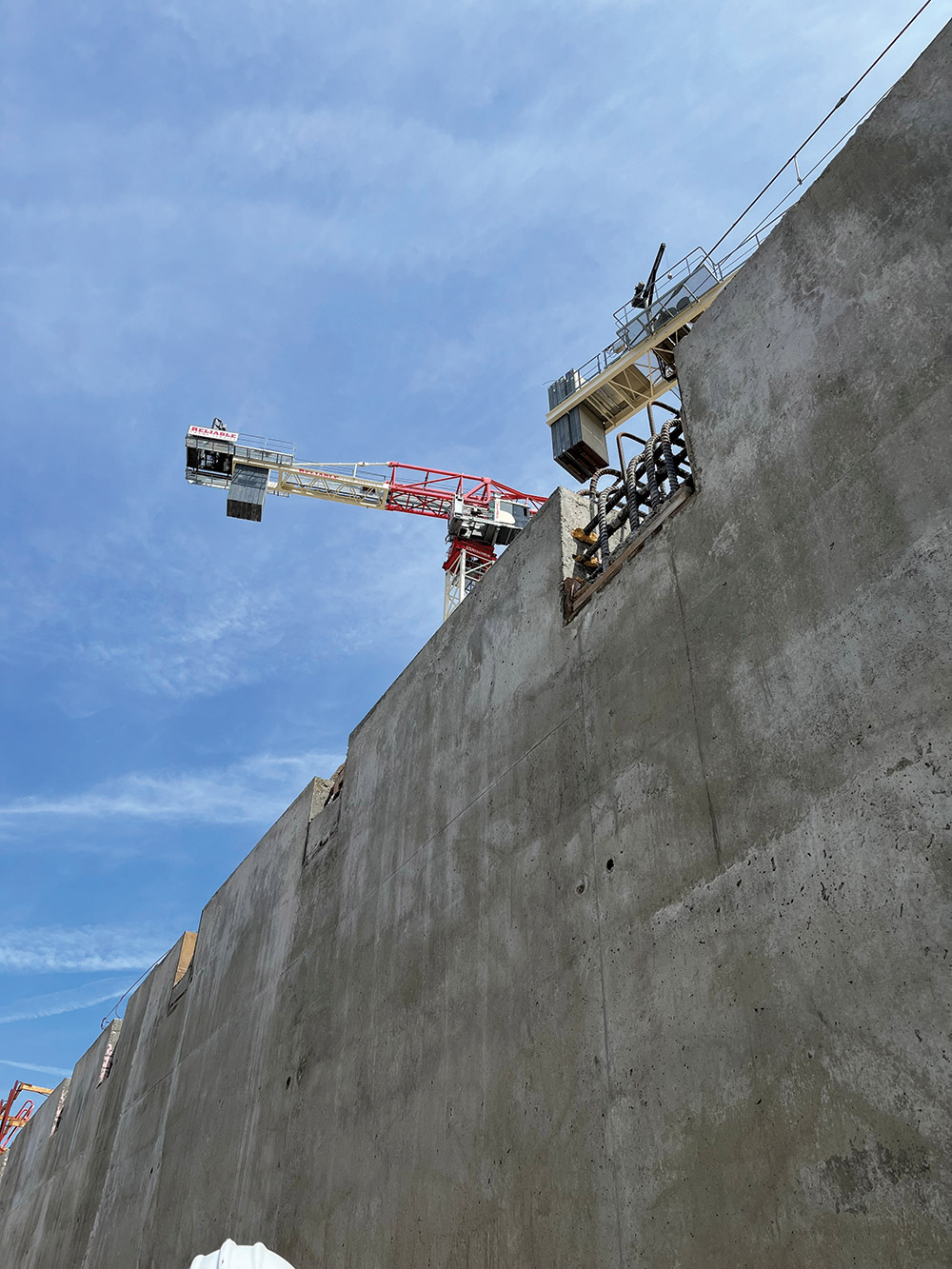
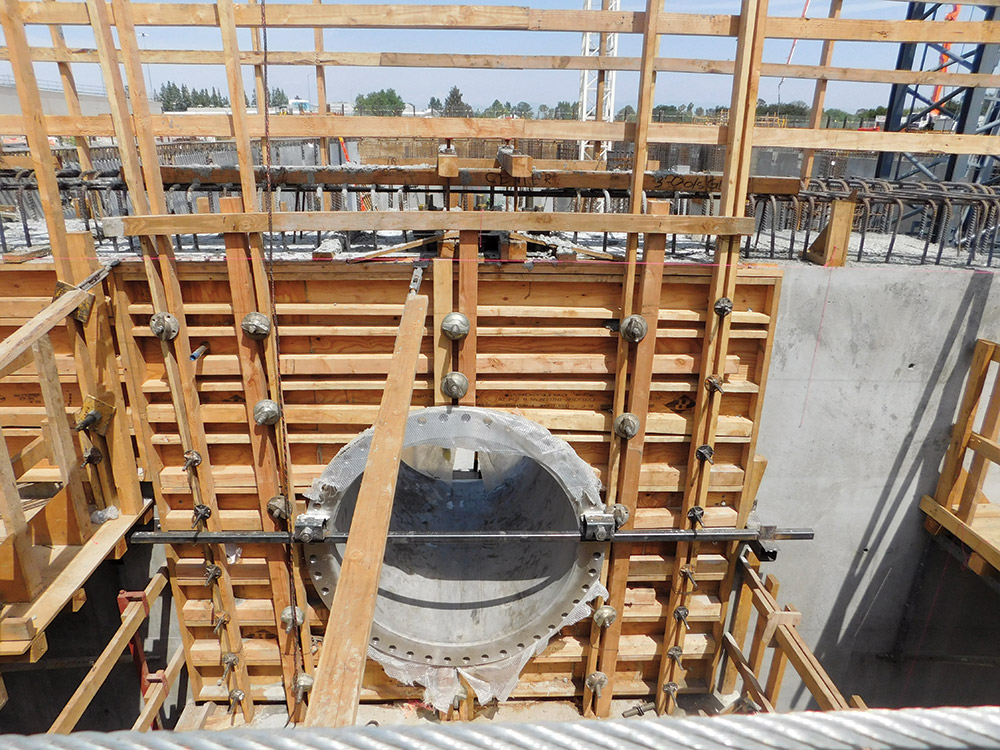
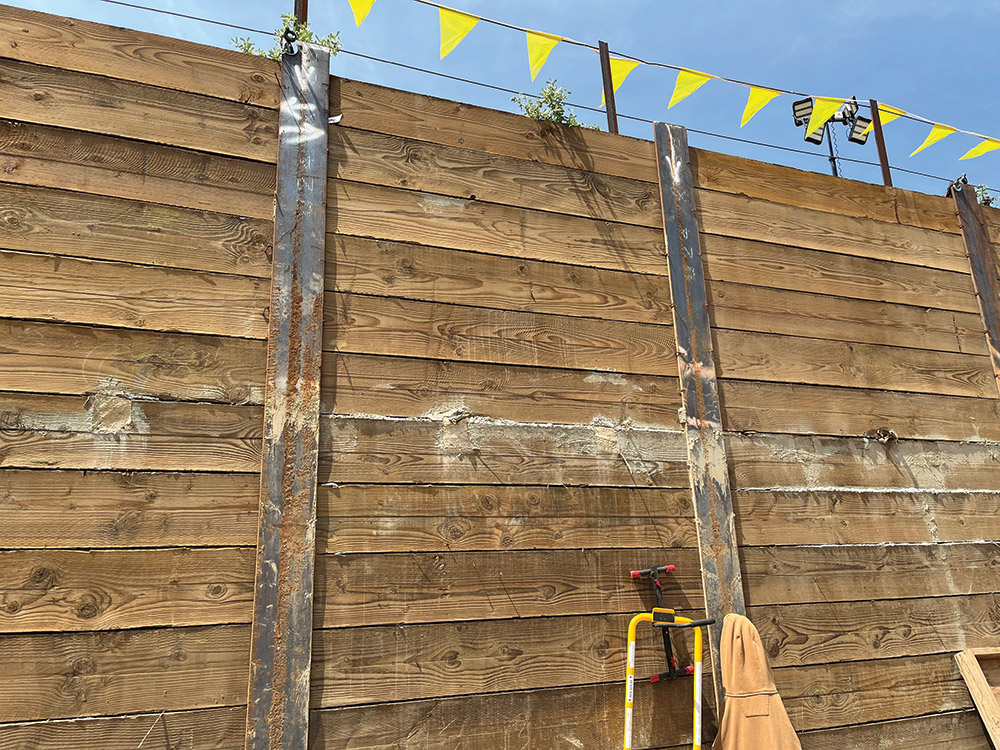
The entrance to where treated water will be discharged, left; the original soldier piling, right; and the workaround concrete wall with sheet piling (above) used as a result of the progressive design- build process, at Tillman.
Photos by Pam McFarland for ENR
Alternative Approaches at Tillman
Progressive design-build has been critical in keeping the Tillman plant project on track, according to several project team members.
Using the approach—after obtaining a necessary ordinance to be able to do so—allowed the team to more than double the capacity of the new advanced water purification facility while it was already under construction, without losing any time in the schedule, says Gonzalez of the water-power agency.
Originally designed to a capacity of 25 mgd, the plant needed to expand to 45 mgd to better support statewide goals to reduce need for imported water, the team realized. The only way to do that was to go down, not out, says Paul Vranesic, project director at Jacobs, the facility’s design-builder.
Jacobs, along with Carollo, the owner’s advisor on the project, and the agencies worked together to devise a plan. Team members knew they had to excavate down 35 ft beneath the facility base to place electrical and mechanical equipment to be able to add more treatment components on the surface level.
The team decided to install sheet metal piling around the perimeter of the entire structure to stabilize the area where the basement was to be excavated. Once this was done, workers poured pre-cast concrete to line the basement walls, essentially using the sheet piling as the outside face of formwork for the walls.
“Our plan was always to leave the sheet piling in place, which on other projects you would not do, because it’s quite valuable. We’re leaving this in place forever,” Vranesic says. This decision shaved the additional months it would have taken to remove the soldier piling and start over, Gonzalez adds.
Another innovation was working with the concrete subcontractor to modify specifications for the concrete mix to reduce curing time and make it less likely to crack, even in large slabs. This allowed the team to significantly increase the size of the slabs, from a more typical 60 ft by 40 ft, to approximately 180 ft by 120 ft, says Gil Crozes, a Carollo senior vice president.
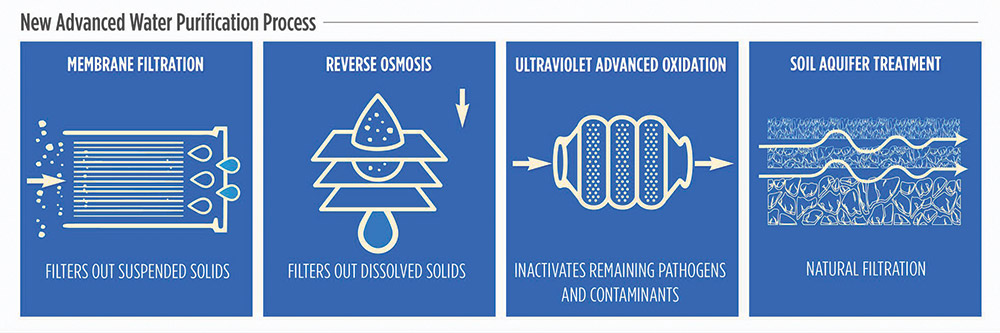
The new advanced purification facility at the Donald C. Tillman reclamation plant will treat water to potable standards using a combination of membrane filtration, reverse osmosis and UV before it is conveyed to spreading grounds.
Visual by LADWP
A Listening Ear
Although discussions have been ongoing for years, it is still early days in several cases. The parameters and scope of myriad projects are not yet entirely solidified, and water agencies’ plans to use progressive design build or other alternative delivery methods on at least some of them indicate that plans and designs could change again.
Another factor influencing the evolving projects has been input from conservation groups such as LA Waterkeeper. Bruce Reznik, its executive director, says he has been involved in discussions about wastewater recycling in California almost since the inception of the programs.
“We are big advocates for wastewater recycling,” Reznik says, “but I do want to be clear: I think projects need to be built in the right way, and we need to be thoughtful about that.” He says the original concepts for the entire region envisioned that the majority of the wastewater would be piped from the San Fernando Valley—where the highest concentration of people live and where most of LA’s water infrastructure is located—to the city center for treatment at Hyperion, and then back to the valley.
“From the get-go, I was warning that this was not a smart plan,” Reznik says.
The city listened to what his group and others had to say, Reznik notes, and ultimately decided to expand the new purification facility at Tillman so that less water would need to be piped into the city to reach Hyperion and then be sent back.
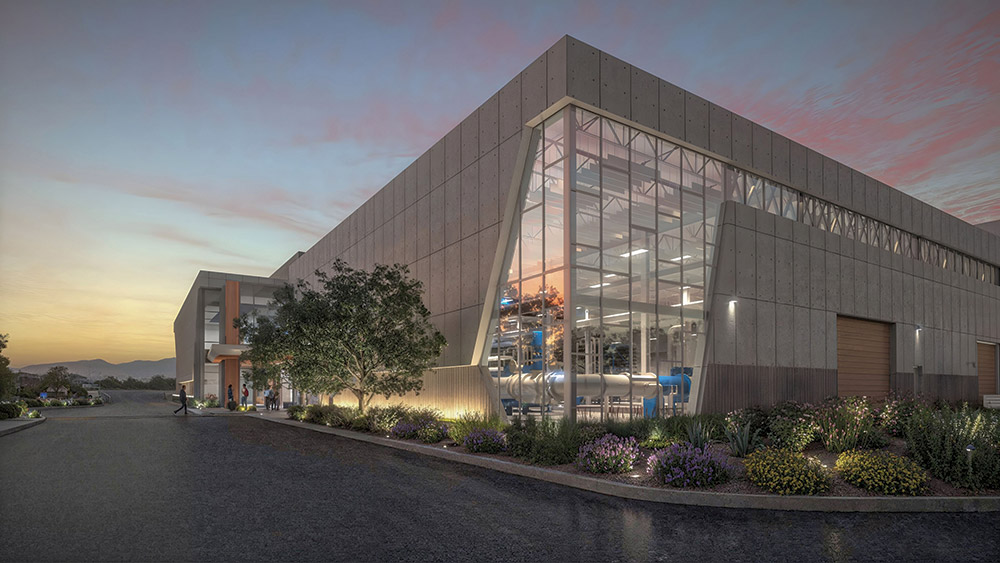
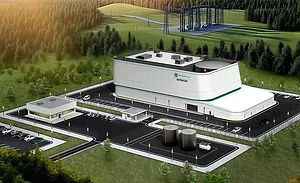
All of the treatment processes at the advanced water purification facility at Tillman will be housed in one building.
Rendering Courtesy LADWP
Collaborative Effort
Another LA Waterkeeper suggestion has been to avoid duplicating similar water infrastructure facilities among different programs, Reznik says.
Metropolitan Water District manager Bednarski says he already is on it. In 2019, his agency signed a letter of intent to collaborate with the city of Los Angeles. “We were really concerned that with these two major infrastructure projects going on at the same time, that there might be a duplication of resources and infrastructure constructed by two entities working in silos,” he says.
Already, the city and water district are discussing sharing the last 15 miles of the latter’s 39-mile pipeline that would cross into the outskirts of the city. Most of the pipeline is 7 ft in dia, but for the final stretch, the water district included in its environmental review a plan to increase pipe diameter to 9 ft to have more capacity, enabling possible use by multiple utilities.
“That’s just one example of how we’re collaborating,” Bednarski says, adding that the organizations all have much expertise and knowledge to offer. “We cross-pollinate our staffs, so we can learn from each other,” he adds.

.webp?height=200&t=1776649425&width=200 "EPA-Water-Reuse-(2)")