Government
Shadow Docket Looms Large in Current Supreme Court Term

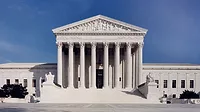
Legal experts agree that the US Supreme Court has been more active in issuing unexplained orders through its "shadow docket," which gives the Trump administration nearly carte blanche to further its goals; it remains unclear how these orders guide court rulings in underlying cases.
The U.S. Supreme court session that began this month is light on major construction-related cases, but industry groups are eyeing lower court disputes on key issues that could soon gain high court action.
Among them are two separate cases over legality of a 2023 U.S. Labor Dept. rule that some construction groups have challenged, including the Associated General Contractors and Associated Builders and Contractors. They claim the rule expands prevailing wage mandates beyond the scope of what is allowed under the federal Davis-Bacon Act. The cases are now on hold as the U.S. Labor Dept. reviews the Biden-era rule.
Also on the docket is a climate case that could have far-reaching ramifications on whether states and local citizens’ groups can use state laws to penalize fossil-fuel companies over climate change impacts. Chevron USA v. Plaquemines Parish will consider if companies can be held accountable for environmental degradation from development in coastal areas protected by Louisiana’s State and Local Coastal Resources Management Act of 1978.
Suncor Energy v. County Commissioners of Boulder County, Colorado, also brought by fossil fuel interests, poses similar questions. The court denied its review in 2022, but after a Colorado Supreme Court ruling in May that allowed state community group suits to move forward against oil and gas developer Suncor Energy Inc., it again petitioned for high court review. The Trump administration filed a supporting brief in September, claiming the U.S. “has a substantial interest in proper interpretation” of state constitutional and statutory provisions.
Similar cases are being reviewed in Hawaii, New York, Michigan and Vermont district courts. Because of administration interest in the case, and the number of others involving similar legal questions, the high court is expected to take up one in the next year, one environmental advocate says.
Attention also is focused on more high court reliance on issuing orders through its so-called “shadow docket,” which are emergency rulings made not through the public process, often with little or no explanation. Legal observers say the docket has given the administration significant deference to advance policies halted by lower courts.
One is the recent order allowing the federal government to pull back funding for construction and infrastructure projects out of administration favor. Lower courts are issuing carefully considered opinions while the Supreme Court “isn’t just short circuiting them… it’s doing so frequently with no explanation, no justification and often greenlighting administration actions that are clearly in defiance of their own current precedent,” says Doug Lindner, League of Conservation Voters’ senior director of judiciary & democracy.
Looking for quick answers on construction and engineering topics?
Try Ask ENR, our new smart AI search tool.
Ask ENR →
Brendan Collins, a partner at law firm Ballard Spahr who has represented both renewable and fossil fuel developers, cautions that shadow docket orders are temporary and not justices’ final say on legal questions in underlying cases. The court this year has gone against its tradition of waiting for lower courts to provide a robust record to then weigh the legality of administration actions. But it would be incorrect to state that the high court won’t clarify when the administration has overstepped its authority, he says.
“What the Supreme Court has decided, for better or worse, is that in most cases, it’s going to let the president do whatever he wants until such time as the case can formally come in front of them, and they can then exercise their constitutional power to tell the president he’s wrong when he’s wrong, and clarify limits of presidential authority when he’s right.”
Tom Spiggle, founder of a Washington, D.C.-based employment law firm, says that irrespective of whether the Trump administration’s strategy to seek high court injunctive relief through the shadow docket is on solid legal ground, “it’s working for them. They’ve been able to get a significant number of these cases before the shadow docket, more than any other administration, and gotten favorable results.”