Waste Cleanup
DuPont, Occidental NJ Toxics Megaprojects Face New Legal Orders
DuPont agrees to $2B remediation at four toxic sites—including 1.500-acre former flagship Chambers Works plant—while Occidental appeals court ruling of major liability for $1.8B cleanup of heavily polluted Passaic River.
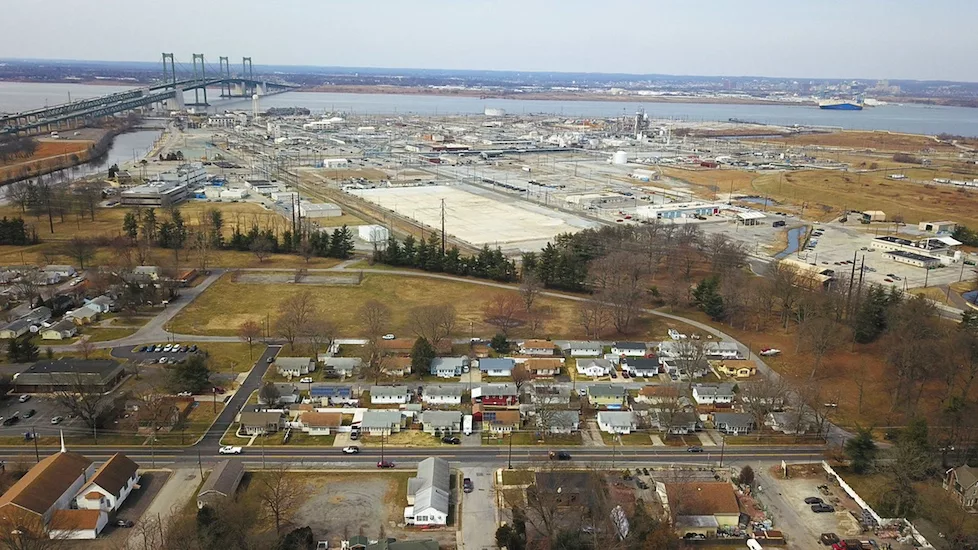
DuPont's 1,500-acre Chambers Works manufacturing facility in Pennsville, N.J. is the largest of four of the chemicals maker's former operating sites that will be remediated for extensive contamination by PFAS and other toxics under a $2-billion-plus settlement between the state and the company and its spinoffs.
Credit: Office of the N.J. Attorney General
New Jersey officials announced Aug. 4 a proposed $2-billion-plus settlement with chemicals maker DuPont and spin-off firms to remediate four former production sites heavily contaminated with PFAS chemicals—including the nearly 1,500-acre Chambers Works facility near the Delaware River that was closed in 2015 after operating since the late 19th century.
Also covered in the settlement of a 2019 federal lawsuit the state filed against the firms for ignoring a statewide cleanup directive are three other former company sites in Gloucester, Middlesex and Passaic Counties that discharged PFAS and other toxic contaminants over decades of production. The agreement also resolves three other lawsuits regarding statewide claims for contamination by firefighting material known as aqueous film-forming foam produced at the plants.
Named as defendants are Delaware-based E.I. Dupont de Nemours and Co., now EIDP Inc., and its related entities The Chemours Co., The Chemours Co. FC LLC, DuPont Specialty Products USA LLC; Corteva Inc.; and DuPont de Nemours Inc.
PFAS substances, also called "forever chemicals," are classified as likely carcinogens, and are linked to developmental disorders in fetuses and breastfeeding infants.
The EIDP companies must create a remediation fund of up to $1.2 billion and a $475-million reserve to ensure cleanup is completed, we well as pay $875 million in damages to land, and water and other natural resources, said the New Jersey Attorney General and state Dept. of Environmental Protection.
The department said it will hold the $875 million in a dedicated trust account to address PFAS and other contamination, with payments to occur annually for 25 years.
“This landmark settlement will advance New Jersey’s nation-leading PFAS abatement efforts, improve drinking water quality and restore injured natural resources," said department commissioner Shawn LaTourette. He said the settlement would be the largest ever in New Jersey and largest ever ever achieved by a single U.S. state.
Looking for quick answers on construction and engineering topics?
Try Ask ENR, our new smart AI search tool.
Ask ENR →
A department spokesman did not respond to a query related to the status of PFAS remediation work at Chambers Works and the other sites and how it is being managed.
The pact comes in litigation of multiple lawsuits that also include manufacturer 3M, which settled with the state in May for $450 million.
The DuPont settlement “will resolve all legacy contamination claims,” a company statement said.
Battle Over Liability
In a separate toxics legal battle, Occidental Chemical said it has appealed to the U.S Appeals Court in Philadelphia a July 28 separate lower court ruling deeming it moslyy responsible for the estimated $1.84-billion cleanup of very hazardous toxics in a 17-mile section of New Jersey's lower Passaic River after decades of waste dumping from herbicide and pesticide production.
Occidental said it has a U.S. Environmental Protection Agency-approved cleanup plan and has contended that numerous other firms that also dumped wastes in the river starting in the late 1800s should contribute more to the remediation total cost. The lower court upheld an EPA consent decree that caps their liability at $150 million,
Occidental bought Diamond Alkali, which made dioxin and other deadly chemicals at its former plant in Newark from the 1940s to the 1960s, but said in its appeal that it was not responsible for many chemicals in the river, including those resulting from prior industrial production by about 80 other companies.
In a statement, the smaller firm group said "objectors to the settlement should not be allowed to delay river cleanup any further," adding that it will "encourage EPA to force these parties to begin to dredge and cap the lower eight miles of the river as called for in the remedial design approved over a year ago.”
OxyChem said it has spent $260 million on cleanup design and pre-remediation for the lower river cleanup and could spend $257 million more on cleanup design for nine more miles.