Innovation was the key to adding a fourth traffic lane to a congested 2,856-ft-long crossing along a critical route connecting central Maryland with the Chesapeake Bay Bridges and the Eastern Shore.
The team says the $201-million project represents Carnegie Mellon University’s “future vision as an ecology of active learning, research and resources.”
As the largest non-residence hall project in Longwood’s history, the $32.5-million, 84,000-sq-ft building was a high-profile effort in more ways than one.
This $71.5-million project to renovate and reprogram a hospital’s perioperative services floor involved reconfiguring operating rooms, a pre-operation services unit and a post-anesthesia care unit.
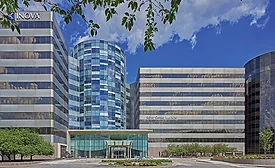
Incorporating a former company headquarters, the 420,000-sq-ft addition combined construction with renovations, creating one of metropolitan Washington, D.C.’s most advanced cancer treatment centers.
This 75-year-old community landmark will reliably serve many more generations of visitors thanks to a comprehensive renovation and expansion project that updates and expands public and administrative spaces, the team says.
The first expansion of the nation’s most revered military cemetery in 40 years, the $85-million Millennium Project integrated new construction and design and sustainability initiatives while paying proper respect for the site’s history and taking into account long-term maintenance needs.
Modularization was the key, the project team says, to efficiently constructing and commissioning one of the world’s largest natural-gas-fired, combined-cycle power stations in just 30 months.
Equipped with some of the newest natural-gas-powered turbine technologies, this 1,500-MW facility can power more than 1 million homes, providing a highly flexible and reliable addition to the region’s energy grid.
Architecturally expressed structural-steel beams erected in a part of Washington, D.C., where concrete buildings are common, more than make their mark on the city’s bustling L’Enfant Plaza.