Energy
With a $350M Nuclear Fund Approved, Texas Wants Projects to Fill It
State is moving to position nuclear power as a cornerstone of its future workforce and energy strategy
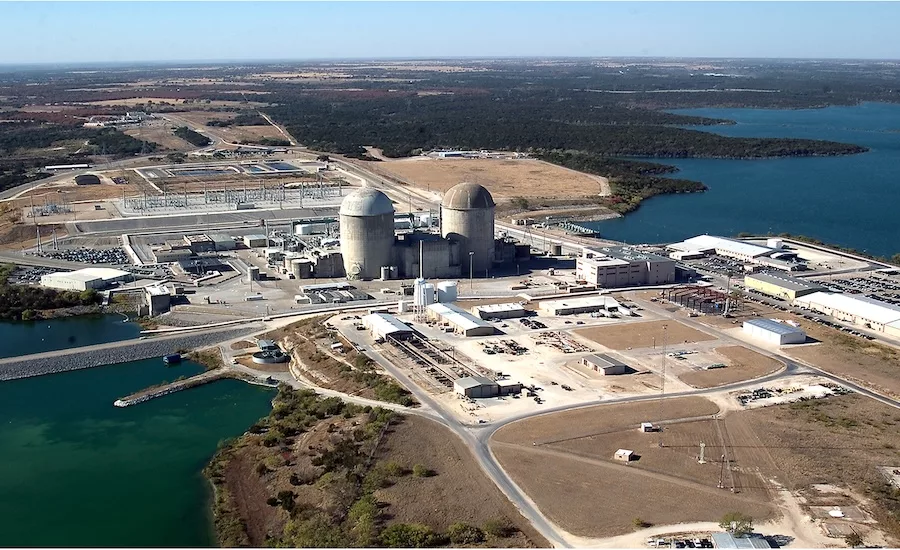
Comanche Peak nuclear power plant, shown here near Glen Rose, represents existing nuclear capacity in Texas as the state opens applications for $350 million in funding to support its next wave of project development.
The state of Texas has opened applications for $350 million in funding for advanced nuclear power project commercialization and supply chain development through the Texas Advanced Nuclear Development Fund. Gov. Greg Abbott (R) called the finance effort, which he enacted last June, the largest state-led investment in nuclear energy of its kind in the U.S.
Monies will be distributed through two fund units: the Advanced Nuclear Construction Reimbursement Program and the Project Development and Supply Chain Reimbursement Program. Eligible applicants include businesses, nonprofits, public entities and universities. Notices of intent are due April 23, with full applications due May 14.
To qualify for construction reimbursement, applicants must have—or reasonably expect to have—a construction permit or combined license application docketed at the U.S. Nuclear Regulatory Commission by Dec. 1.
Fund Director Jarred Shaffer told Power Magazine that only two projects in the state now meet that threshold. One is a Dow–X-Energy partnership to build four 80-MWe Xe-100 high-temperature gas-cooled reactors at Dow's UCC Seadrift operations site in Calhoun County. Dow submitted its construction permit application to the agency in March 2025.
The other is the proposed Project Matador, a venture of Fermi America and Texas Tech University, with four AP1000-design reactors set to be built in Carson County near the U.S. Energy Dept.'s Pantex plant in Amarillo. The commission accepted portions of the combined license application on Sept. 5, 2025—the first such application for a gigawatt-scale light-water reactor since Florida Power & Light filed for Turkey Point Units 6 and 7 in June 2009, according to federal records.
According to project documents presented at the commission's Regulatory Information Conference, construction is targeted to begin in 2027, with the first unit entering commercial operation in 2033. Fermi America has signed a front-end engineering design contract with Hyundai E&C and a long-lead equipment agreement with Doosan Enerbility covering reactor pressure vessels and steam generators.
The Texas Commission on Environmental Quality approved a permit for 6 GW of natural gas generation at Project Matador, Fermi America announced in February. The company said it plans to seek an additional 5 GW permit, potentially expanding the site beyond the originally proposed 11 GW. The four AP1000 units would contribute about 4.4 GW of nuclear capacity, according to Fermi America's annual report filed with the U.S. Securities and Exchange Commission.
Abilene Christian University also holds a docketed federal permit for a molten-salt research reactor, but is ineligible for construction funding after receiving $120 million in prior state support. It remains eligible for development and supply chain funding.
Two entities in Nuclear Regulatory Commission pre-application stages could qualify under the “reasonably expect” provision, ANS Nuclear Newswire reported: Texas A&M University, with ZettaJoule, for a high-temperature gas-cooled research reactor in College Station; and Last Energy, which has proposed up to 30 small pressurized water reactors in Haskell County.
The fund was created under H.B. 14 in the Texas legislature. The legislation followed recommendations from the Public Utility Commission of Texas' Advanced Nuclear Reactor Working Group, formed at Abbott's direction. “Nuclear energy provides an efficient and reliable energy solution while creating high-wage advanced manufacturing jobs,” he said in a press release.

.webp?height=200&t=1773961394&width=200 "Sanibel Island (2).jpg")