ENR 2025 Southwest Best Projects
Project of the Year Finalist, Best Project Higher Education/Research: Arizona State University Wilson Hall
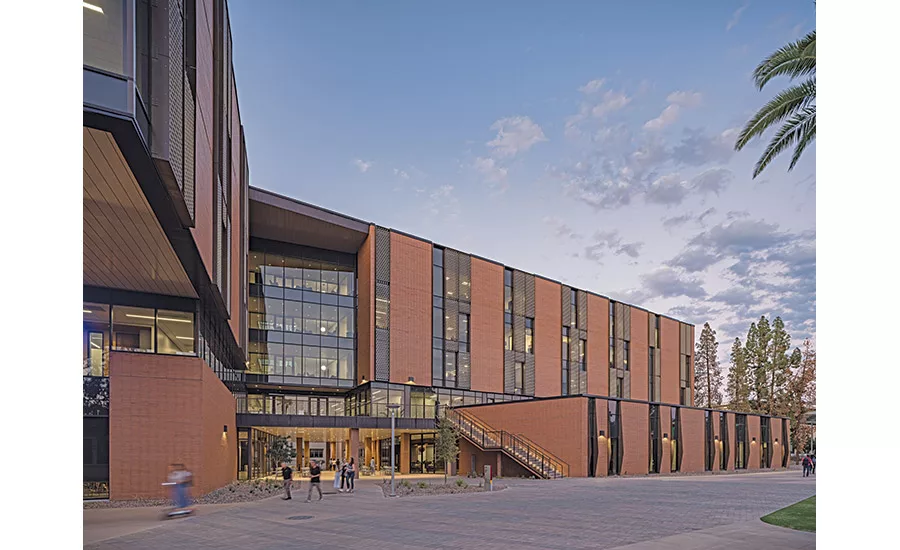
Arizona State University Wilson Hall
Ariz.
PROJECT OF THE YEAR FINALIST and BEST PROJECT, HIGHER EDUCATION/RESEARCH
Submitted by Holder Construction
Owner Arizona State University
Lead Design Firm RSP Architects
Construction Manager Holder Construction
Civil Engineer Dibble Corp.
Structural Engineer PK Associates Consulting Structural Engineers
MEP Engineer Affiliated Engineers Inc. (AEI)
Landscape Architect GBtwo Landscape Architecture
Subcontractors Suntec Concrete; Sun Valley Masonry; KT Fabrication; DP Electric; TD Industries; E&K Cos.; Ryan Mechanical
This nearly $96-million, 178,000-sq-ft flexible student and faculty hub blends into the context of ASU’s iconic campus landmarks, providing a seamless link between indoor spaces and the outdoors.
Features include 19 state-of-the-art classrooms; a variety of student support spaces, including a dedicated home for the Student Accessibility and Inclusive Learning Services group; faculty and staff offices; and shared student-faculty collaboration spaces.
Utilizing energy modeling software, the design team was able to develop the building’s massing for both performance and user experience and optimize the envelope for thermal comfort via two-dimensional conduction heat-transfer analysis and modeling. For example, the self-shaded main entrance creates a microclimate and relief from direct sun. This strategy allowed for more transparency at the entrance, creating an inviting and welcoming front door to the building while still mitigating the effects of the desert climate. Mechanical ventilation systems use a dedicated outdoor air system with energy recovery and bypass, while building cooling is provided by active chilled beams. These and other features led to the project receiving LEEDv4 Gold certification.
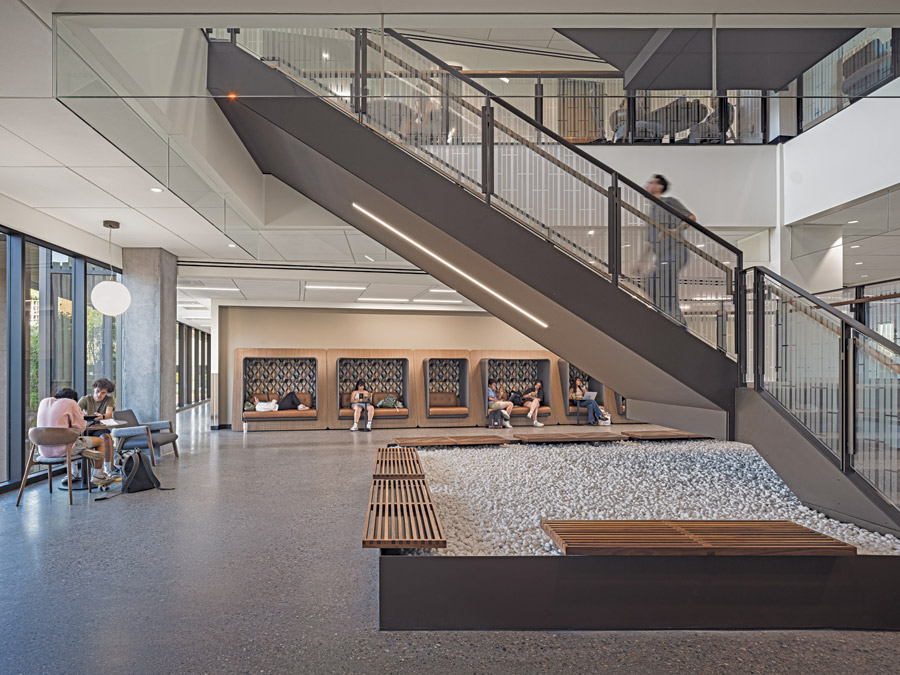
Photo courtesy Jason Roehner
Focusing on both the surrounding campus context as well as durability and maintainability, timeless materials were chosen to reiterate a feeling of longevity and craft. Inspired by mid-century modern architecture and design, the custom aluminum brise soleil gives the building its own identity while still allowing it to feel like it belongs among the surrounding structures. Additionally, it has the added sustainability benefit of protecting the glass from direct solar exposure.
The project team contended with pandemic-related challenges by coordinating and executing the project remotely and continually navigated supply chain disruptions that caused shortages and delays.
Demolition and relocation of an existing utility tunnel crossing the site required extensive planning and coordination to integrate the replacement structure seamlessly with the new building’s basement and support its system load.
Shutdowns were carefully planned around the university’s schedule, including class times and housing occupancy. Line stops were strategically used during the tie-in phase to reduce downtime.
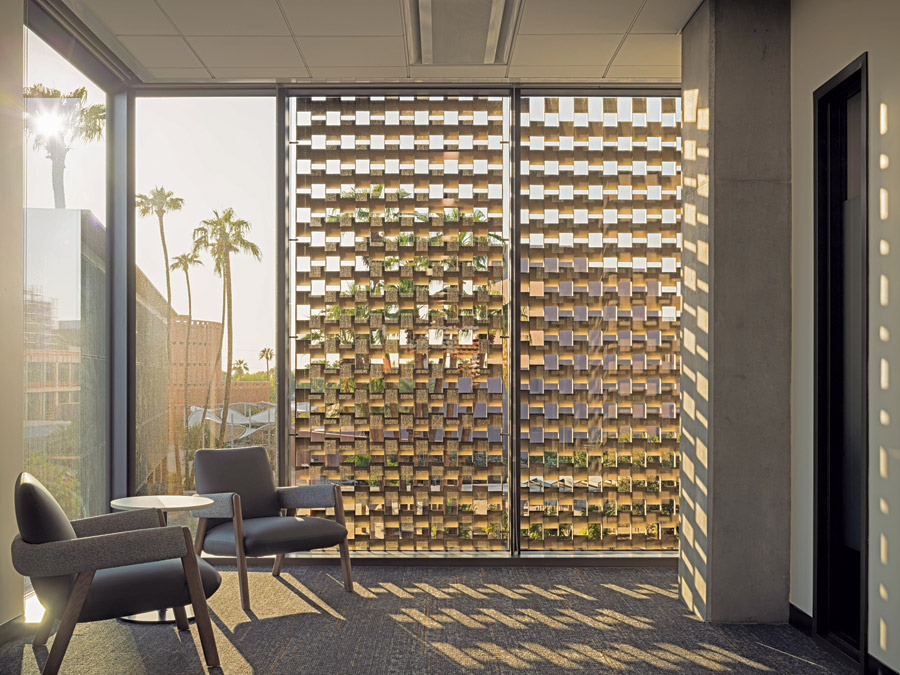
Photo courtesy Jason Roehner
The team implemented a rigorous quality management plan, beginning with preconstruction mock-ups to set clear expectations for finishes and tolerances. Daily coordination meetings ensured alignment between trades, while digital tools like BIM helped identify and resolve clashes before they reached the field.
Craftsmanship was upheld through continuous training, and foremen conducted hands-on workshops to reinforce best practices in post-tension cable installation, concrete placement and curing techniques—critical for structural integrity in Arizona’s extreme climate.
Quality control inspectors performed routine checks at each level, verifying cable tensioning, rebar placement and concrete strength. Any deviation triggered immediate corrective action, fostering a culture of accountability.
Completed below budget and on schedule, the project totaled more than 462,000 work hours with no injuries or recordable incidents.