Transit
Feds Propose Terminating $4B in California High-speed Rail Grants
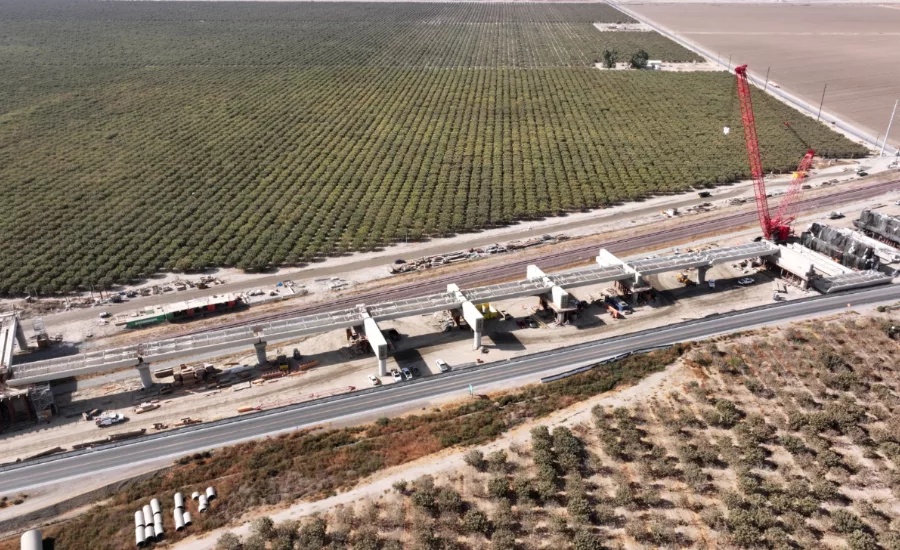
The Tule River Viaduct is part of the 119-mile segment of the planned California high-speed rail system currently under construction.
Photo courtesy California High-speed Rail Authority
The U.S. Dept. of Transportation’s Federal Railroad Administration does not believe the California High-speed Rail Authority csn deliver a 171-mile segment of the planned system by its 2033 deadline, federal officials wrote in a report the federal agency released June 4. The Federal Railroad Administration proposed terminating a pair of grants worth $4 billion as the California agency already faces a $6.5-billion funding gap for the work.
Federal railroad officials cited the large number and value of change orders on the project’s construction contracts, a missed rolling stock procurement deadline, the funding shortage and other issues in their report, concluding that the high-speed rail agency likely will not be able to complete the early operating segment by 2033 as set in a grant agreement, or finish the full ail system.
“This report exposes a cold, hard truth: The [California High-speed Rail Authority] has no viable path to complete this project on time or on budget,” Transportation Secretary Sean Duffy said in a statement.
The authority plans to build an 800-mile high-speed rail system in two phases. The first would be about 500 miles connecting San Francisco to Los Angeles and Anaheim, and the second would extend the line north to Sacramento and south to San Diego. Construction is currently underway on 119 miles of a 171-mile early operating segment that the agency aims to enter service in 2033.
The cost estimate for phase one is $106.1 billion, a 31% increase from the 2020 cost estimate and a 222% increase from the original $33-billion cost estimate when California voters approved a ballot initiative for the project. About $6.9 billion in funding has come from federal sources. The grants that the Federal Railroad Administration has proposed terminating include a $949-million award executed in 2011 and a $3-billion award executed last fall.
The authority “strongly disagrees with the [Federal Railroad Administration] conclusions, which are misguided and do not reflect the substantial progress made” on the project, a California agency spokesperson said in a statement.
“We remain firmly committed to completing the nation’s first true high-speed rail system connecting the major population centers in the state,” the spokesperson said.
The majority of project funding has come from the state, and Gov. Gavin Newsom’s budget proposal before the state legislature would extend at least $1 billion in funding per year for the next 20 years, the spokesperson noted. That would provide necessary resources to complete the initial operating segment, the spokesperson added.
Deadlines and Change Orders
There are two issues raised in the report that most seriously threaten the grants’ status. First, federal officials wrote that the high-speed rail agency failed to finalize rolling stock procurement by the deadline last December. The agency amended its procurement three times in the last year, pushing completion of the process to July and constituting “persistent non-compliance” under terms of the grant agreement, the officials wrote.
Also, the project has seen “numerous” change orders, according to the Federal Railroad Administration, which has contributed to cost increases. The California agency approved more than 1,000 change orders by March 2023, including 20 totaling more than $500 million related to construction of barriers intended to prevent possible freight train derailments from impacting the high-speed line.
Since the start of 2023, change orders have totaled $1.6 billion in combined value, according to the report, “suggesting that a substantial portion of all payments to contractors are being made outside the original terms of negotiated contracts.” Additionally, federal officials wrote that the California agency is in a contract dispute with Dragados/Flatiron Joint Venture, prime contractor on one of the three Central Valley construction packages so far. Change orders raised the contract price by 62% over the initial bid of $1.2 billion for work on the 65-mile segment, and Federal Railroad Administration officials said the contract dispute could delay its completion by at least eight months to August 2027.
If the 171-mile early operating segment is not finished by 2033, it could constitute a “material change” to warrant termination of grants, according to federal agency officials.
“The sheer volume and frequency of these change orders shows waste through an inexcusable combination of poor planning, implementation or mismanagement of contractors, insufficient legal authority and technical expertise and other factors,” they wrote.
Federal Railroad Administration gave the California rrail agency seven days for an initial response and another 30 to provide a corrective action plan if it wants to contest the grant termination.
“Our country deserves high-speed rail that makes us proud—not boondoogle trains to nowhere,” Duffy said.
In a statement, the high-speed rail agency spokesperson said it “will fully address and correct the record in our formal response to the [federal agency] notice.”