ENR Midwest Top Contractors
Data Centers and Energy Facilities Fuel Midwest Market
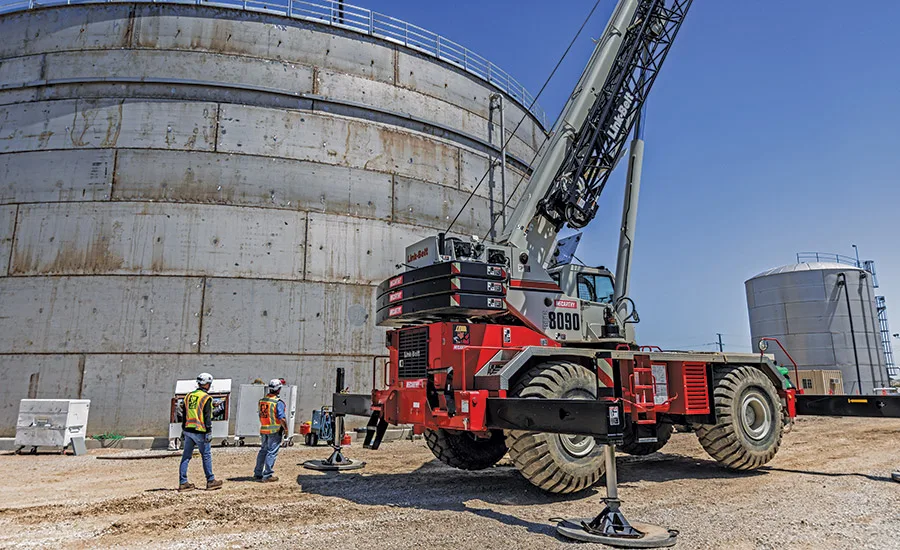
McCarthy Building Cos. is the construction contractor for a dual-fuel conversion project at Ameren Missouri’s Audrain Energy Center in Vandalia, Mo.
Related Link:
ENR Midwest 2026 Top Contractors
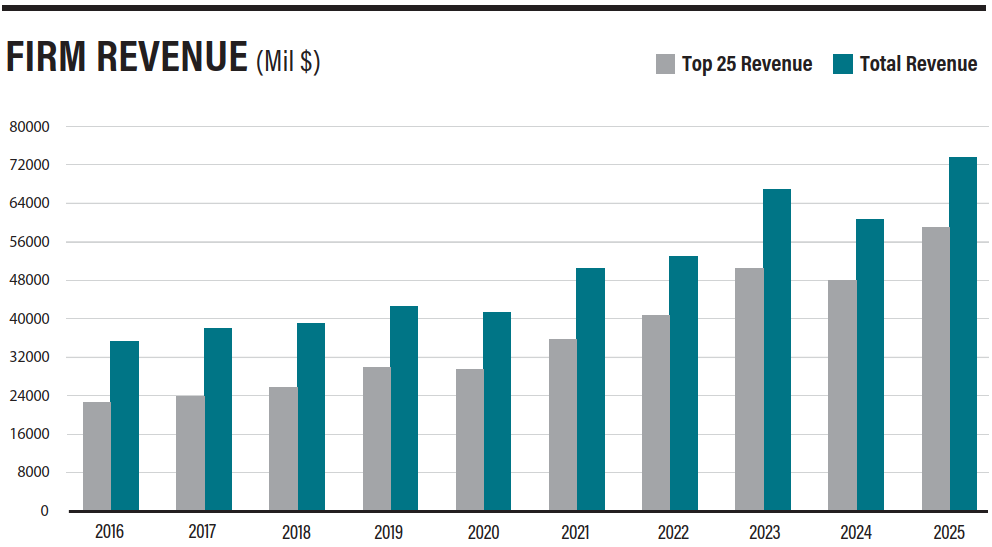
The Midwest construction industry is being propelled by unprecedented investment in data centers, power generation, transportation infrastructure and health care facilities. While contractors, engineers and consultants report strong backlogs and robust growth, they also face mounting challenges related to labor shortages, supply chain constraints and the need to deliver increasingly complex projects on accelerated schedules.
Industry leaders say the region’s construction boom is being driven largely by the rapid expansion of digital infrastructure and the energy systems needed to support it. As developers race to build new data centers and utilities expand power generation capacity, construction firms are finding themselves at the center of a transformation affecting both the economy and the built environment.
“Data centers are fundamentally reshaping the Midwest construction market,” says Chris Anvik, regional president of McCarthy Building Cos. “Our region has become one of the nation’s premier data center hubs, built on reliable, low-cost power [and] access to robust fiber networks and available land.”
That surge in digital infrastructure is creating ripple effects across multiple sectors. Anvik notes that power generation has become “the next wave” as utilities and developers work to meet growing electricity demand. Solar generation, battery storage systems and natural gas facilities are all expanding as aging coal-fired assets are retired and grid reliability becomes increasingly important.
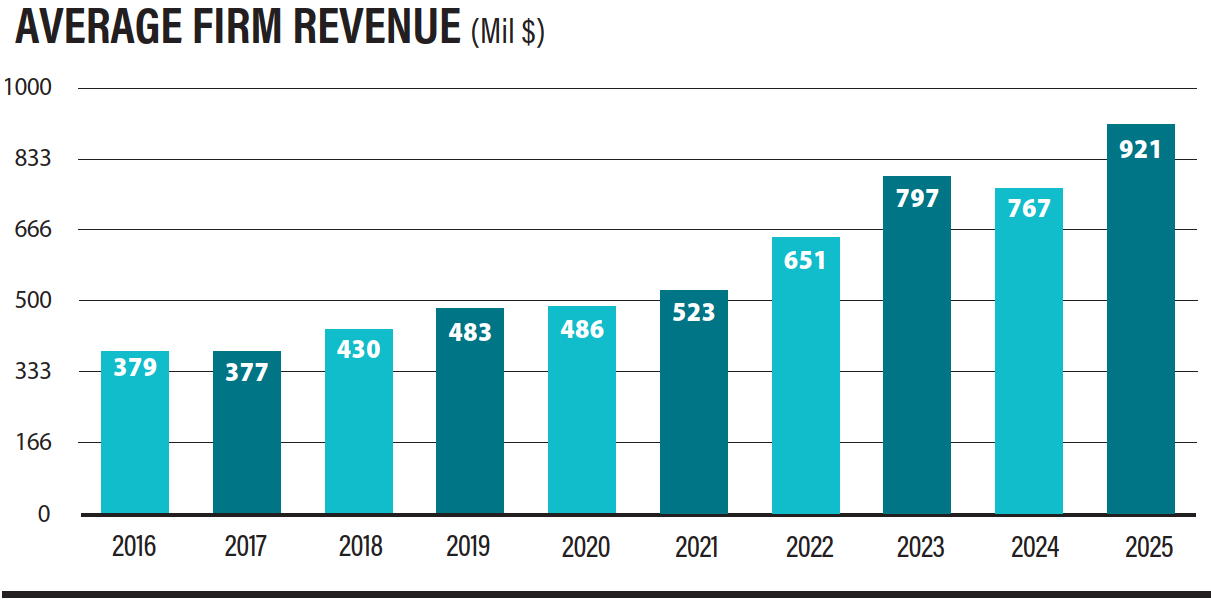
Terracon Consultants is seeing similar trends throughout the region. According to the company, thriving sectors currently include digital infrastructure; energy and transmission; transportation and infrastructure; and health care. The broad-based growth extends across the company’s materials, geotechnical, environmental and facilities service lines.
“Data centers have been keeping many offices very busy,” says Don Dracon, senior vice president of client development for Terracon. “Energy projects are in progress to support all the new energy requirements, [and they include] solar, wind, battery storage and plenty of transmission lines.”
The firm also points to continued activity in road, bridge and other infrastructure projects as well as major hospital developments in several Midwest markets.
McCarthy also is currently delivering multiple large-scale projects connected directly to the growth of digital infrastructure and energy development. In its Central region alone, the company has more than 15 power projects under construction involving natural gas generation, battery storage and solar energy.
“Data centers have been keeping many offices very busy.”
—Don Dracon, Senior Vice President for Client Development, Terracon Consultants
One example is the company’s role as engineering, procurement and construction contractor on a dual-fuel conversion project at Ameren Missouri’s Audrain Energy Center in Vandalia, Mo. The upgrades are intended to enhance the plant’s flexibility and performance during periods of peak energy demand.
Meanwhile, McCarthy’s mission critical team is managing hyperscale data center projects in Wisconsin and Missouri.
“These infrastructure projects are reshaping the construction market by driving unprecedented demand for capacity, compressing schedules and raising expectations around certainty of delivery,” Anvik says.
The surge in work comes as project owners increasingly seek ways to manage risk and improve project delivery. Leslie Duke, CEO of Burns & McDonnell, says market conditions are pushing owners toward integrated project delivery methods.
“If there was ever a time for us to focus on the most efficient way to deliver construction projects, this is it,” Duke says. “Tight labor availability, renewed continued price volatility and global uncertainty escalated by the Iran conflict have project owners turning to integrated delivery methods like design-build/EPC to reduce their risk profile.”
Duke cites industry research indicating that design-build and EPC delivery are expected to account for nearly half of all U.S. construction spending by 2028, representing more than $500 billion annually.
Labor availability is a significant challenge facing the Midwest construction industry.
“The question is no longer whether there’s enough work, it’s whether the industry has the people and capacity to build it,” Anvik says.
He notes the St. Louis metropolitan area could experience three to five times as many large projects over the next five years as it did during the previous decade. If current market conditions continue, he estimates the region could face a shortage of approximately 10,000 electricians and pipefitters within the next 12 to 18 months.
Burns & McDonnell sees other challenges across the broader AEC industry.
“The most significant challenge is the gap between rapidly accelerating demand and the slower pace of infrastructure delivery, particularly due to permitting, supply chain and labor constraints,” Duke says.
She adds that firms are being asked to deliver “unprecedented scale and speed” while managing growing complexity and resource limitations.
To address workforce shortages, companies are investing heavily in recruiting, training and new methods of project delivery.
McCarthy is expanding its use of offsite prefabrication, advanced technology and new workforce partnerships. The company also is collaborating with labor organizations and community groups to strengthen the construction talent pipeline. This fall, McCarthy plans to open the St. Louis Solutions Center, a 17-acre equipment and warehouse distribution facility in Maryland Heights, Mo., to support growing self-perform and prefabrication operations.
Burns & McDonnell is focusing on talent development through STEM education and workforce training. It recently opened a construction academy in Houston to recruit workers, assess skills and provide hands-on training that simulates real construction site conditions. “We need to continue to grow and innovate how we build the talent pipeline,” Duke says.