Power
US Uranium Enrichment Is Set to Expand
Urenco USA plant in Eunice, N.M., eyes 2027 construction start to double capacity
Related Link:
ENR 2026 Top 500 Sourcebook (PDF)
(Subscription Required)
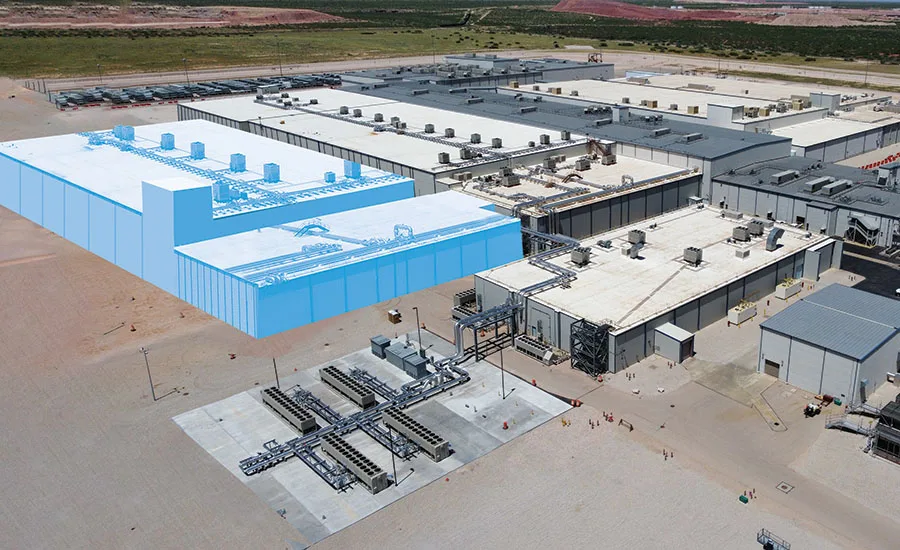
The operator of the National Enrichment Facility, the sole U.S. commercial uranium enrichment site, has announced plans for a privately funded multibillion-dollar expansion at its Eunice, N.M., complex that would boost low enriched uranium production by 50%.
Urenco USA eyes a 2027 construction start for a new process building set to house up to 24 gas centrifuge cascades totaling 2.1 million separative work units of new enrichment capacity. New cascades would start production in 2032, with others to be installed through 2036.
A spokesperson said the firm is weighing supply chain options for the expansion, including EPC contractor selection, and plans to finalize it before 2027. "We are already well into the design process for the new plant and expect to proceed quickly once we have selected supply chain partners," the spokesperson said.
In a separate upgrade project also to begin next year, Urenco USA plans to restore capacity to existing cascades at the facility. It has operated since 2010 and has an existing annual capacity of 4.3 million separative work units, about one-third of current U.S. demand. A 700,000-unit expansion begun last year in an existing building is set to finish in 2027.
15
million separative work units of uranium
enrichment capacity bought by American civilian
nuclear reactors in 2024; only 19% are sourced in US
Source: U.S. Energy Information Administration latest data
In addition to serving as foundational fuel for existing commercial light water nuclear reactors, which generate nearly 20% of U.S. electricity, low enriched uranium produced at the facility will be an essential feedstock to produce high-assay low-enriched uranium for use in advanced reactor designs planned for the 2030s.
The U.S. program is part of a larger effort by Urenco USA's U.K.-based parent to add new enrichment capacity at sites in America and Europe in the next decade. It also is building a facility in England to convert more "tails" of depleted uranium hexafluoride for further use, or to a chemically stable form for disposal.
Bechtel is providing front-end engineering and design services for the project.