City Scoop | Milwaukee
Milwaukee’s Project Pipeline Remains Strong

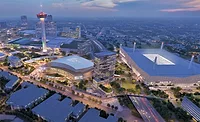
J.H. Findorff & Son broke ground in 2025 on a $95-million concourse redevelopment project at Milwaukee Mitchell International Airport. Completion is expected in 2027.

Chad Bathke
Vice President—Milwaukee
J.H. Findorff & Son Inc.

Scott Lindvall
COO
HGA
Fueled by public and private investment, infrastructure upgrades and a growing emphasis on long-term regional development—ranging from major airport expansions to health care modernization projects and cultural institutions—Milwaukee is seeing a steady pipeline of work that reflects both economic confidence and evolving community needs. While activity remains strong, firms are navigating a complex landscape affected by labor shortages, rising costs and shifting technological demands.
“Milwaukee’s AEC community is experiencing strong momentum right now, supported by continued investment across the region,” says Chad Bathke, vice president at J.H. Findorff & Son Inc. “There’s steady activity across a range of project types, from health care to transportation and more, along with major infrastructure efforts that are helping shape the city’s future.”
“Milwaukee’s AEC community is energized by a wave of prominent infrastructure and civic projects as well as major decisions that will shape the city’s future development,” adds Scott Lindvall, COO at architecture firm HGA, which has a dozen offices across the country, including in Milwaukee.

This broad-based growth is reflected in several high-profile projects currently underway. Among the most prominent is the redevelopment of Concourse E at Milwaukee Mitchell International Airport, which is expected to expand the airport’s capacity and enhance its role as a hub for international travel.
“This transformative project will impact many travelers regionally, nationally and even internationally as it will be a hub for international travel,” Bathke says. “It underscores the region’s continued investment in infrastructure that supports long-term growth, connectivity and economic development.”
“The Interstate 94 East–West expansion represents one of the region’s largest current transportation investments, with far-reaching implications for mobility and development,” Lindvall says. “Milwaukee also continues to advance corridor redesigns—such as the Water Street reconstruction, expanded multimodal options and traffic safety initiatives—reflecting a clear trend toward prioritizing flexible, people-first transportation solutions.”
Health care construction also is a major driver of activity. Findorff is currently involved in a renovation and addition at ProHealth Care Waukesha Memorial Hospital, part of a broader trend of health care systems upgrading facilities to meet the needs of growing and aging populations.
Major civic and cultural projects are also shaping the city’s landscape.
“The prevailing mindset—build now because things never get cheaper—remains a motivating force.”
—Scott Lindvall, COO, HGA
“The new Milwaukee Public Museum is moving forward as a prominent community anchor,” Lindvall says. “The Bronzeville Center for the Arts demonstrates continued investment in cultural equity, and innovation in sustainable construction remains strong, with high-rise mass timber buildings positioning Milwaukee as a leader with this technology.”
In addition, a $455-million, 650-room “headquarters” hotel is proposed to replace the Miller High Life Theatre in Milwaukee.
Meanwhile, HGA is working with Milwaukee County on the Investing in Justice: Courthouse Complex (IJCC) project, which is in the early stages of design to replace the public safety building, renovate portions of the historic courthouse and maintain connections to the criminal justice facility.
Even with so much activity, Bathke sees conversations about data center development, energy demand, manufacturing growth and talent retention influencing decision-making across the AEC sector. The rise of artificial intelligence is also beginning to play a role, with firms exploring how emerging technologies can improve efficiency and project outcomes, Bathke says.
Despite the positive outlook, challenges persist. Workforce availability remains a top concern as companies struggle to find skilled labor to keep pace with demand. Rising construction costs, high interest rates and ongoing supply chain uncertainties are also putting pressure on project budgets and timelines.
“These are key areas we continue to monitor,” Bathke says.
“The prevailing mindset—build now because things never get cheaper—remains a motivating force as the city adapts to shifting market conditions,” Lindvall adds.