ENR 2025 Top 25 Newsmakers
Karina Dailey: Led an Effort to Remove a State Record of Nine Dams to Reclaim the State's Floodplain
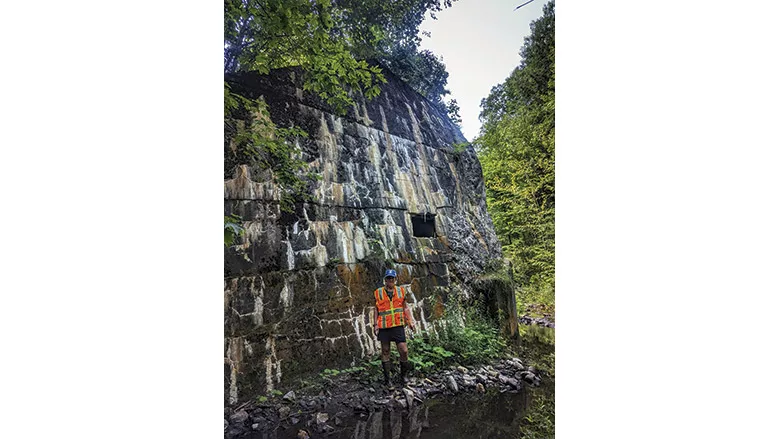
Restoration ecologist and project manager Karina Daily helped efforts to remove the Young’s Brook Dam in West Rutland, Vt.
_ENRready.jpg "headshot of Karina Dailey")
Related Article:
Vermont Dam Removal Program Reclaims Floodplain
Back to:
25 Top Newsmakers
Karina Dailey understands the devastating impacts of Vermont’s historic 2023 flooding as well as anyone. Record amounts of rain washed out roads and bridges and produced catastrophic land and mudslides resulting in more than $1 billion in damages. The science and restoration director for the Vermont Natural Resources Council recalls failed and breached dams directly impacting communities. Despite the cost, Dailey calls the floods a “silver lining for people to connect the dots and see the impact that flooding had in the communities.”
Since 2023, removal of more than 80 dams in Vermont represents more demolished per capita than any other state, says the environmental nonprofit American Rivers—aiming to prevent future flooding and restore the watershed’s ecological resilience. Vermont also passed its 2024 Flood Safety Act, the first-in-the-nation law that gives the state jurisdiction over 23,000 miles of streams and rivers, when new flood hazard area standards and other protections take effect on Jan. 1, 2028.
Dailey, 47, who wrote portions of the Flood Safety Act, spent a year testifying before state lawmakers about the legislation as well as three years testifying about watershed science. She also manages the council’s dam removal program, which assists other conservation groups in identifying dams for removal. It plans to help demolish at least 10 more dams this year.
Last year saw a state record of nine dams eliminated at a cost of nearly $4 million, including Youngs Brook Dam in West Rutland. Dailey oversaw its removal as project manager, while SLR Consulting served as onsite engineer and designer. Removing the 250-ft-long by 40-ft-high dam’s concrete and excess soil required preplanning and implementing the project in stages to control the water and any potential sediment movement.
Dailey brings “energy and excitement to developing Vermont dam removal projects and increasing knowledge in the discipline,” said Roy Shiff, SLR principal water resources engineer and scientist. “Her collaborative approach has accelerated the pace of the removal of obsolete and deteriorating Vermont dams leading to improved public safety, water quality, and habitat.”
Dailey’s “deep well of experience, long-time commitment to the many values of restoration, and enthusiastic spirit motivate all who have the privilege to work with her,” added Corrie Miller, an aquatic organism passage restoration specialist at the Lake Champlain Basin Program.
Dailey chairs the Vermont Dam Task Force, where she worked with Mike Kline, who spearheaded the Flood Safety Act after retiring from a 30-year career in the Vermont Dept. of Environmental Conservation.
Kline said dams can disrupt natural sediment transport, leading to more sediment deposits in some places and greater erosion in others. Removing dams with impoundments allows for the creation of floodplains that can store floodwaters and reduce fluvial erosion during flood events, he noted.
Continuing to advance the work, Dailey said she will keep lobbying and testifying this year “for additional clean water protections.” She is currently working to move the Vermont restoration bill through the State House.
Related to the Flood Safety Act, the proposed bill aims to improve the regulatory review process “for implementing freshwater restoration projects at the scale needed to meet the urgency of climate change and flood risk in Vermont,” Dailey said.
Legislative rulemaking is also on the State House agenda this year for parts of the Flood Safety Act implemented last year, according to Dailey. But the timeline for that action faces continuing delays due to limited state agency capacity and political will, she said. Despite the challenges, Dailey enjoys seeing the results of dam removals. “Watching a free-flowing river transporting sediments and nutrients and observing the immediate fish and wildlife response is extremely gratifying,” she said.