ENR 2025 Top 25 Newsmakers
Cassidy Blowers: Led a Team on an Effort to Improve Highway Workzone Safety
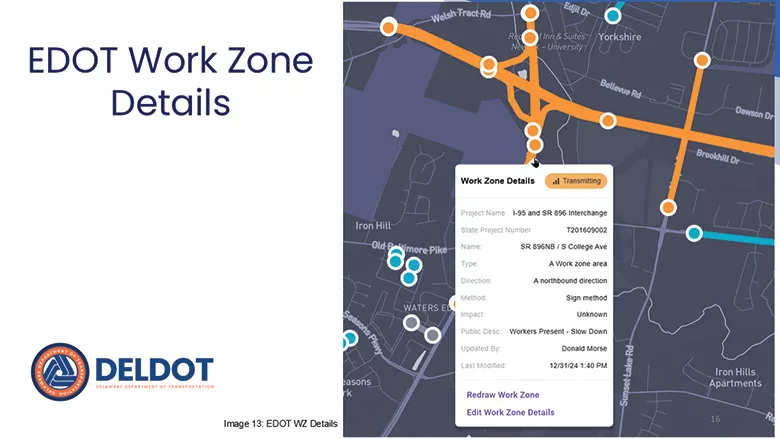
Connected equipment and e-ticketing information help trigger alerts to motorists regarding active construction zones nearby.

Related Article:
States Eye Technology to Improve Highway Work Zone Safety as AGC Releases Report
Back to:
25 Top Newsmakers
Cassidy Blowers knew from a young age that she would pursue some kind of construction-related career. “I liked playing in sand piles with Tonka trucks as a kid,” recalls the construction resource director for the Delaware Dept. of Transportation.
An initial thought of designing roller coasters gave way to transportation via an internship with the Pennsylvania Dept. of Transportation while studying transportation engineering at Penn State. She would later join DelDOT.
“I always wanted to digitize what we had at DelDOT,” says Blowers. “In 2008, we were still using a lot of paper processes. I wanted to modernize that.” The agency, with the aid of Federal Highway Administration grants through the Every Day Counts program, launched initiatives such as an e-ticketing system that keeps track of trucks delivering materials to work sites via the HaulHub Technologies app.
When a construction worker in a neighboring state was killed in a highway work zone crash, Blowers and her team were galvanized to start another pilot program.
“We have all this location data with e-tickets,” she says. “So we thought, can we get notifications to [the public] that you’re coming into a work zone, other than [with standard road] signs?”
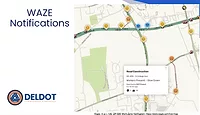
DelDOT partnered with its counterparts in Louisiana, Iowa and Nebraska; contractor Greggo & Ferrara Inc.; and HaulHub on what became Accelerating Digital Inspection Practices with Connected Machinery (ADCMS). The contractor volunteered its fleet of digitally connected machinery for the demonstration phase. Potential road hazards are monitored in real-time thanks to data drawn from e-tickets, connected machines and their telematics data of activity and material deliveries. Drivers are automatically alerted about active construction work zones via their GPS navigation apps and the FHWA’s Work Zone Data Exchange.
Joel VanDusen, director of government solutions for HaulHub, wrote in an article for the American Road and Transportation Builders Association that the project “marks a significant shift in workforce development within the construction industry. By equipping workers with advanced tools and a comprehensive, data-driven perspective, DelDOT is creating a more modernized, sophisticated jobsite that resonates with a digitally native workforce.”
“Cassidy led the team that worked with the vendors, set up peer exchanges, and led the communication to make sure the ADCMS was a huge success,” says Cedric Wilkinson, e-construction program administrator with the Iowa Dept. of Transportation. “I worked with Cassidy in sharing ideas on how the Iowa DOT is utilizing e-ticketing.”
DelDOT is now looking at using the statewide data from 600 pieces of its own connected equipment fleet to inform planning and construction of future projects, including lowering their carbon footprint.
Blowers envisions AI’s potential to help teams better handle the “boatload” of data from e-tickets, traffic and weather reports, connected equipment telematics and other variables. Then, she says, “instead of measuring and calculating what was done, [inspectors] can just verify what the equipment already says was done.”
Other possibilities could include providing work zone data for autonomous vehicles to adjust their routes automatically. “We’re having discussions with [equipment makers] trying to drive additional sensor adoption,” says Blowers. “We want to be able to harness that information and use it to make lives easier for us and for the contractors.