Transportation
Maryland Advances Chesapeake Bay Bridge Replacement Plan
Officials approve recommended preferred design for replacement span, but estimated $14.8B to $16B project is likely years away.

Maryland transportation officials voted on a recommended preferred plan to replace the Chesapeake Bay Bridge.
Maryland will pursue a full replacement of the existing Chesapeake Bay Bridge, although any construction is likely years away.
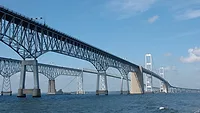
A Dec. 18 vote by the Maryland Transportation Authority board endorsed the recommended preferred alternative for the draft Tier 2 environmental study, calling for building two new, four-lane bridges to replace the tolled 4.3-mile dual-span suspension bridges, constructed in 1952 and 1973 and officially named the Gov. William Preston Lane Jr. Memorial Bridge.
With a current estimated cost of $14.8 billion to $16 billion, nearly double the 2022 Tier 1 study’s estimate, the preferred alternative offers the lowest cost and least environmental impacts compared with the other build alternatives, the agency says. The 78-ft-wide bridges would double the crossing’s capacity and safety by providing 12-ft wide lanes and median shoulders, and 14-ft wide outside shoulders. The structures will rise with a maximum 3% grade to provide vertical navigational clearance of 230 ft, matching the new Key Bridge in Baltimore harbor and allowing larger ships to access the city's port. Pier protection measures, currently being retrofitted to the existing bridges, will also be part of the new crossing’s design.
The new eastbound span is to be located to south of the existing eastbound crossing, while the new westbound span would be built between the two existing structures, both to be demolished once new construction is complete. Highway approaches on both sides of the bay will be widened to support traffic transitions.
A proposed bicycle and pedestrian shared‑use path for the new bridges, which officials say would add about $1 billion to the project cost, was left out of the plan pending further evaluation.
While the crossing will remain tolled with the new bridges, the authority has yet to identify a funding strategy for design and construction. The agency already faces rising costs for the Key Bridge that have sparked debate over fulfilling then-President Biden’s promise of full federal funding for the replacement structure.
The authority now plans to publish its draft Tier 2 environmental study for the new Bay bridge in January, with an eye toward a final record of decision by the end of 2026, coinciding with procurement for final design services. Under the agency’s current timeline, construction would begin in 2032.