Transportation
Pier Protection Upgrades Planned for Chesapeake Bay Bridge

Maryland transportation officials voted on a recommended preferred plan to replace the Chesapeake Bay Bridge.
The Maryland Transportation Authority is preparing a $177-million design-build project to better protect the Chesapeake Bay Bridge from risks of vessel impact, such as the one that caused the deadly 2024 collapse of the Francis Scott Key Bridge in Baltimore.
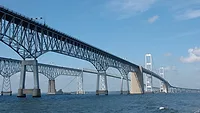
Also known as the William Preston Lane Jr. Memorial Bridge, the parallel 4.3-mile suspension bridges built in 1952 and 1973 form a critical connection with Maryland’s Eastern Shore, handling about 61,000 vehicles per day. Although its existing pier protection system meets federal permit requirements, the bridge is one of nearly 70 navigable waters crossings identified by the National Transportation Board earlier this year as lacking up-to-date vessel collision vulnerability assessments.
The state says the Bay Bridge’s pier protection enhancements will be based on current American Association of State Highway and Transportation Officials code requirements. Project scope, in development, calls for installing up to 16 dolphins to protect the east- and westbound bridges’ main span piers, which rise adjacent to an 800-ft-wide deep-draft navigation channel that provides large maritime vessels with access to the Port of Baltimore about 33 miles to the north. Vertical clearance beneath the main spans is about 186 ft.
The design-build request for proposals for the enhanced pier protection system is to be issued this winter, with the state agency requiring the team to include a licensed heavy marine contractor that can self-perform at least 50% of the contract value. Selection and notice to proceed will take place later in 2026, with construction on the two-year project tentatively scheduled to begin the following spring.
The project may include a Project Labor Agreement, pending a final agency determination. Among project design considerations is a proposed third crossing for the corridor, which is now in the Tier 2 study phase. The state anticipates a final environmental impact statement to be issued in fall 2026, followed by procurement for final design. Construction could begin as early as summer 2032.